Transportation & Travel
Canada’s sheer size presents unique challenges for anyone planning to travel across its provinces and territories. Spanning nearly 10 million square kilometers, this country demands careful consideration of transportation modes, seasonal conditions, and regional infrastructure. Whether you’re flying between isolated northern communities, driving the iconic Trans-Canada Highway, or settling into a sleeper car on VIA Rail’s transcontinental service, each mode of travel comes with distinct logistics, costs, and planning requirements.
Understanding these transportation realities transforms what could be a frustrating journey into a manageable adventure. From navigating regional air monopolies to preparing for unexpected weather delays in the Far North, from budgeting fuel on multi-day highway crossings to maximizing comfort during days-long train journeys, this comprehensive overview provides the foundational knowledge you need. The following sections break down the practical considerations for air, road, rail, and remote travel across Canada’s diverse geography.
Air Travel Across Canada’s Vast Geography
Flying remains the most practical option for covering Canada’s enormous distances, particularly when traveling to remote regions or crossing multiple time zones quickly. However, air travel in Canada operates under different economic realities than in more densely populated countries, creating both challenges and opportunities for travelers.
Understanding Regional Flight Economics
Many Canadian routes, especially those serving northern and remote communities, operate under limited competition or effective monopolies. When only one or two carriers service a particular route, prices reflect the high operational costs of maintaining service to small airports with limited passenger volumes. A flight from Yellowknife to a smaller community might cost several times more per kilometer than a Toronto-Vancouver flight, despite the shorter distance.
These pricing structures aren’t arbitrary—they account for factors like mandatory crew positioning, aircraft deicing in extreme cold, and the need to transport essential supplies alongside passengers. Understanding this context helps travelers budget realistically rather than searching fruitlessly for bargains that simply don’t exist on certain routes.
Strategic Use of Secondary Airports
Larger urban areas often have multiple airport options that savvy travelers can leverage. Consider these approaches:
- Hamilton’s John C. Munro International Airport frequently offers lower fares than Toronto Pearson for certain routes
- Abbotsford International Airport can provide alternatives to Vancouver International, particularly for leisure travelers
- Montreal-Mirabel, though less active than Trudeau, sometimes services charter and cargo operations that accept passengers
The trade-off typically involves longer ground transportation times to your final destination, so calculate the total journey time and cost, not just the ticket price.
Small Aircraft Considerations
Regional routes often utilize smaller aircraft—Dash 8s, ATRs, or even Twin Otters for the most remote destinations. These aircraft impose strict baggage weight limits, sometimes as low as 15-20 kilograms per passenger including carry-on items. Excess baggage may be left behind for the next available flight, which could be days away in some locations.
Additionally, weight distribution matters on small aircraft. Don’t be surprised if you’re assigned seating based on your body weight or asked to move mid-flight to balance the aircraft. This isn’t unusual—it’s essential safety protocol for smaller planes operating in challenging conditions.
Passenger Rights and Protections
Transport Canada’s Air Passenger Protection Regulations establish minimum standards for compensation during delays, cancellations, and denied boarding situations. However, many travelers don’t realize that weather-related disruptions—extremely common in Canadian winters—typically don’t trigger compensation requirements. Airlines must still provide reasonable care during extended delays, but understanding what qualifies as “within the carrier’s control” versus force majeure helps set realistic expectations.
Navigating Canada’s Highways and Road Networks
Road travel offers unmatched flexibility and the opportunity to experience Canada’s diverse landscapes at your own pace. However, the distances involved and seasonal conditions demand thorough planning that goes well beyond simply mapping a route.
Trans-Canada Highway: A Continental Journey
Stretching roughly 8,000 kilometers from Victoria, British Columbia to St. John’s, Newfoundland, the Trans-Canada Highway represents one of the world’s longest national road networks. Driving its entire length typically requires 7-10 days minimum of actual driving time, not accounting for sightseeing, rest, or unexpected delays.
Fuel budgeting becomes crucial on such journeys. Prices vary significantly by province and remoteness, with remote northern sections sometimes charging 50% more than urban areas. Calculate your vehicle’s actual highway fuel consumption, map fueling intervals (never let your tank drop below one-quarter in remote areas), and budget approximately 15-20% above your mathematical calculation to account for detours and price fluctuations.
Winter Driving Realities
Canadian winters transform highway travel entirely. From November through March in most regions—and even longer in northern areas—conditions require specific preparation:
- Vehicle preparation: Winter tires (mandatory in some provinces), block heater, emergency kit with blankets and non-perishable food
- Route monitoring: Check provincial road condition websites and weather forecasts before each day’s journey
- Time flexibility: Build extra days into your itinerary for weather delays that can close highways for 24-48 hours
- Safe passing protocol: Reduced visibility and icy conditions make highway passing significantly more dangerous; patience saves lives
Think of winter highway travel like sailing—you work with the conditions, not against them. Experienced Canadian drivers know that arriving a day late is infinitely preferable to not arriving at all.
Construction and Seasonal Closures
Canada’s harsh winters necessitate intensive summer road maintenance. Major highway sections often face construction-related delays from May through October, with single-lane alternating traffic potentially adding hours to your journey. Provincial transportation websites provide current construction information, but conditions change rapidly.
Some routes, particularly those accessing remote parks or northern communities, close entirely during winter months or during spring thaw when frost heaves make roads impassable. Always verify year-round accessibility when planning trips to remote destinations.
Long-Distance Train Travel: VIA Rail and Beyond
Train travel in Canada occupies a unique niche—slower than flying, more expensive than driving, yet offering an experience that transforms the journey itself into the destination. Understanding what to expect helps align expectations with reality.
Comfort Classes and Sleeping Accommodations
Long-distance routes offer various comfort levels, from economy seats to private sleeping cabins. The choice significantly impacts both cost and experience:
- Economy class: Reclining seats suitable for overnight travel, though actual sleep quality varies by individual tolerance
- Berths: Shared sleeping compartments with curtains for privacy, converting between seating and sleeping configurations
- Cabins: Private rooms with beds, washrooms (in some classes), and meals included in premium tiers
Shared hygiene facilities in economy and berth classes require some adjustment for those accustomed to private accommodations. Think of it as similar to hostel travel—perfectly functional and maintained regularly, but inherently communal.
Onboard Meals and Motion Management
Meal inclusions vary dramatically by class. Premium sleeper fares typically include all meals in dedicated dining cars, while economy passengers purchase food from café cars or bring their own provisions. The quality of included meals has improved considerably in recent years, though options remain limited compared to restaurants.
Train motion affects people differently. Unlike the steady vibration of aircraft, trains sway and rock with track conditions. Some travelers find this soothing; others experience mild motion discomfort. Choosing a cabin positioned over the trucks (wheel assemblies) generally provides the smoothest ride, while cars between trucks experience more pronounced movement.
The Canadian: Transcontinental Rail Reality
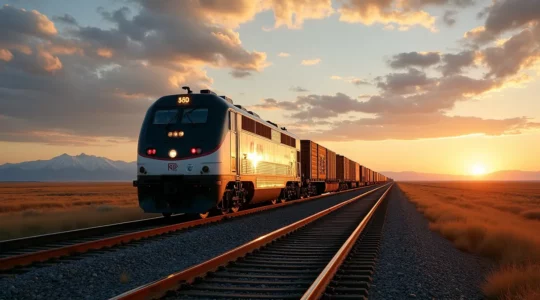
VIA Rail’s flagship transcontinental service, “The Canadian,” deserves special mention for its unique operational characteristics. This route operates on tracks owned by freight companies, meaning freight trains receive priority. Passenger trains regularly pull onto sidings to allow freight to pass, adding hours or occasionally even a full day to scheduled journey times.
This isn’t a malfunction—it’s the fundamental operating agreement. Travelers choosing this route should embrace the uncertainty and focus on the journey rather than the arrival time. The famous dome cars offer unparalleled viewing of the Canadian Rockies and prairies, but access operates on rotation systems during peak periods to ensure all passengers get viewing time.
Seasonal considerations matter significantly. Summer offers long daylight hours to view scenery but attracts peak pricing and crowds. Winter journeys cost less and feature emptier trains, though you’ll traverse much of the prairies in darkness and weather delays become more common.
Planning Travel to Canada’s Far North
Traveling to Canada’s territories and remote northern communities involves logistical challenges that simply don’t exist in southern regions. Success requires understanding these unique factors and planning accordingly.
Flight Costs and Food Economics
Northern flights often shock first-time travelers with their pricing. A return flight from Yellowknife to a smaller community might cost what you’d pay for an international ticket to Europe. Combined with food costs that can reach two to three times southern prices due to transportation logistics, budgeting for northern travel requires significantly more resources than equivalent southern journeys.
Savvy travelers reduce food costs by bringing non-perishable items in checked baggage (within weight limits), purchasing supplies in larger regional hubs before continuing to smaller communities, and understanding that restaurants, where they exist, typically offer limited menus at premium prices.
Weather Delays and Accessibility
Weather doesn’t just affect comfort in the North—it determines whether travel happens at all. Fog, blizzards, and extreme cold regularly ground flights, sometimes for multiple consecutive days. Building buffer days into both ends of your itinerary isn’t optional; it’s essential risk management.
Road accessibility varies dramatically by season and location. Many northern communities have no road access whatsoever, relying entirely on air service and seasonal ice roads or barge access. Ice roads typically operate from January through March when conditions permit, offering dramatically cheaper cargo transport but narrow operating windows. Barge access depends on river ice breakup and freeze-up timing, which varies annually.
Winter Driving in Extreme Conditions
For communities accessible by road, winter driving reaches extremes unknown in southern Canada. Temperatures below -40°C affect everything from fuel gelling to tire pressure to battery performance. Vehicle preparation must include:
- Block heaters and battery blankets (not optional—essential)
- Emergency survival gear assuming you might spend 24+ hours stranded
- Communication devices, noting that cellular coverage is sparse or nonexistent on many northern routes
- Fuel planning that accounts for increased idling and reduced efficiency in extreme cold
The golden rule of northern winter travel: someone should always know your route and expected arrival time. What would be a mere inconvenience in southern Canada becomes life-threatening in the North.
Successful travel across Canada’s diverse regions comes down to matching your expectations with transportation realities, building appropriate buffers into your schedule, and preparing for conditions specific to each mode and region. Whether you’re optimizing connections through regional airports, preparing for days behind the wheel on the Trans-Canada, savoring the slow pace of transcontinental rail, or venturing into the logistical complexities of the Far North, understanding these fundamental principles transforms potential frustration into confident navigation of this vast country’s transportation networks.
Riding “The Canadian”: A Realist’s Guide to the Toronto-Vancouver Route and Its Delays
The key to a successful journey on The Canadian isn’t hope; it’s understanding you’re a guest on a freight line,…
Read more
Rail Journeys in Canada: Is “Prestige Class” Worth the Price Tag?
The price difference between VIA Rail’s Sleeper Plus and Prestige Class is significant, but the true value of Prestige isn’t…
Read more
Navigating Domestic Flights: Why Flying Within Canada Costs More Than to Europe?
High flight prices in Canada aren’t just about taxes or a simple duopoly; they’re a symptom of a fragmented, infrastructure-dependent…
Read more
Driving the Trans-Canada Highway: Crossing the Continent Safely
In summary: True safety on the Trans-Canada Highway comes from mastering logistics, not just avoiding wildlife. Plan fuel stops strategically…
Read more
Traveling to Canada’s Northern Territories: A Logistics-First Guide to Managing High Costs and Limited Flights
Traveling to Canada’s North doesn’t have to break the bank, but it requires a strategic mindset, not a bigger wallet….
Read more