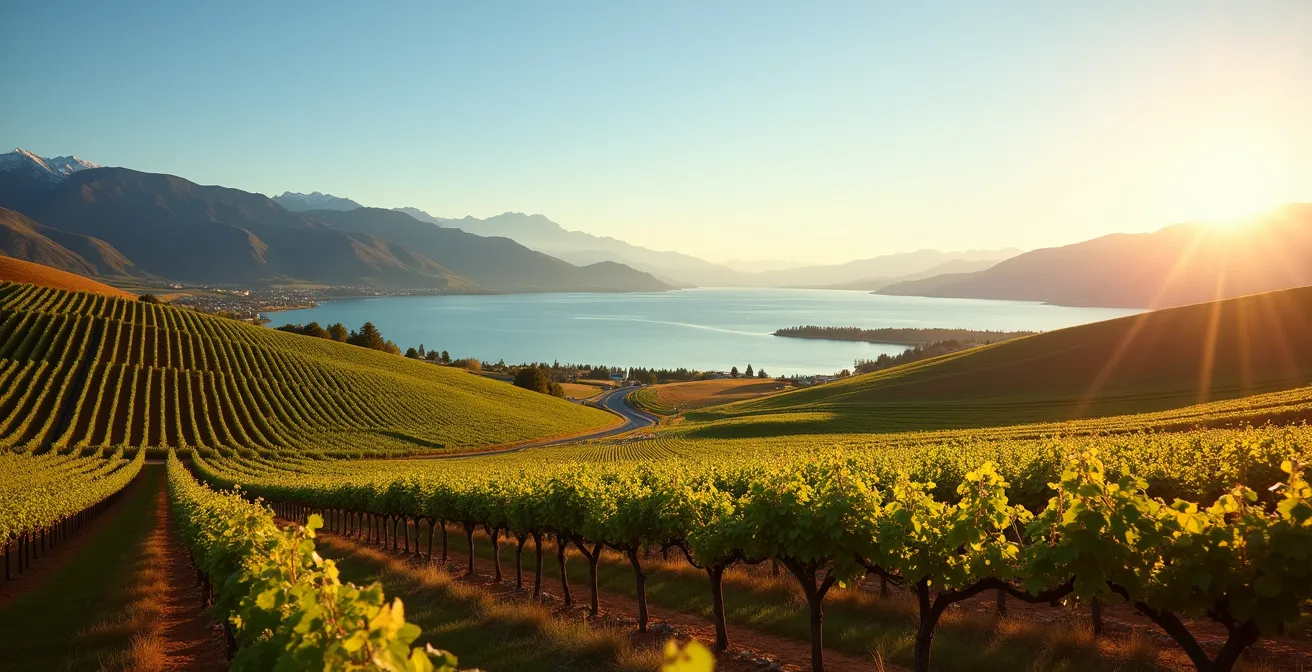
A truly successful Okanagan wine tour is defined not by the wineries you visit, but by how masterfully you navigate the logistical challenges between them.
- Your choice of transport—designated driver versus guided tour—directly impacts tasting freedom and safety, setting the tone for your entire trip.
- The geography of your tour is paramount; Kelowna offers lakeside variety, while the southern Oliver-Osoyoos region is the undisputed heartland for serious red wines.
- Bringing your collection home to provinces like Ontario is possible, but subject to specific rules that differentiate personal transport from direct shipping.
Recommendation: For a seamless experience, prioritize a guided tour to eliminate safety concerns, and secure your dining and key tasting reservations at least two weeks in advance, especially during the peak summer season.
The dream of an Okanagan Valley wine tour is a potent one: sun-drenched vineyards rolling down to turquoise lakes, a glass of world-class Pinot Noir in hand, and a schedule dictated only by whim. For many wine enthusiasts, planning a trip to Kelowna or Oliver seems straightforward—pick a few wineries, book a hotel, and go. The common advice revolves around booking tastings in advance and deciding whether to drive or hire a service. But this surface-level planning often ignores the critical details that separate a pleasant trip from an extraordinary one.
The reality is that the region’s popularity, geography, and regulations introduce a layer of logistical complexity that can easily derail the unprepared visitor. This is where a strategic approach becomes essential. What if the key to a perfect tour wasn’t just about choosing the most famous estates, but about understanding the hidden logistics? The true art of planning lies in mastering the economics of tasting fees, the strategic choice between distinct terroirs, and the legal nuances of transporting your treasured bottles across provincial lines.
This guide moves beyond the basics to offer a sommelier’s perspective on planning. We will deconstruct the core logistical decisions you’ll face, providing a framework to build an itinerary that is not only enjoyable but also efficient, safe, and deeply rewarding. From the foundational choice of transportation to the finer points of winery etiquette, you’ll gain the insights needed to navigate the Okanagan wine route like a seasoned professional.
To help you craft the perfect journey, this article breaks down the essential logistical considerations. Explore the topics below to build your strategy from the ground up.
Summary: Your Strategic Itinerary for the Okanagan Wine Route
- Designated driver vs. Guided Van: is the tour cost worth the freedom to drink?
- Waiving the tasting fee: how many bottles do you need to buy?
- Kelowna vs. Oliver-Osoyoos: choosing between lakeside vibes or serious reds?
- Inter-provincial shipping laws: can you legally mail wine back to Ontario?
- Winery restaurants: why reservations are mandatory 2 weeks out in summer?
- How to plan stops at artisanal fromageries along Route 132?
- The offense of refusing food in a traditional Acadian home
- Combining the drive with a cycling tour of the islands nearby
Designated driver vs. Guided Van: is the tour cost worth the freedom to drink?
The first and most critical decision in planning your Okanagan tour is transportation. The choice between appointing a designated driver (DD) from your group and investing in a professional guided tour fundamentally dictates the rhythm, safety, and ultimate enjoyment of your day. While the self-drive option appears to offer freedom and cost savings, it introduces significant logistical friction and a strict “consumption ceiling” for everyone but the driver. Navigating between wineries, managing tasting schedules, and abstaining from indulgence can turn a day of leisure into a task.
A guided tour, conversely, transforms the experience. The cost, which may seem high at first, is an investment in safety, relaxation, and unparalleled access. With a professional at the wheel, every member of your party is free to fully immerse themselves in the tastings. Furthermore, established tour operators provide far more than just transportation. They offer a curated experience, often including pre-arranged tastings, access to winemakers, and behind-the-scenes moments not available to the general public. As noted by a top-rated operator, premium tours often bundle all tasting fees and door-to-door service, delivering a comprehensive value proposition.

As the image suggests, the guided option is about a professional, seamless experience. The benefits extend beyond safety; guides are storytellers who share the rich history of the wineries and the valley’s evolution into a world-class wine region. They know the hidden gems and the most efficient routes, allowing you to comfortably visit four or even five wineries in a day—a feat that is both challenging and unwise for a self-driving group. Ultimately, the cost of a tour is the price of true freedom: the freedom to taste, to learn, and to soak in the views without a single worry.
Your 5-Point Okanagan Tour Logistics Checklist
- Transportation Mode: Decide between a designated driver and a guided tour. If choosing a tour, book at least 4-6 weeks in advance for summer dates.
- Geographic Focus: Select your primary tasting region(s)—Kelowna, Lake Country, Naramata, or Oliver/Osoyoos—based on your wine preferences and desired atmosphere.
- Key Reservations: Book tastings at your top 3 “must-visit” wineries and secure at least one winery dinner reservation 2-3 weeks out.
- Purchase & Shipping Plan: Determine your bottle budget and research your options for getting wine home, whether by personal transport or through a wine club.
- Pacing & Palate: Plan for no more than 4-5 wineries per day and integrate a non-wine stop, like a local market or viewpoint, to prevent palate fatigue.
Waiving the tasting fee: how many bottles do you need to buy?
The economics of wine tasting in the Okanagan have evolved. Gone are the days of universally free samples; today, nearly every winery charges a tasting fee. This isn’t a deterrent but a shift towards a more premium, educational experience. For the strategic planner, the question becomes about managing these costs and understanding the concept of “Tasting ROI”—the return on your investment. Generally, you can expect tasting fees to run from $10–$20 CAD per person, which often covers a flight of 4-5 wines.
The most common way to recoup this cost is through purchase. Many, though not all, wineries will waive one tasting fee for each bottle purchased. Some may require a two-bottle purchase. This policy creates a decision point at every tasting bar: is the wine good enough to “pay for” your tasting? For a couple, this can mean committing to two bottles at each stop, quickly filling a case box. It’s crucial to ask about the waiver policy upfront to avoid any misunderstanding.
For those serious about wine, there are more sophisticated strategies than the simple bottle-for-fee exchange. Pooling purchases as a group can often meet a higher threshold for waiving multiple fees. However, the ultimate strategy for “Tasting ROI” is joining a wine club. Membership almost always includes complimentary tastings for you and guests on every visit, alongside other benefits. The following table breaks down the strategic considerations.
| Strategy | Immediate Benefits | Long-term Value | Best For |
|---|---|---|---|
| Single Bottle Purchase | May waive current tasting fee | No ongoing benefits | One-time visitors |
| Group Purchase Pooling | Higher chance of fee waiver for entire group | Split case among friends | Groups of 4-6 people |
| Wine Club Membership | Immediate tasting fee waiver + future free tastings | Member pricing, exclusive wines, simplified shipping | Return visitors or wine enthusiasts |
Kelowna vs. Oliver-Osoyoos: choosing between lakeside vibes or serious reds?
The Okanagan Valley is not a monolithic wine region; it’s a diverse tapestry of microclimates and terroirs stretched over 250 kilometers. The most critical strategic choice after transportation is deciding where to focus your time. The two primary hubs for wine tourism are the Kelowna area in the north and the Oliver-Osoyoos corridor in the south. Your choice should be dictated by your palate and the type of experience you seek, creating a truly terroir-driven itinerary.
Kelowna and its surrounding communities (Lake Country, West Kelowna) are defined by their proximity to the expansive Okanagan Lake. This massive body of water creates a moderating effect on the climate, ideal for aromatic whites, elegant Pinot Noirs, and crisp rosés. With over 40 wineries, the area offers a huge diversity of styles, from grand, modern architectural estates to quaint, family-run farms. It’s the perfect choice for those who want a mix of wine tasting, lakeside leisure, and city amenities. In contrast, the south is a different world.
The majority of Okanagan’s 12,000 vineyard acres are right across the US border around Osoyoos and Oliver.
– Wine Folly, Okanagan Wine Country Guide
This concentration of vineyards in the south speaks to its importance. The Oliver-Osoyoos region is Canada’s only desert, a hot, arid landscape that is perfect for ripening powerful, full-bodied red grapes like Merlot, Cabernet Sauvignon, Cabernet Franc, and Syrah. This is the heartland of VQA red wine production. A tour here is less about lakeside views and more about a deep dive into serious, terroir-driven winemaking. To help you choose, consider the following breakdown:
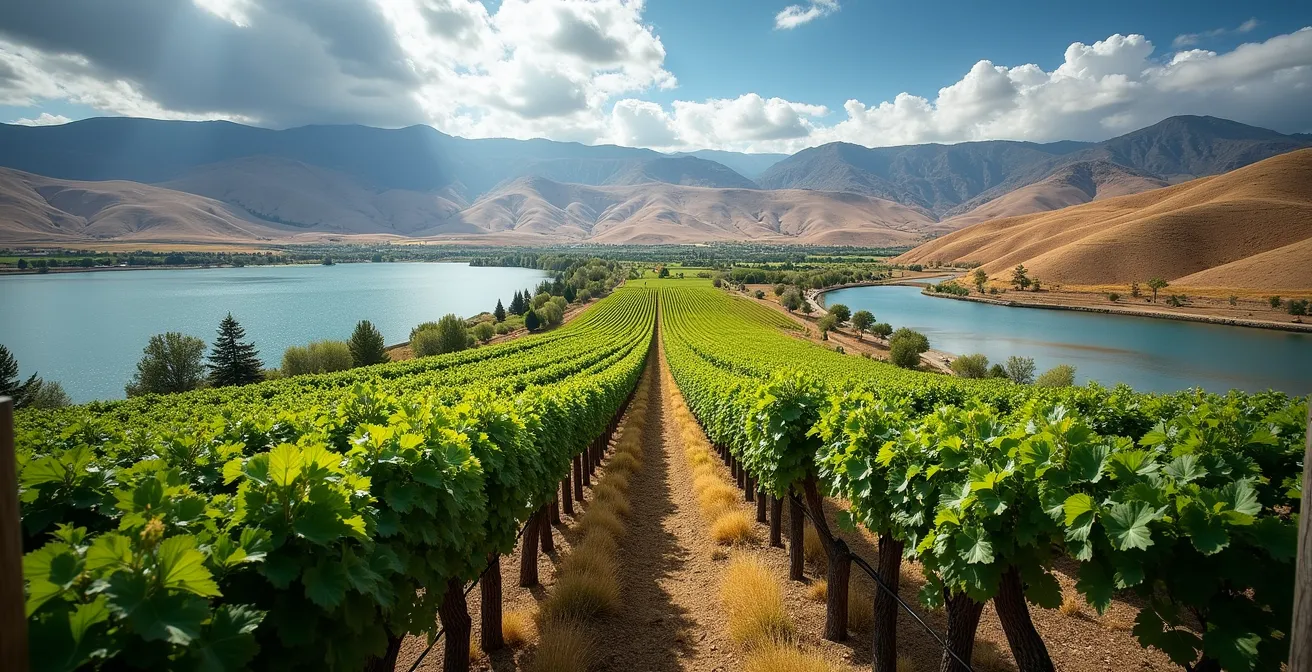
- Kelowna area: Choose for lakeside views, a wide variety of wineries within a short drive, and a mix of modern estates and family-run farms.
- Lake Country: Best for Pinot Noir lovers, with rolling hills and epic views, conveniently located just 10 minutes from the airport.
- Naramata Bench: Select for intimate experiences, unique terroir, and handcrafted wines nestled in the mountain foothills.
- Oliver-Osoyoos: Pick for serious red wines, the highest concentration of vineyards, and a true desert climate experience.
For the ultimate trip, consider a hybrid itinerary: two days of leisurely tasting around Kelowna, followed by a scenic drive south for two days of intensive red wine exploration in Oliver and Osoyoos.
Inter-provincial shipping laws: can you legally mail wine back to Ontario?
For many visitors, especially those from outside British Columbia, a successful wine tour is measured by the quality of the “cellar defenders” they bring home. This introduces the crucial final stage of your tour: collection logistics. The laws governing the movement of alcohol between Canadian provinces have historically been complex, but recent changes have brought welcome clarity, particularly for wine lovers in Ontario.
The primary question for many is: can I legally get my Okanagan wine back to Ontario? The answer depends on *how* you transport it. Thanks to a pivotal regulatory change, the old personal exemption limits have been removed. This means that, as long as it is for your own personal consumption, you can physically bring back any quantity of wine from British Columbia to Ontario in your vehicle or as checked luggage on a flight. This is a significant liberalization that empowers wine tourists to stock up without fear of legal reprisal.
However, there is a critical distinction to understand. This rule applies only to wine that you are personally carrying with you. It does not apply to direct-to-consumer shipping. You cannot, for example, purchase six cases of wine at a winery in Oliver and have the winery legally ship it directly to your home in Toronto. Wineries in BC are generally not licensed to ship directly to consumers in Ontario. The only way to get a Canadian wine that is not carried by the LCBO shipped to you is through the LCBO’s own private ordering program, a more complex and less direct process.
In summary, your logistical plan for acquiring wine should be clear: plan to purchase what you can comfortably and safely transport with you personally. For larger quantities or for friends back home, the most effective method remains joining a winery’s wine club, as they often have legal distribution channels set up to service members across the country.
Winery restaurants: why reservations are mandatory 2 weeks out in summer?
An idyllic winery lunch or dinner, with a stunning vineyard view and a menu crafted to pair perfectly with the estate’s wines, is a quintessential part of the Okanagan experience. However, securing a table at one of the top winery restaurants during the high season (July and August) requires as much forethought as planning your tastings. Spontaneity is a recipe for disappointment; reservations are not just recommended, they are absolutely mandatory, often needing to be booked weeks in advance.
The reason for this is simple supply and demand, driven by the region’s intense seasonality. The Okanagan transforms dramatically from a quiet, snowy valley in winter to a bustling, sun-soaked destination in summer. This seasonal pressure is felt most acutely at the acclaimed winery bistros, which have a limited number of tables and a massive influx of eager diners.
The area is very seasonal. It’s snowy in the winter with very little tourist traffic, and it’s jam-packed (and hot) in the summer.
– Wine Folly, Okanagan Wine Country Guide
This “jam-packed” reality means that the best dining spots—like those at Mission Hill, Quails’ Gate, or the many gems on the Naramata Bench—are often fully committed for dinner service one to three weeks out. To avoid being shut out, your dining strategy must be part of your initial planning. As soon as you have your travel dates, identify your top two or three restaurant choices and book them. A smart approach is to plan your tasting itinerary *around* your dinner reservation, ending your day at or near the winery where you’ll be dining.
For those who prefer a more structured approach, many guided tour companies offer packages that include a dining component. Experiences like the popular “Sunset Sip” tours, which combine evening tastings with a guaranteed dinner reservation, are an excellent way to remove the logistical headache entirely. By bundling the experiences, these tours provide a seamless transition from tasting to dining, ensuring your day concludes on a perfect, stress-free note.
How to plan stops at artisanal fromageries along Route 132?
While your GPS may be set for the wineries of the Okanagan, the planning mindset of a true gourmand is universal. Just as a culinary tour of Quebec’s Route 132 requires carefully mapping out fromageries and bakeries, a truly rich Okanagan journey integrates stops at the region’s own artisanal producers. This is not a distraction from the wine; it’s a way to more deeply understand the terroir, expressed through food.
The Okanagan is, first and foremost, an agricultural paradise. Between the vineyards, you will find a wealth of local creameries, organic farms, fruit stands, and apiaries. Planning these “palate-cleansing” stops between wineries serves multiple purposes. It breaks up the day, prevents the palate fatigue that can set in after the third or fourth winery, and provides the perfect provisions for a scenic picnic. Instead of another tasting room, seek out a local cheese shop in Kelowna or Penticton to find the perfect pairing for the Cabernet Franc you just purchased.
A strategic itinerary might include a mid-morning stop at a fruit stand for fresh cherries or peaches (in season), a visit to a goat cheese farm in the afternoon, and a final stop at a local baker for fresh bread. These elements transform a simple wine tour into a holistic celebration of the valley’s bounty. Ask winery staff for their local recommendations—they will always point you to the hidden gems that don’t appear in the tourist brochures.
The offense of refusing food in a traditional Acadian home
The charming formality of an Acadian kitchen has an unspoken parallel in the sophisticated tasting rooms of the Okanagan. While you are unlikely to cause a grave social offense, there are certainly points of etiquette that separate the novice visitor from the respected connoisseur. Understanding these unwritten rules is not about being pretentious; it’s about showing respect for the craft, the place, and the people who have dedicated their lives to bottling this landscape.
First and foremost is punctuality. A reservation for a tasting is a firm appointment. Arriving 15 minutes late, especially at a smaller, by-appointment-only winery, can disrupt the host’s entire schedule. If you are running late, a quick phone call is a mandatory courtesy. Secondly, embrace the spittoon. In a professional context, spitting wine is not an insult but a sign of a serious taster. It demonstrates that you are there to critically evaluate the wine, not just to consume alcohol, and it allows you to remain sharp through a flight of multiple samples.
Finally, the most important piece of etiquette is engagement. Your host is not simply a server; they are an educator and a storyteller. Ask questions about the vintage, the winemaking technique, or the challenges of a particular harvest. Listen to their stories. Showing genuine curiosity and appreciation for their work elevates the experience from a simple commercial transaction to a memorable cultural exchange. This simple act of engagement is the most profound sign of respect you can offer.
Key takeaways
- Guided tours remove logistical friction and safety concerns, maximizing the tasting experience and providing insider access.
- Choose your home base strategically: Kelowna for variety and lake life, or Oliver/Osoyoos for powerful, terroir-driven red wines.
- Ontarians can personally carry back unlimited quantities of wine for personal use, but direct-to-consumer shipping from wineries is not permitted.
Combining the drive with a cycling tour of the islands nearby
A masterful itinerary considers the entire sensory experience, not just what’s in the glass. The impulse to combine a driving tour with a vigorous cycle, a common desire in scenic island destinations, translates perfectly to the geography of the Okanagan Valley. Integrating another activity like cycling is the final strategic layer that can elevate your trip, providing a fresh perspective and preventing the dreaded palate fatigue that can dull the senses.
The region boasts world-class cycling paths, most notably the historic Kettle Valley Rail (KVR) Trail. This decommissioned railway line has been converted into a network of recreational trails offering breathtaking views and a gentle grade, making it accessible to cyclists of all abilities. Imagine dedicating a morning to a cycle along the famed Naramata Bench section of the KVR, overlooking the glittering expanse of Okanagan Lake, before rewarding yourself with an afternoon of wine tasting at the very wineries you just pedaled past.
This “earn your wine” approach does more than just provide exercise. It connects you to the landscape in a more intimate way, allowing you to appreciate the scale of the vineyards and the contours of the land. It ensures that your final tasting of the day is as focused and enjoyable as your first. By building in these alternative activities, you craft a well-paced, multi-dimensional journey that engages all the senses and leaves you with a much deeper appreciation for this remarkable Canadian treasure.
With these logistical frameworks in place, you are now equipped to design an Okanagan wine tour that is not only enjoyable but strategically sound. The next step is to translate this plan into a concrete schedule. Begin by securing your transportation and key dining reservations to build a solid foundation for your journey.
Frequently Asked Questions about Touring Okanagan Vineyards
Can I order BC wine online and have it shipped directly to Ontario?
No. Direct-to-consumer shipments of beverage alcohol from wineries in other provinces are not permitted under current regulations. However, any Canadian product not carried by the LCBO can be obtained through the LCBO’s private ordering program.
What are the limits if I personally carry wine from BC back to Ontario?
Ontario’s former personal exemption limits, which once restricted individuals to 9 litres of wine, have been removed. You can now bring back any quantity of wine from another Canadian province, provided it is for your own personal consumption.
Are there still federal restrictions on moving wine across provinces?
No. The Canadian Parliament passed amendments to the Importation of Intoxicating Liquors Act in June 2019 that removed all federal barriers to the interprovincial shipping of alcohol for personal use, paving the way for provinces to set their own regulations.