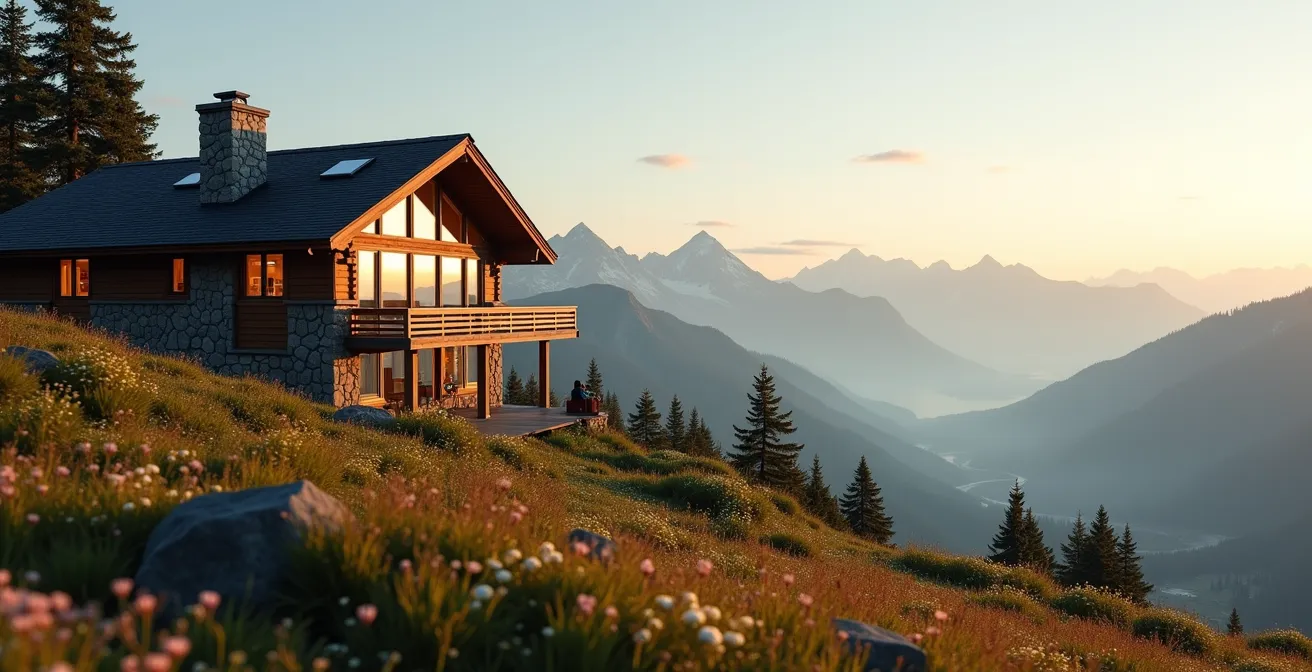
Successfully renting a large Canadian chalet isn’t about finding a deal; it’s about mastering the logistical and legal liabilities you inherit as a renter.
- Online rental scams are a growing threat, requiring rigorous verification before any payment.
- High ancillary fees (like cleaning) are not arbitrary but reflect the real costs of remote property management.
- Local bylaws on noise and waste carry significant personal fines and are strictly enforced in resort communities.
Recommendation: Prioritize diligent verification over booking speed, and treat rules around vehicle access, noise, and wildlife as non-negotiable components of your rental agreement to ensure a safe and successful trip.
The vision is captivating: a sprawling mountain chalet, snow falling softly outside, a fireplace crackling, and your entire group of friends or family gathered together. For many, this is the pinnacle of a Canadian winter vacation. The natural first step seems to be scouring online listings to find the perfect property at the best price. Many groups believe that booking early and reading a few reviews is sufficient due to diligence. They focus on the number of bedrooms and proximity to the ski lifts, assuming the rest will fall into place.
However, this is where a dream trip can begin to unravel. From my perspective as a property manager, the most common and costly issues for renters don’t stem from the property itself, but from a misunderstanding of the operational friction inherent in managing a large, remote home. These aren’t just suggestions; they are firm rules born from experience, local laws, and the logistical realities of mountain life. The difference between a seamless vacation and a logistical nightmare often lies in what is overlooked before the deposit is ever paid.
But what if the key to a perfect chalet rental wasn’t just about the property you choose, but about understanding the hidden ecosystem of rules and costs that surrounds it? The real challenge isn’t just avoiding a bad rental; it’s being a good renter in a community with very specific expectations. This requires looking beyond the beautiful photos and understanding the “why” behind the rental agreement’s fine print.
This guide will pull back the curtain on the critical details that are often missed. We will move beyond the basics and delve into the non-negotiable realities of renting in a Canadian mountain town, covering everything from identifying sophisticated rental scams and understanding vehicle requirements to navigating strict local bylaws that carry hefty fines. Consider this your insider briefing to ensure your group’s mountain getaway is memorable for all the right reasons.
To help you navigate these critical considerations, this article is structured to address the most common and costly pitfalls renters face. The following sections provide a comprehensive roadmap for a secure and enjoyable chalet rental experience.
Summary: A Property Manager’s Guide to Renting a Mountain Chalet in Canada: Avoiding Scams & Group Nightmares
- How to spot fake chalet listings on Craigslist before wiring a deposit?
- Why cleaning fees for large chalets can exceed $300 per stay?
- 4WD requirements: why your rental sedan won’t make it up the chalet driveway?
- Strict noise bylaws in Whistler neighborhoods: how to avoid a $1000 fine?
- Bear-proof garbage disposal: rules for chalet guests to prevent wildlife intrusion
- Why accommodation prices triple during “March Break” and Christmas?
- Why “glamping” in a geodesic dome costs more than a downtown hotel?
- Booking Lakeside Campgrounds: Surviving the Parks Canada “Launch Day” Frenzy
How to Spot Fake Chalet Listings on Craigslist Before Wiring a Deposit?
The allure of a “too good to be true” deal on a luxury chalet is a powerful hook, and scammers know it. The anonymity of platforms like Craigslist and social media marketplaces makes them fertile ground for fraudulent listings. These scams often involve hijacking photos and descriptions from legitimate rental sites, creating a convincing fake ad with a different contact person and a much lower price. The primary goal is to create a sense of urgency—claiming the property is in high demand for your desired dates—to pressure you into sending a deposit via a non-refundable method like a wire transfer or cryptocurrency. Once sent, the money is gone, and the “owner” vanishes.
The threat is not theoretical; it’s a growing problem across Canada. According to the Canadian Anti-Fraud Centre, there was a 15% increase in rental scams between 2019-2020 with $586,000 lost by victims. This underscores the need for extreme vigilance. The single most important rule is to never pay a deposit for a vacation rental via a method that offers no recourse or buyer protection. Reputable owners and property managers will always offer payment via credit card or through a secure booking platform like Airbnb or Vrbo, which holds your payment until after you’ve checked in.
To protect your group and your finances, you must shift from a mindset of trust to one of verification. Every detail of a listing should be treated with healthy skepticism until independently confirmed. This proactive diligence is the only effective defense against increasingly sophisticated scams.
Your 5-Point Verification Checklist for Online Listings
- Search the property address online along with the owner’s name. Check if multiple listings exist with different contact information, which is a major red flag.
- Use Google Maps Street View to confirm the property physically exists and that its exterior matches the listing photos. Pay attention to the landscape and neighboring properties.
- Contact the listed owner by phone, not just email or text. Ask specific, local questions a real owner would know, such as the name of their recommended snow removal service or the reliability of cell reception at the property.
- Request verifiable proof of ownership. A recent municipal tax bill or utility statement (with sensitive information redacted) can confirm their identity and connection to the address.
- Never, under any circumstances, pay via wire transfer, e-transfer, gift cards, or cryptocurrency. Insist on using a credit card, as it provides chargeback protection in case of fraud.
Why Cleaning Fees for Large Chalets Can Exceed $300 Per Stay?
After finding the perfect chalet, many groups are surprised by a cleaning fee that can range from $300 to over $500. It’s often perceived as an exorbitant add-on, leading renters to wonder if it’s a negotiable cash grab. The reality, however, is that this fee directly reflects the significant and specialized labor required to “turn over” a large, multi-level property in a remote mountain location. Unlike a standard hotel room, a 5-bedroom chalet that sleeps 12-16 people generates an immense amount of work that must be completed within a tight window, typically between an 11 a.m. checkout and a 4 p.m. check-in.
The high cost is driven by several factors. First is the sheer volume of laundry; a group of 16 can generate over a dozen sets of bed linens and towels, which often requires multiple industrial-sized machines or even off-site laundering services. Second is the deep cleaning of multiple kitchens and bathrooms to a hospitality-grade standard. Finally, there are tasks unique to mountain properties, such as hot tub maintenance (draining, cleaning, and chemical balancing), and specialized waste disposal, as many chalets are not on a municipal garbage route and require private contractors.
This fee isn’t a profit center; it’s a direct pass-through of the operational costs required to maintain a high standard of cleanliness and readiness for the next guest. These costs are a fixed part of managing a large-capacity rental in a high-demand market.
This breakdown illustrates why the fee for a large group chalet is substantially higher than for a small condo. Each task requires significant time and resources, and professional cleaning services in resort towns charge a premium for their labor, especially for short-notice or weekend turnovers.
| Cleaning Task | Time Required | Estimated Cost |
|---|---|---|
| 16+ sets of linens laundering | 4-5 hours | $80-120 |
| Multiple bathroom sanitization | 2-3 hours | $60-90 |
| Deep kitchen cleaning | 2 hours | $50-70 |
| Special waste disposal (remote areas) | 1 hour | $40-60 |
| Hot tub maintenance | 1 hour | $30-50 |
4WD Requirements: Why Your Rental Sedan Won’t Make It up the Chalet Driveway?
Many chalet listings include a critical but often underestimated requirement: “4WD/AWD with winter tires mandatory.” Renters from urban centers or milder climates may dismiss this as a mere suggestion, assuming their front-wheel-drive rental sedan with “all-season” tires will suffice. This is one of the most dangerous and disruptive mistakes a group can make. Mountain access roads and chalet driveways are not like city streets. They are often unpaved, incredibly steep, and covered in a treacherous layer of packed snow and ice that is not regularly cleared by municipal plows.
Your rental sedan will not make it. The result is predictable: the car gets stuck, blocking the narrow road for you and all other residents. This creates a stressful and hazardous situation, often requiring an expensive emergency tow service, which can take hours to arrive in a remote area. It’s a scenario that ruins the first day of a vacation and can cause significant friction within a group. The property owner or manager includes this requirement not as an upsell, but as a crucial piece of safety and logistical advice based on years of seeing this exact scenario play out. The infrastructure premium of a mountain home includes dealing with this challenging access.
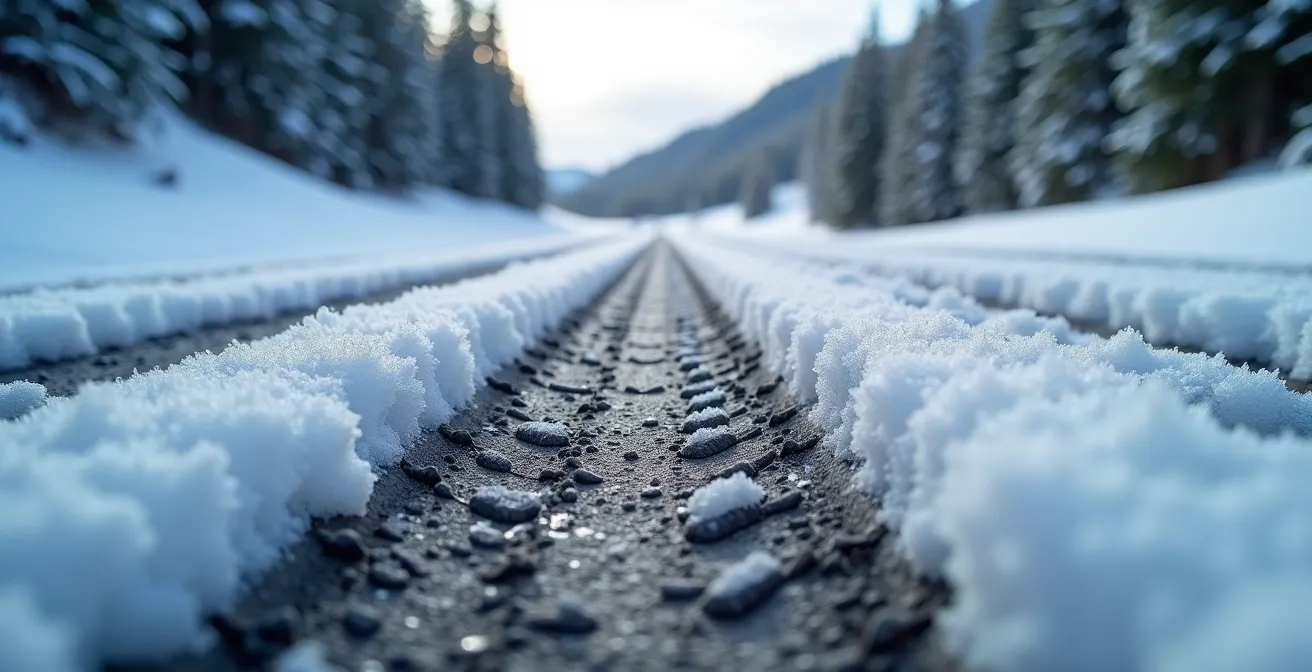
The legal and safety standards for winter driving in Canada’s mountain regions are also strict. As Transport Canada advises, the right equipment is not just a recommendation but often a legal mandate.
In Canada, the combination of 4WD/AWD and proper winter tires (not ‘all-season’) is crucial. Provincial laws, like in Quebec and parts of B.C., mandate winter tires on many routes.
– Transport Canada, Provincial Winter Driving Regulations Guide
When booking your group’s transportation, ensure that at least one vehicle meets these requirements. It should be the designated vehicle for luggage and supply runs. This isn’t about luxury; it’s about the fundamental ability to safely access the property you’ve rented.
Strict Noise Bylaws in Whistler Neighborhoods: How to Avoid a $1000 Fine?
The serene, quiet environment of a mountain neighborhood is a huge part of its appeal. However, for a large group on vacation, the transition from celebratory excitement to a bylaw infraction can happen quickly and unexpectedly. Resort municipalities like Whistler, Mont-Tremblant, and Canmore have extremely strict noise bylaws designed to protect the peace for full-time residents. These are not sleepy towns; they are highly regulated communities that take quality of life seriously. The most common source of conflict? Hot tubs and outdoor decks, especially after 10 p.m.
Quiet hours, typically from 10 p.m. to 8 a.m., are aggressively enforced. Voices, especially those of a large group, carry incredibly far in the still, cold mountain air. What seems like a normal conversation on a deck can be heard clearly by neighbors several houses away. A single complaint from a neighbor will trigger a visit from bylaw officers or private security, and the consequences are immediate and severe. Recent bylaw changes in Whistler have seen fines increase substantially, with fines starting at $500 per offence for noise violations. Some rental agreements even stipulate a “zero tolerance” policy, where a single verified complaint can result in the immediate eviction of the entire group without a refund, on top of the fine.
It is crucial to understand that the bylaw liability falls directly on the individual who signed the rental agreement. They are personally and financially responsible for the fine, regardless of which member of the group caused the disturbance. Before your trip, the group leader must communicate this reality to everyone. The “party” must stay indoors with the doors and windows closed after 10 p.m. This isn’t a suggestion to be quiet; it’s a contractual and legal obligation with significant financial consequences.
Bear-Proof Garbage Disposal: Rules for Chalet Guests to Prevent Wildlife Intrusion
Renting a chalet in the Canadian mountains means you are a temporary guest in a wild environment. The most critical aspect of this co-existence is managing your garbage. Improperly stored food and waste is the number one cause of negative human-wildlife encounters. A single bag of trash left on a deck or in an unsecured bin is an open invitation to local black bears, who have an extraordinary sense of smell. This isn’t a charming wildlife sighting; it’s a dangerous situation that can lead to property damage and, more tragically, the death of the animal.
To prevent this, all mountain municipalities enforce strict rules requiring waste to be stored exclusively in certified bear-proof bins. These are heavy-duty metal containers with a complex latching system that humans can operate but bears cannot. Your rental agreement will contain specific, non-negotiable instructions: all garbage must be bagged, tied securely, and placed inside these bins immediately. Nothing—not a single bottle or pizza box—can be left outside, on a deck, or in a vehicle overnight. Failure to comply can result in large fines from the municipality, as well as charges from the property manager for cleanup and potential damages.

The stakes are incredibly high, extending beyond a simple fine. This rule is fundamentally about environmental coexistence and protecting the local wildlife from our impact. A conservation officer’s warning puts this responsibility into sharp perspective.
A bear that becomes habituated to human garbage is often euthanized by conservation officers. This transforms the rule from an inconvenience into a crucial act of wildlife preservation that all chalet guests must take seriously.
– Conservation Officer Warning
As a renter, your group has a direct role to play in conservation. Designate a clear process for garbage collection within your group and ensure every single person understands that the rules are absolute. It’s a small effort that has a profound impact on preserving the natural beauty and wildlife you came to enjoy.
Why Accommodation Prices Triple During “March Break” and Christmas?
Renters are often shocked to see the price of their target chalet double or even triple during peak periods like the Christmas holidays and March Break. This isn’t arbitrary price gouging by owners; it’s a direct reflection of intense, concentrated demand overwhelming a fixed supply of large-capacity properties. The entire Canadian vacation rental market, projected to reach a market volume of US$1.88bn in 2024, operates on the principles of supply and demand, and nowhere is this more evident than in premier ski resorts during winter.
The phenomenon of peak season compression is especially powerful in Canada due to the nature of school holidays. While Christmas creates a universal two-week spike, March Break is a more complex and sustained event. Different provinces—and even different school boards within a province—have their breaks on different weeks. This creates a “staggered” high season that can last for five to six consecutive weeks from late February to early April.
During this extended period, every large chalet that can accommodate a family or group is in play. The demand from Ontario, Quebec, Alberta, and British Columbia, combined with international visitors, creates a bidding war for a finite number of properties. Owners and property managers use dynamic pricing models that respond to this demand in real-time. The price rises not just because it’s a holiday, but because the property could be rented three or four times over to different groups willing to pay the premium. For groups on a budget, the most effective strategy is to plan your trip for the “shoulder seasons” just before or after these major peaks, such as early December or April.
Case Study: The Impact of Canada’s Staggered March Break
The Canadian ‘Staggered March Break’ creates a sustained 5-6 week super-peak season from late February to early April. As each major province like Ontario, Quebec, and Alberta schedules different break weeks, it eliminates any lull in demand. This drives up prices consistently for large chalets that can accommodate 12 or more people, as owners have guaranteed booking potential throughout this entire extended period, not just for a single week.
Why “glamping” in a Geodesic Dome Costs More Than a Downtown Hotel?
In the search for a unique Canadian getaway, many groups are drawn to “glamping” (glamorous camping) options like geodesic domes, yurts, or tiny cabins. The sticker shock often follows: a two-person dome in a remote location can cost upwards of $500 per night, significantly more per person than a luxury downtown hotel or even a large shared chalet. This price seems counterintuitive—shouldn’t a smaller, off-grid structure be cheaper? The answer lies in the massive infrastructure premium required to provide a comfortable, hotel-like experience in a place that has no existing utilities.
A downtown hotel is connected to a city grid for power, water, and sewage. A geodesic dome is not. The owner must build and maintain a completely independent, miniature utility company on-site. This includes a robust solar power system with battery storage, a specialized septic system designed for remote and often rocky terrain, and large propane tanks for heating and on-demand hot water. Furthermore, guaranteeing year-round access requires expensive private snow removal contracts for the access road. All of these systems demand significant upfront investment and ongoing maintenance, costs that are factored directly into the nightly rate.
Essentially, you are not just paying for the unique structure; you are paying for the novelty and the complex, expensive infrastructure that makes a luxurious, off-grid experience possible. These hidden costs are substantial:
- Solar power system installation and maintenance: $15,000-30,000
- Specialized septic system for remote locations: $10,000-20,000
- Propane heating and hot water systems: $5,000-8,000
- 4-season road access and snow removal contracts: $3,000-5,000 per year
- Premium insurance for unique structures: $2,000-4,000 per year
While a glamping experience offers unparalleled tranquility and connection to nature, it’s important for groups to understand that the price reflects the high cost of creating comfort and safety far from the convenience of the city grid.
Key Takeaways
- Diligently verify all rental listings before payment; insist on credit card transactions and be wary of deals that seem too good to be true.
- Understand that high fees for services like cleaning are not arbitrary but reflect the real, significant costs of operating a large, remote property.
- Strictly adhere to all local bylaws regarding noise, garbage, and parking, as the person who signs the rental agreement is personally liable for hefty fines.
Booking Lakeside Campgrounds: Surviving the Parks Canada “Launch Day” Frenzy
For many groups, an alternative to a private chalet is a classic Canadian experience: camping at a national or provincial park. However, securing a spot for a group at a popular lakeside campground like those in Banff or Jasper has become a competitive sport. The Parks Canada reservation system opens on a specific “launch day” for the entire season, and demand is so high that virtually all prime summer campsites are booked within minutes. This “launch day frenzy” leaves thousands of hopeful groups disappointed, with their vacation plans in limbo.
For groups that require multiple adjacent sites to stay together, the odds are even lower. This system forces a choice between a stressful, lottery-like booking experience with no guarantee of success, or seeking a more reliable alternative. While camping offers an unparalleled connection to nature, it comes with significant trade-offs in comfort, privacy, and amenities, especially for a large group. A private chalet rental, while more expensive, eliminates these uncertainties entirely.
As the Canadian Tourism Commission notes, private rentals offer a compelling, stress-free alternative for groups who value certainty and comfort.
Missed out on the Parks Canada booking frenzy? A private lakeside chalet is a better, stress-free alternative for your group, with guaranteed availability and privacy.
– Canadian Tourism Commission, Alternative Accommodation Guide 2024
The comparison below highlights the fundamental differences in the experience, making it clear why a private chalet is often the superior choice for group logistics and comfort.
| Feature | Parks Canada Campground | Private Chalet |
|---|---|---|
| Booking availability | Lottery system, sells out in minutes | Year-round availability |
| Privacy | Shared facilities, neighboring sites | Complete privacy |
| Amenities | Basic facilities, no hot tub | Full kitchen, hot tub, luxury amenities |
| Group capacity | Max 6-8 per site typically | 12-20 people in one property |
| Weather protection | Exposed to elements | Climate-controlled comfort |
By understanding these hidden realities—from due diligence against scams to respecting local bylaws—your group is now equipped to move beyond the role of a mere tourist and become a responsible, informed renter. This knowledge transforms the booking process from a game of chance into a strategic plan, ensuring your Canadian mountain vacation begins with confidence and ends with great memories. Use these insights to book your next group chalet with the assurance of a seasoned professional.
Frequently Asked Questions About Chalet Rental Rules
What are the quiet hours in major Canadian ski resort towns?
Most resort municipalities, including popular destinations like Whistler, Mont-Tremblant, and Canmore, enforce strict quiet hours from 10 PM to 8 AM. Fines for violations are significant, typically ranging from $250 to $500 per offense.
Who is liable for noise violations in a rental property?
The individual who signed the rental agreement is held personally and financially responsible for all fines and any consequences, which can include potential eviction. This liability applies regardless of which person or people in the group actually made the noise.
What is the main source of noise complaints in mountain chalets?
Hot tubs are overwhelmingly the primary source of noise complaints. Voices carry exceptionally well in quiet, snowy mountain environments, especially at night. A conversation at a normal volume in a hot tub can easily disturb neighbors and lead to a bylaw complaint.