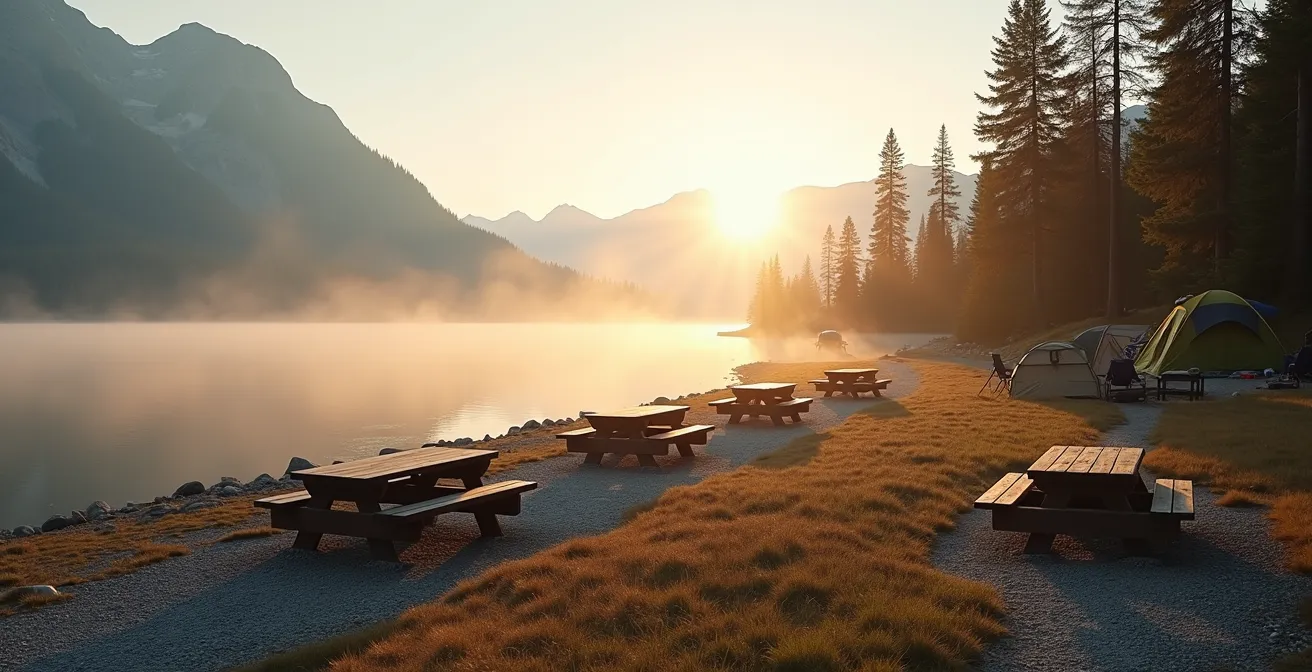
Scoring a prime Parks Canada campsite isn’t about luck; it’s a zero-sum game you can win with the right strategy.
- Exploit system mechanics like staggered launches and “split-stay” options to find hidden availability.
- Master geographical arbitrage by using provincial parks as tactical alternatives, not just backups.
Recommendation: Shift your mindset from a hopeful camper to a reservation strategist. Your mission begins with pre-launch reconnaissance, not at 8:00 AM.
The digital clock ticks to 8:01 AM. Your heart sinks. The coveted lakeside spot in Banff, the one you meticulously planned for, is gone. “Fully Booked” glares back from the screen. For thousands of Canadian campers, this is the frustrating reality of Parks Canada’s reservation “launch day.” The common advice is always the same: be prepared, log in early, and have backup dates. But when thousands of people follow the same advice, it ceases to be an advantage. It’s just the price of entry to a high-stakes lottery.
But what if it isn’t a lottery? What if the entire process is a game of strategy, where understanding the system’s mechanics and the battlefield’s geography gives you a decisive edge? This is not a guide about hoping for the best. This is a tactical playbook for outmaneuvering the competition. We will move beyond the basics and into the realm of strategic warfare: exploiting staggered launch dates, leveraging geographical arbitrage, and running environmental defense to protect the value of the campsite you fought so hard to win. Forget luck. It’s time to prepare for battle.
This guide will provide a complete tactical briefing, breaking down every critical phase of the reservation mission. From high-cost northern expeditions to the non-negotiable rules of engagement on the ground, you will learn to think and act like a reservation commander.
Table of Contents: Your Tactical Briefing for Parks Canada Reservations
- The 8:Traveling to Northern Territories: Managing High Costs and Limited Flights
- Tent pad sizes: ensuring your 6-person tent fits on the specific site dimensions
- Provincial vs. National Parks: finding availability when the big names are full?
- Black fly season in June: why lakeside camping can be miserable without preparation?
- Alcohol bans on long weekends: understanding the strict rules in provincial parks
- When to book national park accommodations to ensure availability for July?
- Why purchasing a Park Pass is mandatory for through-driving on scenic loops?
- Campervan Adventures: Solving the “Where Can I Legally Park” Nightmare?
The 8:Traveling to Northern Territories: Managing High Costs and Limited Flights
For the truly dedicated strategist, the northern territories—Yukon, NWT, and Nunavut—represent the ultimate high-risk, high-reward mission. These are not casual weekend trips; they are logistical expeditions where the cost of failure is measured in thousands of dollars. The primary challenge is not reservation availability, but the staggering cost of access. A flight to Whitehorse or Yellowknife can easily cost $800 to $1,500 from a major Canadian hub, with specialized vehicle rentals and fuel adding hundreds more per day.
Success in this theatre of operations demands a “hub and spoke” strategy. Fly into a central hub like Whitehorse, secure one expensive 4×4 rental, and use it to execute strikes on multiple objectives, such as Kluane National Park and Tombstone Territorial Park. Timing is also a weapon. Targeting the shoulder season of late August or early September allows you to flank the worst of the bug season, catch the first glimpse of the Aurora Borealis, and potentially benefit from off-peak rental savings before seasonal closures lock down the region.
Finally, northern logistics are unforgiving. This is not a place for improvisation. Your plan must include renting a satellite communicator, purchasing bear spray upon arrival (as it cannot be flown), and mapping out service stations, as there can be 300-kilometer gaps between them. Victory here is defined by meticulous financial and logistical planning long before you ever click “reserve.”
Tent pad sizes: ensuring your 6-person tent fits on the specific site dimensions
Winning the reservation is only half the battle. Arriving on-site to discover your brand-new 6-person tent doesn’t fit the 10×10 foot tent pad is a catastrophic failure of intelligence. This is a common rookie mistake. The “devil is in the details,” and in the world of Canadian campgrounds, the most diabolical detail is often the precise dimensions of your designated site. Parks Canada’s site details provide this information for a reason; ignoring it is strategic negligence.
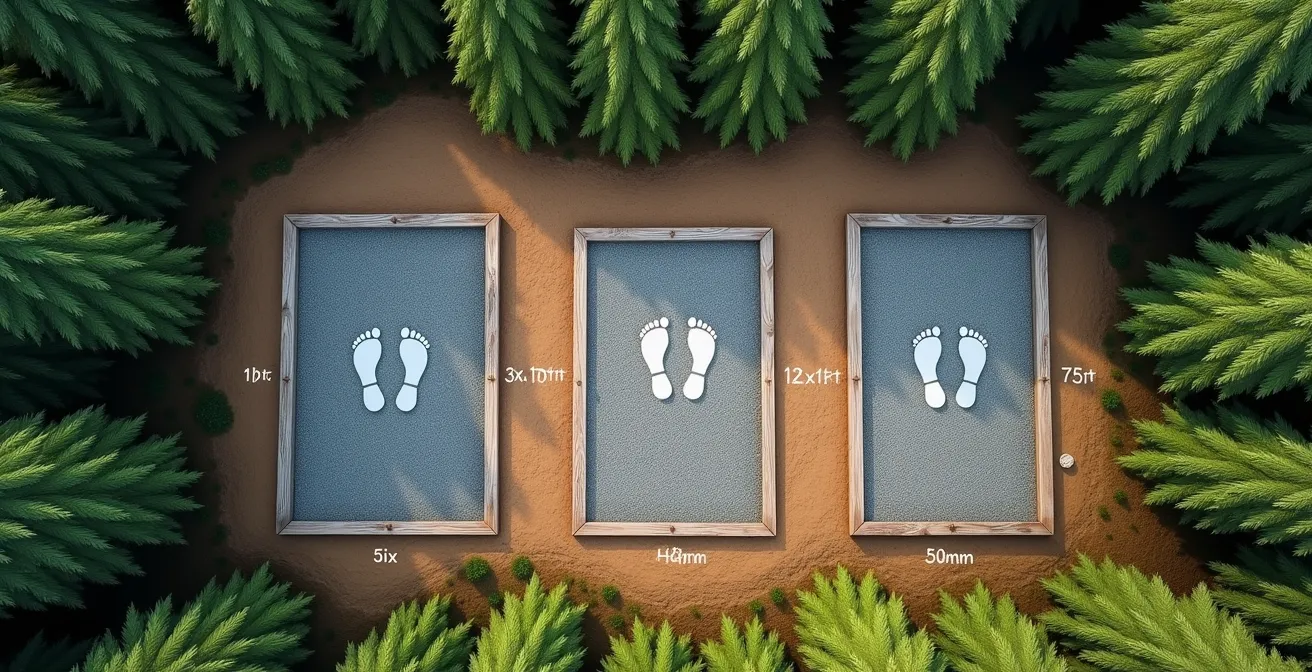
As the visualization shows, not all pads are created equal. Before you book, you must cross-reference your tent’s footprint with the site’s listed dimensions. But what if the perfect site with the right dates has the wrong pad size? This is where a key system mechanic comes into play. According to official Parks Canada reservation instructions, you can use the “Split your stay across sites” feature. This tactical maneuver allows you to book two different (but adjacent) sites for different nights, potentially securing your desired dates by being flexible on location within the same campground.
This level of micro-management separates the amateur from the strategist. You must not only know what you want but also the exact physical constraints of your gear and how to manipulate the booking system to accommodate them. A successful mission depends on securing a site that is not just available, but truly viable for your equipment.
Provincial vs. National Parks: finding availability when the big names are full?
When the primary objective—a site in Banff or Jasper—is overrun, the amateur gives up. The strategist executes a flanking maneuver known as geographical arbitrage. This isn’t about settling for “backups”; it’s about tactically pivoting to provincial parks that offer comparable experiences with significantly higher availability. Canada’s provincial park systems are not a consolation prize; they are a massive, parallel network of high-value targets.
The challenge is that this requires navigating a fragmented command structure. As each province operates its own unique portal, you must be prepared to engage with up to 10 different provincial booking systems. This complexity deters the casual camper, creating an opportunity for the prepared strategist. Instead of endlessly refreshing the Parks Canada page, you should have browser tabs open for the relevant provincial systems, ready to strike.
The “Sister Park Strategy” is your playbook for this. It involves identifying a provincial park with similar geography and features to your prime national park target. This table outlines some of the most effective pivots:
| If National Park is Full | Book Provincial Alternative Instead | Key Advantage |
|---|---|---|
| Jasper/Banff (AB) | Peter Lougheed or Kananaskis Country | Similar mountain scenery, less crowded |
| Bruce Peninsula NP (ON) | Awenda or Killbear Provincial Park | Georgian Bay access, better availability |
| Pacific Rim NP (BC) | Juan de Fuca Provincial Park | Coastal wilderness, whale watching |
| Fundy NP (NB) | Hopewell Rocks Provincial Park | Bay of Fundy tides, unique formations |
By treating provincial parks as a strategic asset, you dramatically increase your probability of success. While everyone else is fighting for a handful of sites in one system, you are operating across a dozen, multiplying your chances of securing a world-class camping experience.
Black fly season in June: why lakeside camping can be miserable without preparation?
You’ve done it. You won the click-war and secured a pristine lakeside campsite for a week in June. The victory feels sweet until you arrive and are swarmed by a merciless cloud of black flies. Your triumph turns into a week-long miserable retreat inside your tent. This is not a camping trip; it’s a tactical failure. Securing the site is pointless if you cannot enjoy it. Environmental defense is a critical, non-negotiable phase of your mission.
The period from May to July, especially in the Canadian Shield regions of Ontario and Quebec, is peak season for black flies and mosquitoes. A lakeside site, which seems idyllic, is often the humid, sheltered cove where these pests breed and thrive. A true strategist plans for this enemy. According to official camping advisories from Parks Canada, effective defense is multi-layered:
- Time your visit strategically: If possible, avoid the May-July peak in high-risk zones. Late August offers a similar experience with minimal insect interference.
- Invest in a screened dining tent: This is not a luxury; it’s an essential piece of equipment for any Eastern Canada campaign. It creates a bug-free zone for eating and socializing.
- Choose defensive campsites: During booking, prioritize sites on points of land or in open areas exposed to wind, which naturally deters insects, over those in sheltered coves.
- Master smoke positioning: Your campfire is a weapon. Place it upwind of your primary living area to create a natural smoke barrier that drives bugs away from your site.
- Pack Canadian-approved repellents: Formulations with 30% DEET or those from proven brands like Watkins are your last line of personal defense.
Do not underestimate the enemy. The insect variable can single-handedly ruin the most perfectly planned trip. A robust bug-season survival strategy ensures you can actually hold and enjoy the ground you fought to win.
Alcohol bans on long weekends: understanding the strict rules in provincial parks
Another critical piece of battlefield intelligence is understanding the “Rules of Engagement” for your chosen park, particularly regarding alcohol. Many campers are caught off guard by the strict, temporary alcohol bans enforced in many provincial parks during major long weekends. The Victoria Day (“May Two-Four”) and Labour Day long weekends are notorious for this. As detailed in the Ontario Parks reservation policies, these are not mere suggestions; they are zero-tolerance regulations.
Getting caught with alcohol during a ban isn’t a slap on the wrist. It results in immediate eviction and fines up to $365. Park wardens conduct regular and thorough enforcement patrols, and pleading ignorance is not a valid defense. Your hard-won reservation is instantly forfeit. This rule is designed to prevent the rowdy parties that once plagued these weekends, ensuring a peaceful experience for all. For the strategist, it’s a simple rule to be followed to protect your mission’s success.
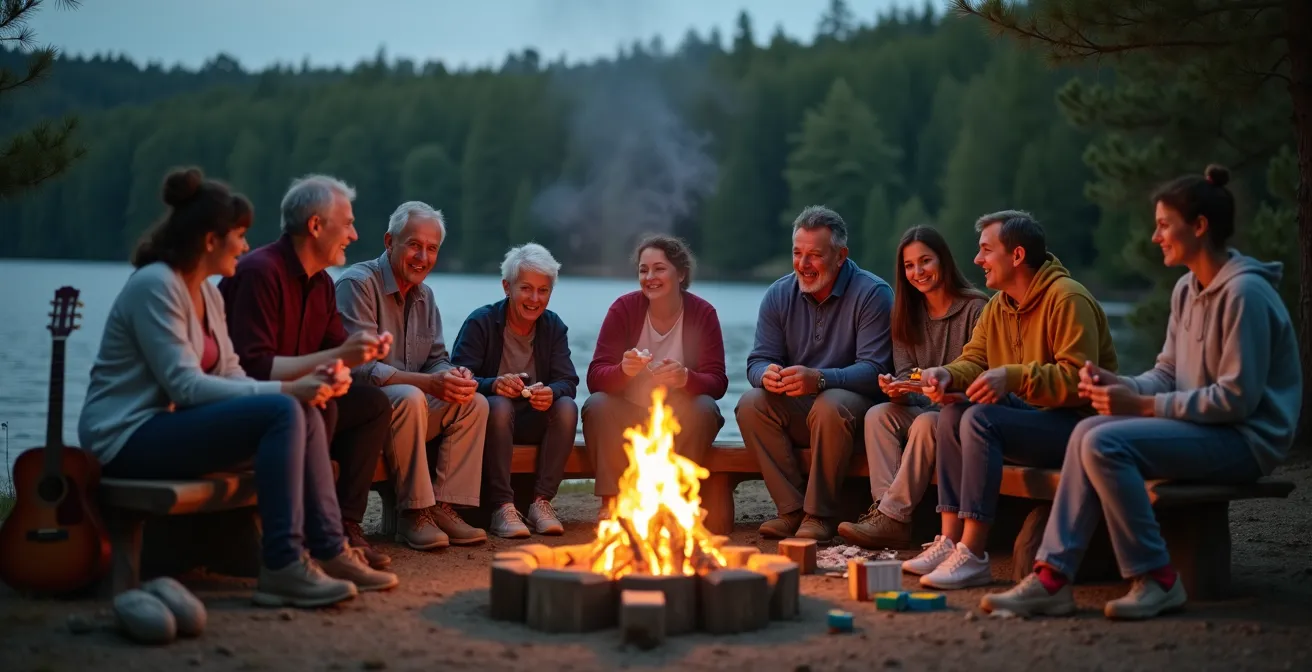
However, a “dry” weekend doesn’t mean a “boring” weekend. In fact, it presents a tactical opportunity to focus on different kinds of activities that are often overlooked. Instead of planning for beers around the fire, a strategist plans for an epic weekend of alternative adventures:
- Organize sunrise photography expeditions to capture the golden hour landscapes.
- Host campfire cooking competitions focused on gourmet meal challenges.
- Plan night sky astrophotography sessions, especially during new moon periods.
- Create wildlife spotting bingo cards for a family-friendly competition.
- Schedule ambitious day hikes to summits that would normally be too challenging.
Knowing and respecting the rules is paramount. It protects your reservation and forces a more creative and often more rewarding approach to a long weekend in the wild.
When to book national park accommodations to ensure availability for July?
This is D-Day. The moment the entire campaign hinges upon. To secure a site for the peak month of July, you must be ready on the specific “launch day” for your target park, which typically occurs in January. The competition is fierce, with popular campgrounds in Banff and Jasper becoming fully booked for the entire summer within minutes. The key is to understand how the system’s queue actually works. It is not first-come, first-served.
As Parks Canada states in their official instructions, there is a crucial mechanism at play. It is a system designed to manage overwhelming server load, but one a strategist can understand and prepare for.
30 minutes prior to reservations opening, anyone navigating the reservation website will be directed to a waiting page. At exactly 8 am local time, anyone on that waiting page is randomly assigned a place in a queue.
– Parks Canada, Official Parks Canada Reservation Instructions
This means logging in at 7:00 AM gives you no advantage over someone who logs in at 7:55 AM. The critical window is being on that waiting page before the 8:00 AM randomization. To maximize your chances, have multiple browsers or devices open, each on the waiting page, to get multiple “tickets” in the random lottery. Furthermore, the launch is not simultaneous for all parks. It’s a staggered launch, a critical piece of intel. For 2025 bookings, key dates included Waterton Lakes on January 22, Banff on January 24, and Jasper on January 28, all at 8:00 am MT. You must build a calendar of these dates and be ready for each launch as a separate operation. Being ready at 8:00 a.m. local time on launch day is the absolute minimum requirement for having any chance at a weekend spot in July.
Why purchasing a Park Pass is mandatory for through-driving on scenic loops?
A common and costly mistake for visitors, especially those just passing through, is misunderstanding Canada’s National Park Pass requirements. The rule is simple: if you stop for any reason within the park boundaries, you need a pass. This applies even if your “stop” is just pulling over for a photo, using a washroom, or getting gas. While non-stop transit on major arteries like the Trans-Canada Highway #1 through Banff is exempt, the moment you exit the highway to visit a viewpoint, you are required to have a valid pass.
This rule is most critical on designated scenic routes. The entire Icefields Parkway (Highway 93) between Banff and Jasper, for example, is considered a park facility. You cannot legally drive any portion of this world-famous route without a valid National Park pass. Wardens patrol these routes, and being caught without a pass will result in a fine that far exceeds the cost of a day pass.
For any trip longer than a few days, the tactical choice is clear: purchase a Parks Canada Discovery Pass. A break-even analysis shows that for a family, the annual Discovery Pass becomes cheaper than buying individual daily passes after just seven days. The annual pass, which costs around $145.25 for a family/group, offers unlimited access to over 80 national parks and historic sites for a full year, providing immense value and peace of mind. Buying it online in advance is the smartest move, though they are also available at park entry gates and visitor centres.
Key takeaways
- Strategy over luck: Winning a campsite is a game of tactical planning, not chance.
- Geographical arbitrage: Use provincial parks as strategic alternatives, not just backups.
- Know the rules: Understand system mechanics, alcohol bans, and pass requirements to prevent mission failure.
Campervan Adventures: Solving the “Where Can I Legally Park” Nightmare?
For the mobile strategist in a campervan, the booking frenzy presents a different kind of challenge: not “if” you can get a site, but “where” you can legally and safely park for the night. The dream of pulling over on any scenic lookout is quickly dashed by “No Overnight Camping” signs and the threat of municipal fines. A successful campervan mission requires a clear understanding of the legal hierarchy of overnight parking in Canada.
Your plan should be layered, with multiple contingencies. While official campgrounds are the top priority, having a robust set of fallback options is what separates a smooth trip from a nightly scramble for a safe spot. This is your operational framework for solving the “where to park” problem. In British Columbia, for instance, the extensive network of over 1,000 Recreation Sites offers a fantastic alternative. These sites, often documented in Backroad Mapbooks (BRMB), are typically free or low-cost, operate on a first-come, first-served basis, and provide basic amenities, making them a cornerstone of any BC campervan strategy.
Your Action Plan: The Hierarchy of Legal Campervan Parking
- Priority 1: Official Campgrounds – Book National/Provincial park sites whenever possible. This is always the safest and most legal option.
- Priority 2: Private Campgrounds – Identify KOA, Good Sam, or other private options along your route. They are a reliable, albeit more expensive, fallback.
- Priority 3: BC/Alberta Recreation Sites – Research these free or low-cost, first-come-first-served sites using resources like Backroad Mapbooks.
- Priority 4: Crown Land – Check provincial regulations for resident vs. non-resident rules and stay limits (typically 14-21 days). This requires more research but offers true freedom.
- Last Resort: Retail Lots (Walmart/Canadian Tire) – Always go inside and get explicit permission from the manager. Check local municipal bylaws online to avoid tickets.
By building your itinerary around this tiered strategy, you transform the nightly stress of finding a spot into a predictable and flexible plan, ensuring your adventure remains focused on the journey, not the parking lot.
Now that you have the tactical playbook, your mission is clear. Begin your reconnaissance, mark your calendar with the launch dates, and prepare your equipment. The next launch day is not a lottery; it’s an opportunity to execute a flawless plan.
Frequently Asked Questions about Park Passes and Reservations
Do I need a park pass just to drive through on the Trans-Canada Highway?
No, according to Parks Canada’s official terms, non-stop transit on Trans-Canada Highway #1 does not require a pass. However, ANY stop (for photos, washroom, gas) requires a valid park pass.
What about the Icefields Parkway (Highway 93)?
The entire Icefields Parkway between Banff and Jasper is considered a park facility. A valid National Park pass is mandatory for any portion of this scenic route.
Can I buy a pass at park entrance gates?
Yes, passes are available at park entry gates, Parks Canada visitor centres, and staffed campground kiosks.