
Acquiring authentic Indigenous art is an investment in cultural sovereignty, not just a purchase.
- Authenticity is confirmed by understanding systems of provenance like the Igloo Tag and distinct regional styles, not just by looking for a signature.
- True support means ensuring your money reaches the artist or a community-owned business, bypassing the majority of souvenir shops that sell imitations.
Recommendation: Shift your mindset from consumer to collector by focusing on the story, the artist, and the economic reciprocity of your purchase.
For the discerning collector and the thoughtful traveller alike, acquiring a piece of Indigenous art in Canada is an opportunity to connect with a story that is thousands of years old. Yet, the marketplace can be a fraught landscape. The desire for a meaningful connection to the land and its original peoples is often exploited by a pervasive trade in mass-produced imitations. These knockoffs not only devalue the cultural significance of the art but also divert critical income from the artists and communities who are the rightful stewards of their heritage.
The common advice—”buy from a reputable gallery” or “look for a signature”—is a starting point, but it is insufficient. It fails to equip the buyer with the deeper knowledge required to navigate this complex environment with confidence and respect. This guide moves beyond those platitudes. We will not simply list red flags; we will build a framework for connoisseurship. The key is not merely to spot a fake, but to understand the intricate systems of authenticity that underpin true Indigenous art.
This involves appreciating the nuances of regional styles, from the bold formlines of Coast Salish art to the transformative spirit of Inuit sculpture. It requires understanding the economic structures, like artist co-operatives, designed to ensure your investment fosters cultural and financial sovereignty. By shifting your perspective from that of a simple consumer to that of an informed patron, you transform a transaction into a meaningful act of economic reciprocity and cultural appreciation. This is how you find a piece that holds not just aesthetic appeal, but genuine, lasting value.
To navigate this world with the discernment it deserves, this guide provides a structured approach. We will explore the specific tools for verifying provenance, the indicators of investment value, and the critical differences between authentic creation and mass-market imitation. You will learn to see the art not just as an object, but as the product of a specific culture, community, and creator.
Summary: A Curator’s Guide to Identifying Authenticity in Canada
- How to verify the “Igloo Tag” on Inuit carvings to ensure provenance?
- Traditional prints vs. modern sculpture: what holds value for investment?
- Buying mass-produced knockoffs in tourist souvenir shops: the visual clues
- Why distinct regional styles differ between Coast Salish and Inuit art?
- Shipping heavy stone carvings home without damage or customs issues
- Why you should buy art directly from Indigenous creators rather than souvenir shops?
- Member-owned businesses: ensuring your tourism dollars stay in the community
- Engaging with Indigenous Heritage: Etiquette for Visitors on First Nations Land
How to verify the “Igloo Tag” on Inuit carvings to ensure provenance?
For collectors of Inuit art, the “Igloo Tag” is the single most important symbol of authenticity. Officially named the “Certified Authentic” tag, this small label was introduced by the Canadian government in 1958 to protect the economic interests and cultural integrity of Inuit artists. Its presence signifies that the work was handcrafted by an Inuk artist in Canada. Given that a stunning 25% of all Inuit over the age of 14 are involved in creating visual arts, protecting this economic lifeline is paramount. The tag is a primary tool in the system of provenance, providing a direct link from the object to its creator and community.
However, as with any symbol of value, the Igloo Tag itself can be subject to forgery. A discerning buyer must therefore know how to authenticate the tag itself. This involves more than a cursory glance. You must examine its material, the information it contains, and its consistency with the piece it accompanies. An authentic tag is a piece of documentation, carrying the artist’s name, their community of origin, and sometimes a disc number—a unique identifier assigned to many artists in the mid-20th century. For older pieces, the paper and print quality should feel appropriate for their era, not like a modern, glossy reproduction. Verifying these details is the first step in building a piece’s verifiable history and ensuring your purchase supports the intended artist.
Your Action Plan: Verifying Igloo Tag Authenticity
- Artist Information: Check that the tag includes fields for the artist’s name, their home community, and a disc number.
- Material & Language: Examine the paper quality for age-appropriateness and look for the presence of traditional Inuktitut syllabics on the label.
- Cross-Reference: Use the artist’s information to cross-reference them with the official Inuit Art Foundation’s online artist database.
- Age Consistency: For older pieces, verify the tag material is not modern plastic or paper, and for pre-1958 works without tags, insist on gallery-provided provenance documentation.
- Gallery Provenance: For any significant purchase, especially historical ones, request the full provenance record from the gallery, tracing ownership back as far as possible.
Traditional prints vs. modern sculpture: what holds value for investment?
When considering Indigenous art as an investment, it’s crucial to move beyond a monolithic view and understand the different tiers of the market. The conversation is not simply about “prints versus sculpture,” but about the artist’s career stage, the work’s historical significance, and its rarity. An investment strategy requires the same diligence as in any other asset class, balancing risk with potential for appreciation. Works by “blue-chip” masters—iconic figures like printmaker Kenojuak Ashevak or sculptor Bill Reid—are considered low-risk investments. Their legacies are cemented, and their works show steady, reliable growth, though they command a high entry price.
Conversely, acquiring works from emerging or mid-career artists presents a higher-risk but potentially higher-reward scenario. These are often contemporary artists gaining recognition through awards and inclusion in major exhibitions. As the Art Gallery of Ontario (AGO) notes in its collection strategy, a critical goal is acquiring new Inuit artworks that express the current state of affairs in the North. This institutional focus on contemporary work validates its cultural and potential financial value. Limited edition prints, particularly from renowned co-operatives like those in Cape Dorset (Kinngait), offer a balanced entry point, combining affordability with strong potential for appreciation due to their controlled scarcity and established reputation.
This comparative data, drawn from an analysis of the Indigenous art market in Canada, illustrates the distinct risk and reward profiles for a collector.
| Investment Type | Risk Level | Price Range | Growth Potential | Example Artists |
|---|---|---|---|---|
| Blue Chip Masters | Low | $10,000+ | Steady 5-10% yearly | Kenojuak Ashevak, Bill Reid |
| Emerging Mid-Career | Medium-High | $1,000-5,000 | 15-30% potential | Contemporary award winners |
| Limited Edition Prints | Low-Medium | $500-2,000 | Moderate 8-12% | Cape Dorset collections |
Buying mass-produced knockoffs in tourist souvenir shops: the visual clues
The most significant threat to both Indigenous artists and uninformed buyers is the prevalence of counterfeit art, particularly in tourist-heavy areas. The numbers are alarming; an investigation in Vancouver found that up to 75% of tourist shops were selling items with fake Indigenous designs. These items are often produced overseas, using non-traditional materials and manufacturing methods that directly undercut the livelihoods of authentic creators. As Kwakwaka’wakw artist Lou-ann Neel expressed, “It pains me to see some of the really poor reproductions of it.” This is not just a commercial issue; it is an issue of cultural theft that harms communities and insults the traditions the art represents.
To protect yourself and support artists, you must train your eye to recognize the subtle but clear distinctions between a handmade object and a mass-produced knockoff. Authentic pieces bear the marks of their creation. A hand-carved soapstone sculpture will have minute variations and the faint, elegant traces of the artist’s tools. Its surfaces will not be perfectly uniform. In contrast, a resin or plastic replica will often feel lighter, have a tell-tale seam from the mould, and exhibit a flawless, machine-made smoothness that lacks any sign of a human touch. This difference in texture is one of the most reliable indicators of authenticity.

As the detailed comparison above illustrates, the evidence of the artist’s hand is a key differentiator. Look for the soul in the material—the subtle imperfections that signify a unique, handcrafted origin. Authentic art is born from skill and time, while fakes are born from a mould. The difference is not just aesthetic; it is the entire story of the object’s creation. An educated eye can easily discern the story of a mould from the story of a master carver.
Why distinct regional styles differ between Coast Salish and Inuit art?
To say one is buying “Indigenous art” is like saying one is buying “European art.” The term is a geographic convenience that masks a breathtaking diversity of distinct cultural traditions, visual languages, and material practices. In Canada, two of the most prominent and distinct traditions are those of the Coast Salish peoples of the Pacific Northwest and the Inuit of the Arctic. Understanding their differences is fundamental to true appreciation and connoisseurship. These differences are not arbitrary; they are born from the land itself, from available materials, from unique spiritual traditions, and from divergent histories.
As one analysis of Indigenous art across Canada notes, artists draw inspiration from their relationships with their environment. The lush, temperate rainforests of British Columbia provided the Coast Salish with abundant cedar, leading to a rich tradition of wood carving for totem poles, masks, and bentwood boxes. Their visual lexicon is defined by formlines, ovoids, and U-forms that depict ancestral crests and stories of lineage. In stark contrast, the Arctic landscape offered the Inuit materials like soapstone, bone, and ivory. Their art is often more compact and sculptural, reflecting themes of survival, shamanism, and the powerful bond between humans and animals in a harsh environment. The historical context, such as the Potlatch Ban’s impact on Coast Salish practices versus the government-led co-op system that shaped the modern Inuit art market, also played a crucial role in their evolution.
This clear distinction in materials and themes is detailed in a comparative overview of major Canadian Indigenous art forms, highlighting how geography and culture create unique visual languages.
| Aspect | Coast Salish | Inuit |
|---|---|---|
| Primary Materials | Cedar wood, copper | Soapstone, bone, ivory |
| Traditional Forms | Totem poles, masks, bentwood boxes | Stone carvings, prints, wall hangings |
| Core Themes | Lineage, social status, ancestral stories | Shamanism, survival, transformation |
| Historical Context | Potlatch Ban drove practices underground | Government co-op system post-1950s |
Shipping heavy stone carvings home without damage or customs issues
The excitement of acquiring a significant piece, particularly a substantial stone carving, can be quickly tempered by the logistical challenge of getting it home safely. Standard shipping practices are simply not adequate for valuable, heavy, and often fragile artworks. Professional packing and shipping are not a luxury; they are an essential part of the acquisition process to protect your investment. The process begins before the piece is even boxed. You must ensure you have the correct documentation, both for insurance purposes and for international customs.
For certain materials, this documentation is a legal necessity. Materials like walrus ivory or whalebone, sometimes used in historical or contemporary Inuit art, are regulated under the Convention on International Trade in Endangered Species (CITES). Attempting to ship a piece containing these materials without the proper CITES permit will result in its seizure at the border. Reputable galleries are well-versed in this process and should be able to provide all necessary paperwork. Furthermore, always insist on a gallery-issued condition report, complete with detailed photographs, before the item is packed. This document is your crucial evidence should any damage occur in transit. As a member of a group like the Indigenous Arts Collective of Canada, you may even benefit from a 30% shipping discount with Canada Post, but specialized carriers are often the wiser choice for high-value items.
To ensure your art arrives in perfect condition, follow a professional protocol. These steps are standard practice in the museum and gallery world:
- Obtain a fine art insurance rider specific to your purchase value before shipping.
- Verify CITES compliance and secure all necessary permits for restricted materials.
- Use custom-cut, high-density ethafoam to pad all surfaces, preventing any movement.
- Encase the padded piece in a double-walled corrugated box with at least a 3-inch clearance on all sides.
- Request a detailed, pre-shipment condition report from the gallery.
- Choose a specialized fine art shipping carrier over standard postal or courier services.
Why you should buy art directly from Indigenous creators rather than souvenir shops?
The single most impactful decision a buyer can make is choosing where their money goes. When you purchase from a typical souvenir shop, you are often participating in a system that disenfranchises the very culture you seek to celebrate. When you buy directly from an artist or a verified artist co-operative, you are engaging in an act of powerful economic reciprocity. The financial difference is staggering: when buying direct, artists receive 100% of the purchase price. When their work is sold through a typical commercial gallery, that share drops to between 40-60%. In a tourist shop selling knockoffs, the artist receives nothing.
This is about more than just money; it is about respect and connection. Buying directly—whether at a studio, a powwow, or through a collective’s online portal—creates a personal link to the creator. It provides an opportunity to hear the story behind the piece from its source and to understand its context. As Coast Salish artist Shain Jackson states in his powerful appeal for ethical purchasing, “We want you to have the real thing, there is meaning in our art work.” That meaning is inextricably tied to the creator. An object’s true value, its story and its spirit, is most potent when the line between creator and collector is as short as possible. The souvenir shop severs this line entirely, leaving the buyer with a hollow, meaningless object.
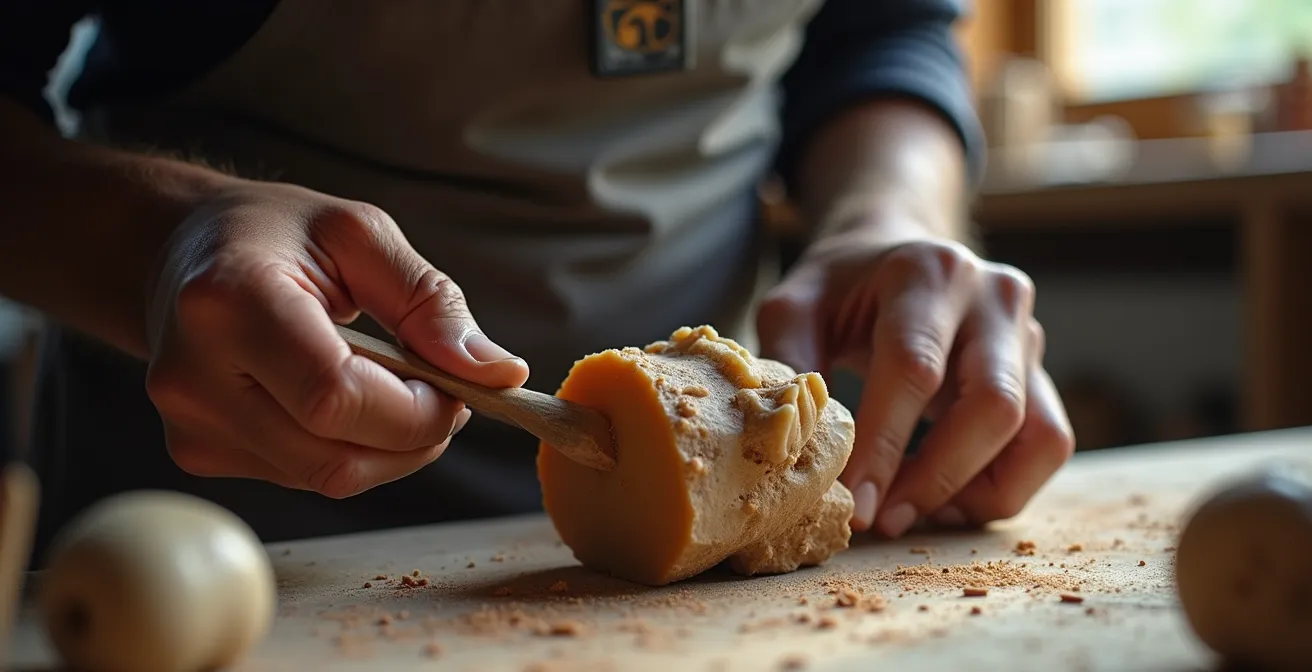
This direct connection honors the principle of cultural sovereignty, ensuring the artist has control over their work, their story, and their livelihood. A purchase becomes a relationship, not just a transaction. The experience is enriched, the story is preserved, and your investment directly fuels the continuation of a living cultural practice. An artist’s revenue can be more than doubled by selling directly to a collector, a simple choice with a profound impact.
Member-owned businesses: ensuring your tourism dollars stay in the community
While buying directly from an individual artist is the ideal, it isn’t always feasible. The next best course of action is to purchase from Indigenous-owned and operated businesses, particularly artist co-operatives. These organizations are pillars of economic self-determination in many First Nations and Inuit communities. Unlike private galleries, a co-operative is owned and governed by its artist members. This structure ensures that profits are not only distributed fairly among the artists but are often reinvested into community services, such as education, healthcare, and cultural programs. A prime example is the celebrated West Baffin Eskimo Co-operative in Kinngait (Cape Dorset), which has been instrumental in bringing Inuit art to the world stage while ensuring the economic benefits flow back to the community.
When you purchase from a gallery or shop that is a verified Indigenous-owned business, you are participating in a system of sustainable, community-based economics. According to Destination Indigenous, these owners are deeply connected to their local communities and the artisans they represent. This guarantees that designs are shared appropriately and that the economic benefits directly support the artists and their families. This model of economic reciprocity stands in stark contrast to the exploitative nature of the souvenir trade. A discerning buyer should actively seek out these enterprises as a primary channel for acquisition.
Identifying these businesses requires a bit of diligence. Here are key indicators of a community-run or Indigenous-owned enterprise:
- They openly state their co-operative or non-profit status.
- The board of directors is composed primarily of community members.
- They hold verified membership in organizations like the Indigenous Tourism Association of Canada or the Indigenous Arts Collective.
- Staff can speak knowledgeably about how profits are reinvested into the community.
Key Takeaways
- True authenticity goes beyond a signature; it lies in understanding provenance, regional style, and the artist’s story.
- Support artists directly or through Indigenous-owned co-operatives to ensure economic benefits return to the community.
- Train your eye to spot the differences between handmade quality and mass-produced fakes by looking for tool marks and material integrity.
Engaging with Indigenous Heritage: Etiquette for Visitors on First Nations Land
The final, and perhaps most important, aspect of collecting Indigenous art is engaging with its creators and their culture with respect and humility. Whether you are visiting an artist’s studio on reserve land or interacting at a public market, your conduct matters. The relationship between a collector and an artist should be one of mutual respect, not a simple commercial transaction. It is not the artist’s responsibility to educate you. Do your research beforehand. Learn about the artist, their nation, and their specific art form. This preparation shows respect for their time and their craft.
A common point of anxiety for non-Indigenous buyers is the fear of cultural appropriation. Many wonder if it’s appropriate for them to wear or display the art they purchase. The answer from many artists is a resounding yes, provided it was acquired ethically. As Kwakwaka‘wakw moccasin maker Jamie Gentry states, “Please, please wear our work. I wouldn’t put my work out there if it wasn’t okay for everyone to wear.” The issue is not in the wearing, but in the sourcing. Wearing a piece you bought directly from an artist or a community co-op is an act of appreciation and support. Wearing a mass-produced knockoff from a tourist shop is an act of erasure. Remember that some stories or designs are sacred and not meant for public sharing; if an artist tells you they cannot explain a piece’s full meaning, accept that with grace. It is a sign of the story’s cultural power, not a slight to you.
Finally, always ask for explicit permission before taking photographs of an artist, their work, or their home. Purchasing a piece does not grant you the right to its copyright or reproduction. Approaching every interaction with this level of consideration transforms you from a mere customer into a welcome patron of the arts, fostering the positive relationships that are the true foundation of ethical collecting.
By applying this curatorial mindset—focusing on provenance, community, and respect—you can confidently build a collection that is not only beautiful but also meaningful, ethical, and a true investment in the enduring power of Indigenous culture in Canada.
Frequently Asked Questions About Buying Indigenous Art
Should I research before contacting an Indigenous artist?
Yes, do your research prior to contacting the community and or the artist. It is not their responsibility to educate you about them and their art.
Can I photograph an artist’s work or studio?
Always ask for explicit permission before photographing an artist, their work, or their home. Purchasing a piece does not grant copyright or reproduction rights.
What if an artist says they cannot share a story’s meaning?
Some stories or meanings are sacred or private and not meant for public sharing. ‘I can’t share that’ is a perfectly acceptable answer.