In summary:
- For maximum comfort and accessibility, especially for those with mobility challenges, the Banff Gondola is the superior choice over the Jasper Skytram.
- Dressing in layers is non-negotiable; expect a temperature drop of up to 10°C at the summit, even in summer.
- Booking tickets online in advance is essential to save money through dynamic pricing and to avoid long queues or sold-out time slots during peak season.
- While mild lightheadedness is possible, serious altitude sickness is rare at gondola summit elevations, which are below the typical 2,400-meter threshold.
The desire to stand on a mountain summit and gaze across a sea of peaks is a powerful one. For many, however, the strenuous multi-hour hike required to get there is an insurmountable barrier. Whether due to age, mobility issues, or simply travelling with young children, the Canadian Rockies’ most iconic views can feel tantalizingly out of reach. Conventional wisdom often stops at “take a gondola,” but this simple advice overlooks the crucial details that separate a stressful outing from a truly magnificent and comfortable experience.
Most guides will tell you to bring a jacket and book a ticket. But the real key to unlocking a perfect summit day for a non-hiker lies in actively engineering the experience. It’s about understanding the nuances between different gondolas, mastering the timing of your booking to maximize value, and knowing precisely how to prepare for the alpine environment to ensure complete comfort and safety. This isn’t just about getting to the top; it’s about curating every element of your visit for a seamless, stress-free adventure.
This guide moves beyond the basics to provide an accessibility-focused blueprint for your trip. We will compare the key gondolas through the lens of a non-hiker, provide a practical comfort-first protocol for dressing, and demystify altitude concerns. By the end, you’ll have a clear strategy to experience the majestic grandeur of the Rockies from a place of total comfort and confidence.
Summary: Experiencing the Rockies’ Summits Without the Hike
- Banff Gondola vs. Jasper Skytram: comparing altitude and amenities
- How to dress for the temperature drop at the summit in summer?
- Why booking tickets online saves money and queue time using dynamic pricing?
- Altitude dizziness for visitors with heart conditions: knowing the risks
- Peyto Lake vs. Bow Lake: which stop requires a hike for the view?
- Dining at the summit: is the reservation worth the cost for the food?
- Altitude sickness symptoms that hit hikers above 2,500 meters
- Hiking Rocky Mountain Peaks: Safety Protocols for High-Altitude Trails
Banff Gondola vs. Jasper Skytram: comparing altitude and amenities
For the non-hiker, choosing between the Banff Gondola and the Jasper Skytram isn’t about which is “better,” but which is better suited to your specific needs for comfort and accessibility. While both offer stunning panoramic views, they provide fundamentally different experiences. Your decision should be guided by a clear understanding of their infrastructure, as the right choice forms the foundation of a stress-free day.
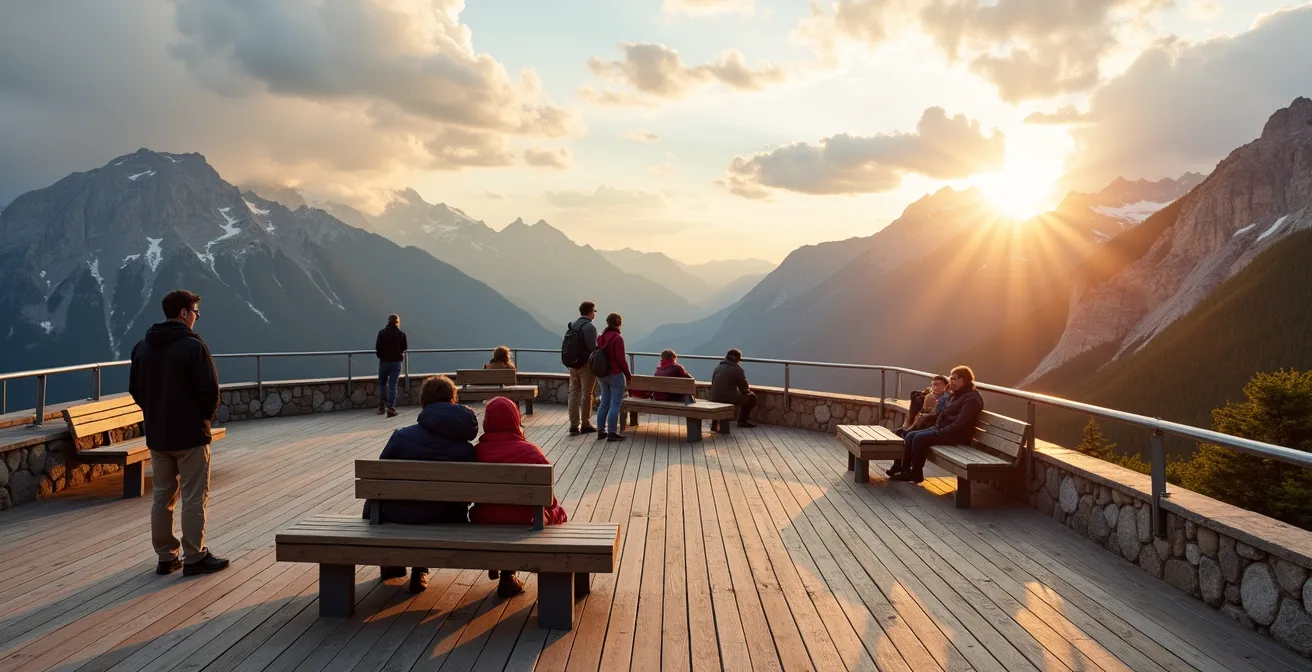
The Banff Gondola is engineered for accessibility. It is the only fully accessible gondola in the Canadian Rockies, making it the default best choice for anyone with mobility challenges. Its cabins can accommodate wheelchairs, and the summit complex features elevators, accessible bathrooms, and smooth, wide platform viewing decks. This “controlled wilderness” environment extends to nearby attractions like the Cascade of Time Garden and the Upper Hot Springs, allowing for a full day of accessible activities.
The Jasper Skytram, in contrast, offers a more rugged and nature-focused experience. The summit is less developed, prioritizing an untamed mountain feel. While staff are on hand to share cultural heritage and assist passengers, the facilities are more limited. The Banff Gondola’s comprehensive accessibility features make it a standout for seniors and families with strollers who want to experience the summit with zero physical barriers. Choosing Banff means choosing a seamless, comfortable, and predictable environment from base to peak.
How to dress for the temperature drop at the summit in summer?
One of the most common mistakes visitors make is underestimating the dramatic change in weather between the town and the summit. A warm, sunny day in Banff can be brisk and windy at 2,281 meters. The key to staying comfortable is not just bringing a jacket, but adopting a “comfort-first protocol” based on layering. This strategic approach ensures you can adapt to any condition instantly.
Official guidelines confirm that it can be up to 10°C colder at the summit than at the base. In the Rockies, weather can change in minutes, with sunshine giving way to wind, rain, or even a brief summer snow flurry. Relying on a single heavy coat is inefficient; layering is the superior strategy. It allows you to add or remove clothing to perfectly regulate your body temperature, ensuring you’re never too hot or too cold.
Your layering system should consist of three parts. Start with a moisture-wicking base layer (like merino wool or a synthetic tee) to keep your skin dry. Add an insulating mid-layer, such as a fleece or a packable down vest. Finally, top it with a waterproof and windproof outer shell. This system traps warm air while protecting you from the elements. Don’t forget a warm hat (a toque), gloves, and sunglasses, as the sun’s glare off snow patches can be intense even in July.

As you can see in the texture of technical fabrics, modern materials are designed to be lightweight and packable. A small daypack is all you need to carry these essentials. This preparation is a small investment that pays huge dividends in comfort, allowing you to linger on the viewing platforms and fully immerse yourself in the 360-degree panorama without feeling a chill.
Why booking tickets online saves money and queue time using dynamic pricing?
In the past, buying a ticket was a simple transaction. Today, attractions like the Banff Gondola use dynamic pricing, a system that adjusts ticket costs based on demand. For the savvy non-hiker, understanding this system is key to engineering a more affordable and efficient visit. Booking online isn’t just a convenience; it’s a strategic move to save money and, just as importantly, precious time and energy.
Prices fluctuate based on the day and time of your visit. The first rides of the morning and the later afternoon slots are often the cheapest, while midday tickets during peak summer season and on Canadian public holidays (like Canada Day or the August long weekend) are the most expensive. According to Pursuit, the operator, this system is designed to spread visitors out across the day. By booking in advance, you can lock in a lower price and guarantee your preferred time slot.
The second major benefit is skipping the on-site ticket line. During the summer, queues can be long, and tickets for popular times frequently sell out. For a family with restless children or a senior who prefers to avoid standing for extended periods, this is a massive advantage. Walking past the queue directly to the boarding area transforms the start of your experience from a stressful wait into a seamless ascent. The official booking portal shows real-time availability and pricing, allowing you to plan your visit with complete certainty. A recent check showed that planning ahead could alter the adult ticket price significantly, demonstrating the tangible savings.
By leveraging dynamic pricing, you treat your ticket purchase not as a last-minute chore but as the first step in designing your perfect day. This proactive approach saves money, eliminates stress, and conserves your energy for what truly matters: the breathtaking views from the top. It is a prime example of how a little planning yields a high-value return. For current rates and availability, it is always best to consult the official ticket-purchasing platform directly.
Altitude dizziness for visitors with heart conditions: knowing the risks
A common concern for visitors, especially seniors or those with pre-existing health conditions, is the risk of altitude sickness. The thought of feeling dizzy or unwell can cast a shadow over the excitement of a summit visit. However, it’s essential to approach this topic with facts, not fear. For a gondola experience in the Canadian Rockies, the risk of serious altitude sickness is very low, and simple preventative measures can ensure your comfort.
Acute Mountain Sickness (AMS) typically occurs at elevations above 2,400-2,500 meters. The Banff Gondola summit sits at 2,281 meters. As clinical guidelines from Emergency Care BC point out, AMS is rare below 2,400m. While some people might feel mild, temporary effects like a slight headache or lightheadedness upon arrival, these symptoms are usually minor and manageable. The key is to acclimatize calmly.
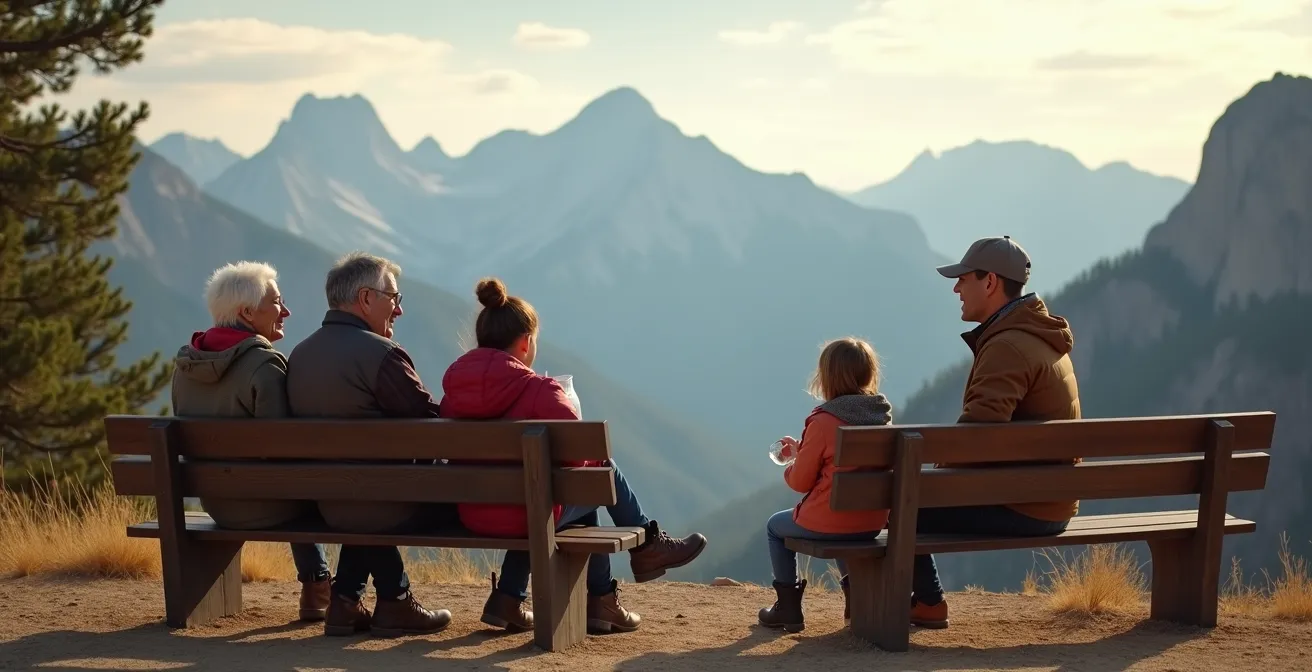
The summit facilities are designed with this in mind, offering ample seating areas both indoors and outdoors where you can relax and adjust. Instead of rushing to the edge of the boardwalk, take a few minutes to sit, breathe, and simply enjoy the initial view. This small pause allows your body to adapt to the thinner air. For those with specific concerns, especially related to heart or respiratory conditions, consulting a doctor before your trip is always the most responsible first step.
Action plan for managing mild altitude effects
- Stay hydrated: Drink plenty of water before and during your gondola visit to help your body acclimatize.
- Move slowly: Upon arrival at the summit, walk at a relaxed pace and sit down for the first 5-10 minutes.
- Use over-the-counter relief: For a mild headache, common pain relievers like ibuprofen can be effective.
- Rest and limit exertion: Avoid rushing or strenuous activity on the boardwalks. Let the views come to you.
- Descend if necessary: In the rare event that symptoms worsen or include confusion, descend immediately. Symptoms almost always resolve at a lower altitude.
Peyto Lake vs. Bow Lake: which stop requires a hike for the view?
While gondolas offer the ultimate panoramic views with zero effort, the Canadian Rockies also provide stunning ground-level vistas that are highly accessible. For non-hikers looking to supplement their summit experience or for those on a tighter budget, understanding the accessibility of famous viewpoints along the Icefields Parkway is crucial. Peyto Lake and Bow Lake are two iconic stops, but they offer very different experiences in terms of physical requirement.
Bow Lake is the epitome of effortless beauty. The parking lot is situated directly beside the lake, meaning you are mere steps from its shore. You can enjoy the incredible reflections of the surrounding peaks in its turquoise water with virtually no walking required. This makes it a perfect stop for anyone with severe mobility limitations or for a quick, breathtaking photo opportunity without any exertion.
The iconic, wolf-shaped view of Peyto Lake, however, requires a bit more effort. From the main parking lot, there is a paved, uphill walk of about 10-15 minutes to reach the main viewing platform. While the path is wide and suitable for wheelchairs and strollers, it does have a noticeable incline. The reward is one of the most famous views in all of Canada. For photographers, this platform is stable for tripods, and a wide-angle lens is best to capture the lake’s unique shape. Early morning offers the best light and fewest crowds at both locations.
| Location | Walking Required | View Type | Cost (with Park Pass) | Best For |
|---|---|---|---|---|
| Peyto Lake Viewpoint | 10-min paved walk | Iconic single viewpoint | Free | Wheelchairs, strollers |
| Bow Lake Shore | 1-min from parking | Ground-level lake | Free | Zero mobility required |
| Gondola Summit | Zero walk required | 360-degree panorama | $75-85 ticket | Full amenities access |
Dining at the summit: is the reservation worth the cost for the food?
A meal at the top of a mountain can be the crowning moment of a trip, but it often comes with a premium price tag. The question for many non-hikers becomes: is the experience worth the cost? When analyzing the value of summit dining, like at Banff’s Sky Bistro, it’s a mistake to judge the food in isolation. The true value lies in the combination of cuisine, comfort, and the unparalleled setting.
The Sky Bistro experience at the Banff Gondola summit offers elevated Canadian cuisine at 2,281 meters, with panoramic views of six mountain ranges. A value-per-dollar analysis shows that while menu prices are comparable to other upscale restaurants in the town of Banff, those restaurants can’t offer the 8-minute scenic gondola ride and the exclusive alpine glow of a mountain sunset. The ultimate value play is booking a dinner reservation to coincide with sunset. You get a world-class meal while watching the peaks catch the day’s last light—an experience that is truly priceless.
This transforms the meal from a simple dinner into a multi-sensory event. It provides a warm, comfortable, and civilized shelter from which to enjoy the wild beauty outside. For a special occasion, it elevates the entire gondola visit into an unforgettable memory. The local experts at The Banff Blog, who have extensive experience with all the area’s attractions, reinforce this idea of the overall experience being the main draw.
We think that, although it is the most touristy, the Banff Gondola offers the most enjoyable experience for visitors. We have brought all of our parents up there separately, and they all said it was their favorite thing to do in Banff.
– The Banff Blog Local Experts, Ultimate Banff Gondola Comparison Guide
Altitude sickness symptoms that hit hikers above 2,500 meters
To fully appreciate the low-risk nature of a gondola ride, it’s useful to contrast it with the experience of high-altitude hikers. The conversation around altitude sickness is often dominated by the risks faced by mountaineers and trekkers, which can create unnecessary anxiety for gondola visitors. Understanding this distinction is key to feeling secure and confident in your travel plans.
Hikers and climbers pushing their bodies at elevations above 2,500 meters face a much higher risk of developing Acute Mountain Sickness (AMS). The physical exertion of hiking increases the body’s demand for oxygen in an already oxygen-poor environment, leading to symptoms like severe headaches, nausea, and fatigue. This is a world away from the experience of a gondola passenger.
The Banff Gondola summit, at 2,281 meters, sits comfortably below the 2,400-meter threshold where AMS symptoms typically begin to appear. As a passenger, you are ascending in a comfortable, seated position with no physical exertion. Your body has a much easier time adapting. While you might notice the thinner air, the likelihood of developing true, debilitating AMS is extremely low. The experience is designed for passive enjoyment, not athletic performance, and the altitude reflects that design.
This context is crucial. When you read about safety protocols for mountain activities, remember that they are often written for a completely different user group. Your “hike” is a gentle stroll on a secure, flat boardwalk, and your ascent is effortless. This distinction should provide significant peace of mind for any visitor concerned about the altitude. You are participating in a carefully controlled and safe sightseeing activity, not a high-altitude trek.
Key takeaways
- The Banff Gondola is the premier choice for non-hikers seeking full accessibility and comfort in the Canadian Rockies.
- Strategic planning, including advance online booking and dressing in layers, is crucial for maximizing both value and comfort.
- The risk of serious altitude sickness is very low at gondola-accessible summits, and simple precautions can manage any mild effects.
- A gondola experience provides a “controlled wilderness” environment, offering the thrill of the wild from a position of complete safety and comfort.
Hiking Rocky Mountain Peaks: Safety Protocols for High-Altitude Trails
The term “mountain safety” often conjures images of bear spray, navigation tools, and survival gear. For a non-hiker visiting a gondola summit, these concerns are irrelevant. Your safety protocol is not something you carry in a backpack; it’s the very infrastructure that surrounds you. This shift in perspective is the final piece in engineering a worry-free summit experience.
As Parks Canada safety guidelines implicitly suggest, the infrastructure *is* the safety protocol. The wide, well-maintained boardwalks, sturdy railings, and clear signage are your handrails through the alpine world. Your responsibility is simply to respect them. Staying on the designated paths protects both you from the fragile environment and the environment from you. The entire experience is designed to remove the risks associated with backcountry travel, allowing you to focus solely on the grandeur of the landscape.
This concept of a “controlled wilderness” is perfectly illustrated by the opportunities for wildlife viewing. The Lake Louise Summer Gondola, for example, is renowned as one of the best places in the Rockies to safely view grizzly bears from the secure enclosure of a gondola cabin or summit platform. This allows for incredible photo opportunities and a genuine connection with nature, all while adhering to Parks Canada’s principles of keeping wildlife wild and ensuring visitor safety. You get the thrill of the sighting without any of the risk of an on-trail encounter.
Your Safety Protocol is the Handrail – for a gondola visitor, safety isn’t about bear spray and navigation; it’s about staying on the designated, well-maintained boardwalks and respecting signage. The infrastructure IS the safety protocol.
– Parks Canada Safety Guidelines, Gondola Safety Standards
By choosing a gondola, you are opting into a curated, safe, and highly managed environment. It’s an agreement to exchange the unpredictability of the wild for the certainty of a spectacular view. This understanding allows you to relax completely and immerse yourself in the moment, confident that every risk has been managed for you.
You now have the complete blueprint to engineer a comfortable, safe, and unforgettable mountain summit experience. The next logical step is to start planning your visit by exploring ticket options and available time slots.
Frequently Asked Questions About a Rockies Gondola Experience
Will I get altitude sickness on the Banff Gondola at 2,281m?
Mild symptoms like a light headache are possible but serious altitude sickness is rare below 2,400m. Most gondola visitors experience only temporary, mild effects that resolve quickly by moving slowly and staying hydrated.
How long do mild altitude symptoms last at the gondola summit?
For the short 2-3 hour duration of a typical gondola visit, any mild symptoms are usually very temporary. If they were to persist, they generally resolve within 12 hours to 3-4 days after returning to a lower elevation.
What’s the difference between Banff and Jasper altitude effects?
The town of Banff is already at a higher elevation (1,400m) than Jasper, so the elevation gain to the gondola summit is less dramatic. This may result in slightly more noticeable effects for some visitors ascending the Jasper Skytram from its lower base.