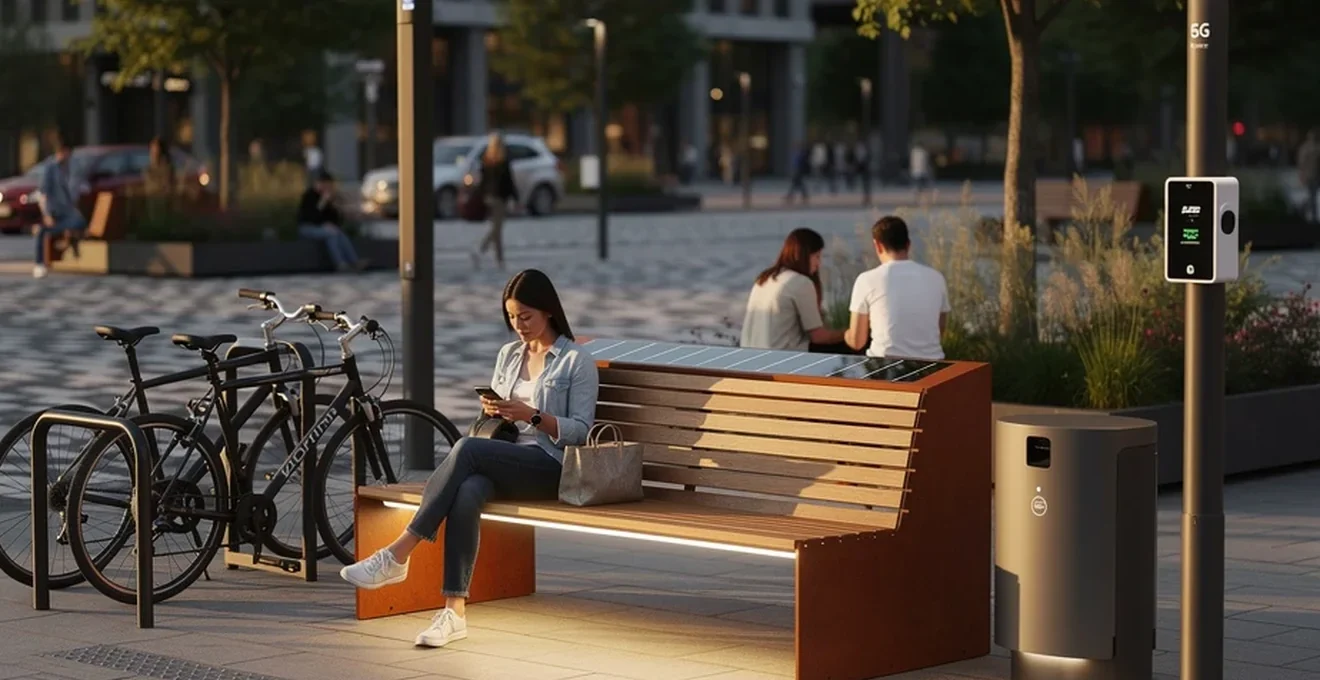
Street furniture is the quiet infrastructure that determines whether a public space feels welcoming or hostile. Benches, bollards, bins, lighting and shelters shape how people move through, wait in and enjoy urban environments, influencing everything from safety perceptions to community interaction. As cities grow denser and more technologically connected, street furniture has evolved from purely functional fixtures into carefully engineered systems that respond to sustainability targets, accessibility standards and digital infrastructure needs. This article examines how contemporary urban design approaches street furniture: the core typologies that form the backbone of public realm planning, the materials and smart technologies now shaping procurement decisions, and the placemaking strategies cities use to activate underused spaces. It also considers safety frameworks, sustainability certifications and real-world examples from cities recognised for liveability, offering a practical grounding in what makes street furniture genuinely effective.
Defining street furniture in contemporary urban design
Street furniture refers to the objects and structures installed in public spaces to support the needs of pedestrians, cyclists and communities. This includes benches, litter bins, street lamps, bike racks, bus shelters, planters, bollards, signage and public art installations. Rather than being an afterthought to road and building design, street furniture is now treated as a core planning discipline in its own right, shaping how people experience and use the spaces between buildings.
The value of well-considered street furniture extends across several dimensions. It improves quality of life by giving people places to rest, meet and socialise. It reinforces a city’s visual identity, turning anonymous streets into recognisable, attractive places. It ensures functionality and accessibility, allowing public spaces to remain usable across different weather conditions and user needs. And it supports environmental sustainability through the choice of materials and production methods. These four pillars—social value, identity, functionality and sustainability—underpin most modern approaches to street furniture specification.
Core typologies: benches, bollards, bins and bike racks
Benches remain one of the most visible and socially significant categories of street furniture. Positioned along sidewalks, parks and plazas, they offer more than a place to sit; they encourage people to pause, converse and engage with their surroundings, contributing directly to community cohesion. Design ranges from classic timber slats to sculptural contemporary forms, often combined with planters to create integrated relaxation zones that add greenery while offering seating.
Bollards perform a less celebrated but equally essential role. These sturdy, typically cylindrical structures made from steel or concrete direct and control vehicular flow, protecting pedestrian zones while subtly shaping traffic patterns. Their design has traditionally prioritised function over form, but well-designed bollards now integrate more seamlessly into the wider streetscape aesthetic.
Waste bins have undergone a notable design transformation. Rather than purely utilitarian containers, modern bins increasingly use vibrant colours, artistic finishes or eco-friendly materials, and are sometimes camouflaged within decorative enclosures or public art installations. This shift supports both cleanliness and a broader culture of recycling and environmental responsibility, with manufacturers offering ranges in materials such as wood, steel or wood-steel composites to suit different architectural contexts.
Bike racks complete this core set, providing secure, durable parking that encourages cycling as an eco-friendly transport mode. Strategic placement of bike racks reduces congestion and emissions while creative, stylised designs allow them to double as streetscape features rather than purely functional add-ons.
Material innovation: corten steel, recycled HDPE and FSC-Certified timber
Material choice has become one of the most important levers for balancing durability, aesthetics and environmental responsibility in street furniture design. Weathering steels offer a distinctive rusted patina that requires minimal maintenance while withstanding harsh outdoor exposure, making them popular for benches, bollards and planters where a robust, industrial aesthetic is desired.
Recycled plastics are increasingly used in place of virgin materials for bins, seating and decking elements, reducing the environmental footprint of manufacturing while maintaining the durability needed for constant outdoor use. Sustainably sourced and certified timber remains a preferred choice where a warmer, more traditional appearance is wanted, particularly for benches and pergola-style structures, provided it is paired with appropriate weather treatments.
Across all these material choices, the underlying principle is the same: high-quality, durable materials reduce the frequency of replacement, lower long-term maintenance costs and shrink the ecological footprint of public realm investment.
Universal design principles and inclusive accessibility standards
Designing for inclusivity means ensuring that street furniture serves the full range of people who use public space, including those with reduced mobility, older residents, children and people with sensory impairments. This includes accessible seating heights, sufficient clearance for wheelchairs and mobility aids, and layouts that avoid creating physical or visual barriers.
Shelters and seating structures that comply with accessibility standards offer sufficient space for people with reduced mobility and are positioned to allow easy, safe approach. This focus on universal design is not a peripheral consideration but a central requirement of modern street furniture specification, ensuring public spaces genuinely serve entire communities rather than a subset of users.
Smart street furniture and IoT integration
The integration of digital technology into street furniture is accelerating as cities pursue smart infrastructure goals. Features such as solar-powered charging points, Wi-Fi-enabled benches and interactive kiosks are transforming previously passive objects into active nodes of urban connectivity, aligning street furniture design with broader smart city strategies.
Solar-powered smart benches: steora and soofa case studies
Solar-powered smart benches represent one of the clearest examples of technology-enhanced street furniture, combining traditional seating with integrated photovoltaic panels that power device charging ports, USB outlets and, in some cases, environmental sensors. These benches allow city dwellers to rest while charging phones or accessing connectivity, extending the functional life of a simple seating element into a piece of digital infrastructure.
Sensor-equipped waste bins and bigbelly compaction technology
Sensor-equipped waste management systems use solar power and compaction technology to increase capacity and reduce collection frequency, allowing waste services to operate more efficiently. This approach reflects a broader trend of embedding sensors into street furniture so that maintenance and servicing can be data-driven rather than based on fixed schedules, cutting unnecessary vehicle movements and associated emissions.
Interactive wayfinding kiosks and digital information totems
Information kiosks have evolved into dynamic components of urban infrastructure, offering digital hubs for city guidance. Strategically placed kiosks provide maps, event information and local services, often equipped with touchscreens and interactive displays delivering real-time updates. Their sleek design integrates technology with the surrounding streetscape, serving as valuable reference points for both tourists and residents while fostering connectivity and accessibility.
5g-enabled smart lighting poles as urban infrastructure hubs
Street lamps have long balanced practical illumination with aesthetic contribution to a city’s character, ensuring safety and visibility along sidewalks and roadways at night. Increasingly, lighting poles are being adapted to host additional infrastructure, including public Wi-Fi hotspots that transform city spaces into digital hubs. These access points, designed to blend into the urban environment, offer high-speed internet connectivity, supporting a digitally engaged community while extending the technological footprint of even the most traditional street furniture category.
Placemaking strategies and public realm activation
Beyond individual objects, street furniture plays a central role in placemaking: the deliberate shaping of public spaces to encourage use, interaction and a sense of belonging. This requires thinking about furniture not as isolated items but as components of a coherent spatial strategy.
Parklets and modular seating for tactical urbanism projects
Modular and flexible furniture designs allow cities to reconfigure public spaces quickly in response to changing needs, supporting temporary uses such as pop-up markets or community events. This flexibility is central to tactical urbanism approaches, where low-cost, reversible interventions—often built around movable seating, planters and barriers—are used to test how a space might function before committing to permanent redesign.
Copenhagen’s superkilen park as a Furniture-Led regeneration model
Public art installations and sculptural elements demonstrate how street furniture can transcend simple utility to become a vehicle for cultural storytelling and community identity. Furniture-led regeneration projects use carefully curated objects and structures, often sourced from diverse cultural contexts, to reflect the identity of a neighbourhood’s residents while creating genuinely multifunctional public space that supports recreation, socialising and everyday movement through a single, cohesive design language.
Barcelona’s superblocks and Pedestrian-Priority street elements
Pedestrian-priority urban models reallocate street space away from vehicles and towards walking, cycling and community use, relying heavily on street furniture such as planters, bollards and seating to physically define new pedestrian zones. This approach demonstrates how furniture placement itself can act as a tool of urban policy, reshaping traffic patterns and reclaiming space for social interaction without requiring wholesale infrastructure rebuilding.
Sustainability frameworks in street furniture procurement
Environmental sustainability has become a defining consideration in how cities specify and procure street furniture, driven by both regulatory pressure and public expectation.
Circular economy principles and Cradle-to-Cradle certification
Manufacturers are increasingly opting for eco-friendly materials such as recycled plastics and sustainably sourced wood, alongside production processes designed to minimise environmental impact. This reflects a broader shift towards circular economy thinking, where street furniture is designed for durability, repairability and eventual recyclability rather than disposal at the end of a short service life.
Rain gardens, SUDS integration and permeable paving systems
Planters and green street furniture elements contribute directly to urban sustainability goals by introducing vegetation into hard-surfaced environments. Beyond their visual and psychological benefits, planters improve air quality and can be integrated with drainage-conscious landscaping to help manage surface water more effectively. Combining benches with planters, for example, creates practical relaxation spaces while simultaneously increasing urban greenery and supporting more resilient, climate-adapted public realm design.
Carbon footprint reduction through local manufacturing and BREEAM compliance
Reducing the embodied carbon of street furniture involves choices that extend beyond the materials themselves, including sourcing decisions that limit transport distances and production methods that reduce energy consumption. Tensile structures, such as fabric marquees and shade canopies used in squares and markets, illustrate this principle well: they typically require less material and energy to construct than traditional buildings, while still delivering effective weather protection, and can be further enhanced with integrated solar panels to offset their operational energy use.
Safety, security and CPTED considerations
Street furniture has a direct bearing on how safe public spaces feel and how effectively they can be secured against both everyday risks and more serious threats.
Anti-terrorism bollards and hostile vehicle mitigation (HVM) standards
Bollards made from sturdy materials such as steel or concrete serve as protective barriers that control vehicle access to pedestrian areas. Their contribution to pedestrian safety and traffic management means that, despite their simple form, they are among the most safety-critical items of street furniture in any public realm scheme, particularly in locations with high footfall or symbolic significance.
Crime prevention through environmental design in public seating layout
The placement of benches and seating influences natural surveillance and the sense of safety within a space. Seating positioned with good visibility, side awareness and proximity to active pedestrian routes reinforces a feeling of security, particularly during quieter periods or in less central locations. This principle applies equally to shelters: a well-lit structure with side visibility and a solid build reduces the vulnerability felt by users waiting alone.
Lighting levels and BS 5489 compliance for pedestrian safety
Street lamps remain one of the most fundamental safety-related items of street furniture, ensuring visibility and reducing risk during hours of darkness. Adequate, well-distributed lighting along sidewalks and roadways is essential not only for physical safety but for the broader perception of a space as cared-for and monitored, which in turn encourages continued use after dark.
Case studies from leading liveable cities
Examining how different cities apply street furniture principles in practice reveals how climate, culture and policy priorities shape design choices.
Vienna’s Superblock-Style public bench networks
Cities that prioritise dense, well-distributed networks of public seating create consistent opportunities for rest and social contact throughout the urban fabric, rather than concentrating amenity in a small number of flagship spaces. This approach reinforces the idea that street furniture value comes not from isolated statement pieces but from reliable, everyday availability across a city’s neighbourhoods.
Singapore’s Rain-Sheltered linkways and tropical climate adaptation
In climates where rainfall or intense heat is a constant consideration, shelters and covered walkways become essential rather than optional street furniture. The Lusitano Shelter, developed by Microcubo and adopted by the Portuguese city of Viana do Castelo to replace 80 passenger shelters, illustrates this principle in a temperate context: it offers a sheltered space with modern lines, adaptable to different urban settings, while complying with accessibility standards and providing sufficient space for people with reduced mobility. Structures designed for climate protection need to combine weather resilience with genuine comfort and accessibility if they are to serve their full range of users effectively.
Melbourne’s laneway furniture and Micro-Public space design
Smaller-scale, informal public spaces—laneways, pocket parks and micro-plazas—rely on compact, adaptable street furniture rather than large-scale installations. Modular seating, planters and small-format lighting allow these tight urban spaces to function as genuine social hubs, demonstrating that impactful placemaking does not require extensive square footage, only thoughtful selection and placement of the right furniture elements for the scale of the space.