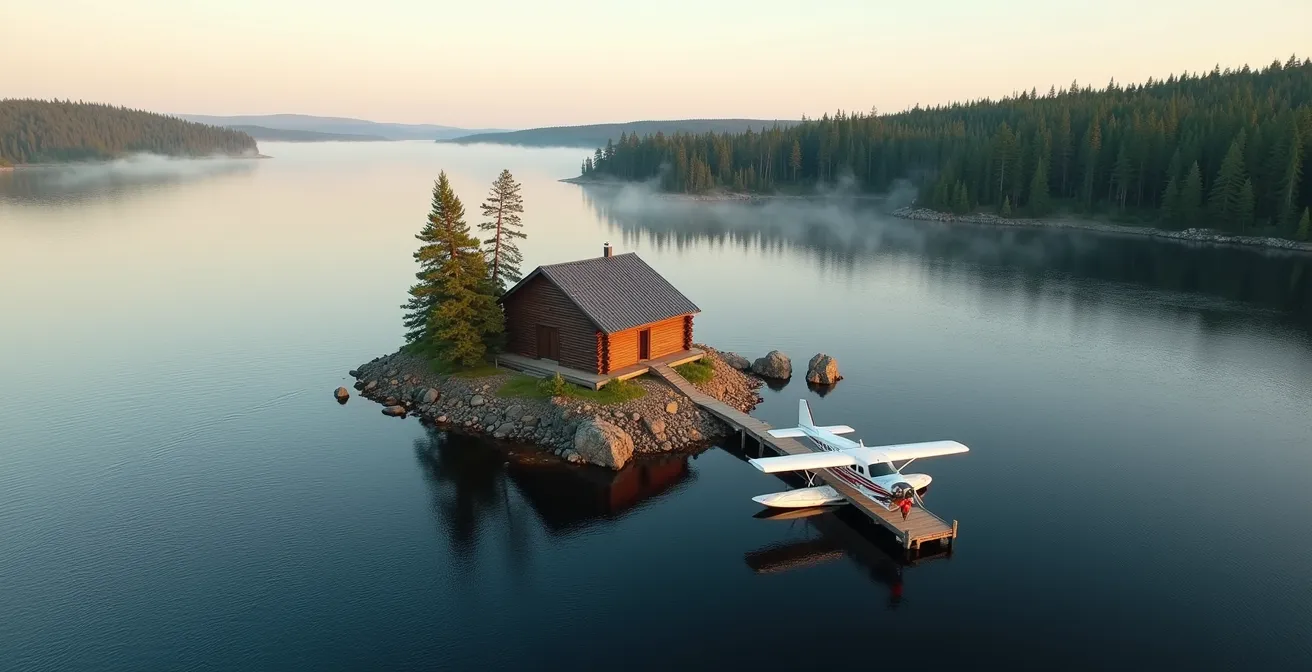
The success of your dream fly-in trip is decided long before the floatplane leaves the dock; it’s won in the strategic logistical choices you make.
- Treat your weight allowance as a currency: a 24-pack of beer weighs nearly 30 lbs, the same as your entire clothing bag.
- The typical $1000 American Plan premium buys back approximately 20 hours of cooking and cleaning, maximizing your time on the water.
Recommendation: Adopt a ‘self-reliance insurance’ mindset, making non-negotiable items like a satellite phone your first priority over non-essentials.
For many anglers, a fly-in fishing trip to a remote Northern Ontario lodge is the pinnacle—a bucket-list adventure into the heart of the Canadian Shield, chasing trophy walleye and northern pike in pristine waters. The dream involves shore lunches, the haunting call of a loon, and the thrill of a fish on the line miles from any road. But between that dream and the dock lies a web of logistics that can intimidate even seasoned travelers. The anxiety is real: strict seaplane weight limits, confusing meal plans, and the sheer responsibility of being in a true wilderness.
The common advice you’ll hear is to “pack light” or “choose a good lodge.” While true, this counsel is superficial. It ignores the fundamental nature of remote travel, which isn’t just about reducing weight, but about making smart decisions and understanding critical trade-offs. The real challenge isn’t just fitting your gear into a bag; it’s navigating the choices that define your entire experience. Is the convenience of cooked meals worth the extra cost? Is liquor a better weight investment than beer? How do you ensure safety when you’re completely off the grid?
This guide offers a different perspective—that of an outfitter. We’ll treat logistics not as a burden, but as the first strategic element of your adventure. We will move beyond platitudes to focus on the key decision points. This article will break down the essential logistical calculus of a fly-in trip, empowering you to make informed choices that ensure your bucket-list adventure lives up to the dream.
To help you navigate these critical decisions, this guide is structured around the most common and impactful logistical challenges. From managing your gear weight to ensuring your safety on the water, we’ll cover the essential knowledge you need to plan with confidence.
Summary: Planning a Fly-In Fishing Trip: Logistics for Remote Northern Ontario Lodges
- Beer vs. Liquor: managing strict seaplane weight limits for your group supplies
- American Plan vs. Housekeeping: is the cooked meal service worth the extra $1000?
- Walleye or Northern Pike: choosing the right lake based on seasonal fish activity?
- Why satellite phones are non-negotiable for remote fly-in outposts?
- Slot sizes and catch-and-release rules: avoiding fines from conservation officers
- Carry-on restrictions on Dash-8 prop planes: preventing gate-check surprises
- Wind management on open water: when to stay on shore to avoid swamping?
- Whitewater Rafting in Canada: Choosing Between Family Fun and Class V Adrenaline
Beer vs. Liquor: managing strict seaplane weight limits for your group supplies
The single most challenging constraint for any fly-in trip is the seaplane’s weight limit. Every pound counts, and nothing exposes poor planning faster than the scale at the airbase. Your group’s supply of beverages is often the biggest culprit. This isn’t just about packing light; it’s about understanding weight economy. A standard 24-case of beer weighs nearly 30 pounds. A 1.75-liter bottle of liquor weighs about 4 pounds. The choice isn’t just about preference; it’s a significant logistical trade-off. Opting for liquor over beer for a group of four can free up nearly 100 pounds—the equivalent of two extra people’s gear.
This decision impacts everything else you bring. That saved weight can be reallocated to more comfortable camp chairs, higher quality rain gear, or a wider variety of fishing tackle. Many outfitters in Northern Ontario, a vast wilderness with over 250,000 lakes and 60,000 miles of rivers, can pre-order beer and other heavy supplies to be waiting at the lodge, bypassing your personal weight allowance entirely. This service is a game-changer, allowing you to focus your allowance on what truly matters: your gear and personal comfort.
Before you even think about what lures to bring, your group should have a serious discussion about beverage strategy. Here are the key considerations for managing your weight budget:
- Prioritize Multi-Use Gear: Choose items that serve multiple purposes. A high-quality insulated jacket can serve as both a mid-layer and an outer layer in mild conditions.
- Pack Compact Clothing: Use packing cubes and focus on synthetic, quick-dry layers rather than bulky cotton items like jeans and hoodies.
- Account for Bag Weight: The weight of coolers, duffle bags, and tackle boxes themselves adds up. A heavy-duty hard case can eat up 10-15 lbs of your allowance before you even put anything in it.
- Leverage Outfitter Services: Ask your outfitter about pre-ordering heavy items like water, soda, and beer. This is the single most effective way to solve weight issues.
- Double-Check Essentials: Ensure you have critical, lightweight items like prescription medication, a quality headlamp, and polarized sunglasses. Forgetting these can lead to last-minute, inefficient repacking.
American Plan vs. Housekeeping: is the cooked meal service worth the extra $1000?
The second major decision is choosing your service level: American Plan or Housekeeping. This choice defines the entire rhythm of your trip and represents a classic “adventure calculus“: weighing cost against convenience. A Housekeeping plan, where your group is responsible for all cooking and cleaning, is the more affordable option. In Ontario, 7-day Housekeeping Plan rates range from $1,500 – $2,000 per person. The American Plan, which includes all meals prepared by the lodge staff, daily maid service, and often a guided shore lunch, can add $1,000 or more to that cost. Is it worth it?
The answer isn’t just about money; it’s about time. A typical group of four will spend 2-3 hours per day on meal prep, cooking, and cleanup. Over a seven-day trip, that’s nearly 20 hours of time not spent on the water. For many anglers, especially those on a once-in-a-lifetime trip, buying back that fishing time is an incredible value. The American Plan transforms your trip from a domestic chore in a beautiful location into a pure, focused fishing experience. You wake up to coffee brewing, eat a hot breakfast, grab a packed lunch, and return after a long day on the water to a prepared dinner.
Case Study: The Value of Time at Gateway North Outfitters
Lucas Adams, owner of Gateway North Outfitters, guided at a full-service American Plan lodge for six years before starting his own fly-in outpost business. His experience highlights the trade-off perfectly. He notes that American Plan lodges provide not just prepared meals and daily maid service, but also expertly cooked shore lunches. This service alone saves anglers roughly 20 hours of cooking and cleaning time on a week-long trip, allowing them to maximize their time fishing rather than managing camp chores.
However, the Housekeeping plan offers its own unique rewards. There is a deep satisfaction in cooking your own fresh-caught walleye over a fire, controlling your own schedule, and experiencing a more rustic, self-reliant adventure. For a truly authentic wilderness experience, nothing beats a traditional shore lunch you’ve prepared yourself.
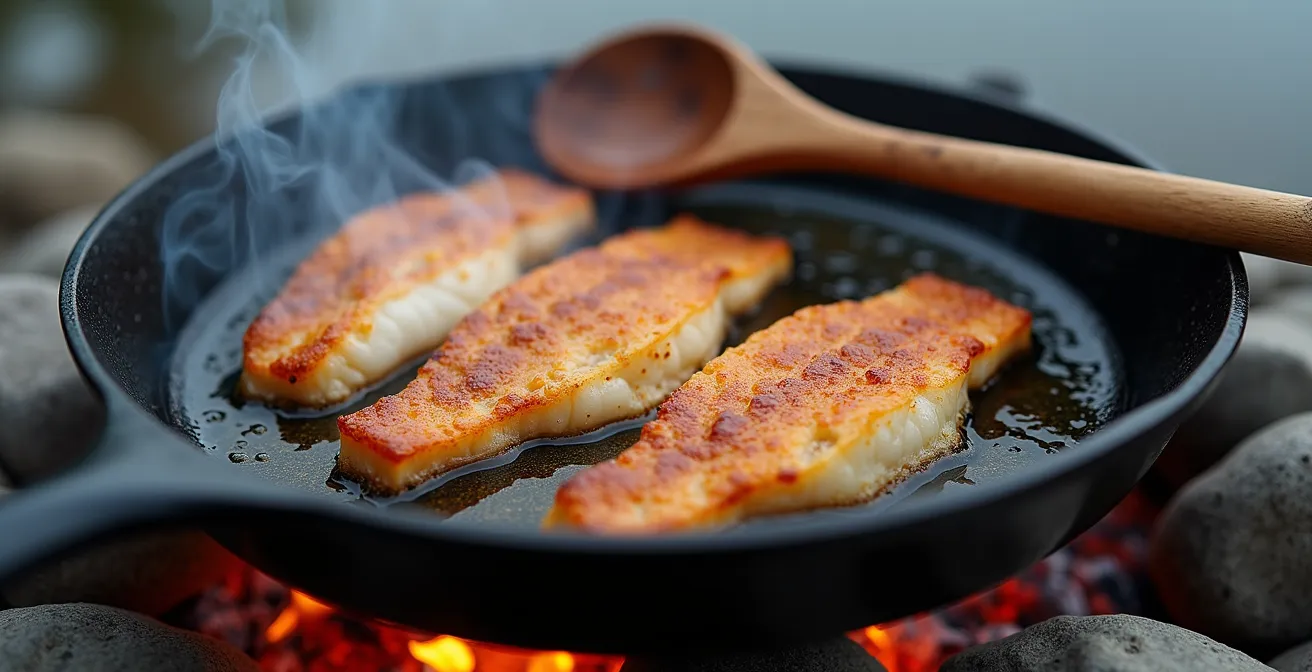
As the image shows, the sizzle of fresh walleye in a cast-iron pan is an iconic part of the Canadian fly-in experience. Ultimately, the choice depends on your group’s priorities. If maximizing every possible moment on the water is the goal, the American Plan is a sound investment. If you cherish the self-sufficiency and camaraderie of managing your own camp, the Housekeeping plan delivers an unmatched sense of accomplishment.
Walleye or Northern Pike: choosing the right lake based on seasonal fish activity?
With a choice of nearly 300 fly-in fishing lodges in Ontario, selecting the right lake can feel overwhelming. The key is to move beyond the lodge’s marketing and focus on what truly matters: seasonal fish patterns. The “best” lake is entirely dependent on when you are going and what species you are targeting. A lake that offers world-class walleye fishing in late June might be mediocre in August, when those same fish have moved to deep, hard-to-find structures. Similarly, the giant northern pike that cruise shallow bays just after ice-out in May are in a completely different pattern by September.
A good outfitter will be transparent about this. When you call, your first question shouldn’t be “How’s the fishing?” but rather, “We want to target trophy pike in the third week of August; which of your lakes is best suited for that pattern?” This shows you’ve done your homework and allows them to give you a specific, honest answer. A top-tier outfitter will guide you to the right body of water based on a deep understanding of seasonal fish behavior, rather than just trying to fill a cabin.
To make an informed decision, it’s crucial to understand the general seasonal movements of Northern Ontario’s primary game fish. This knowledge allows you to align your expectations and trip timing for the highest chance of success, as outlined in an analysis of remote lodge fishing.
| Season | Target Species | Prime Location | Best Technique |
|---|---|---|---|
| May (Ice-Out) | Northern Pike | Shallow warming bays | Topwater lures |
| Late June | Post-spawn Walleye | Primary points/sandbars | Jigs and minnows |
| August | Suspended Walleye | Deep-water humps | Vertical jigging |
| September | Trophy Pike | Weed edges | Large spoons/bucktails |
As the table demonstrates, tactics and locations change dramatically throughout the season. Choosing a shallow, weedy lake for a late-August walleye trip is a recipe for frustration, as the fish will likely be suspended in deep water elsewhere. Conversely, targeting those same shallow weeds in September can produce the trophy pike of a lifetime. The right lake is a function of the right time.
Why satellite phones are non-negotiable for remote fly-in outposts?
In the world of fly-in fishing, there are wants, and there are needs. A satellite phone or a similar two-way satellite messenger (like a Garmin inReach) is a non-negotiable need. It is your single most important piece of gear, transforming a potentially life-threatening situation into a manageable logistical problem. At a remote outpost camp, you are completely cut off. There is no cell service, no Wi-Fi, and no one to hear you shout. Your only link to the outside world is the device you bring. Thinking of it as an optional gadget is a grave mistake; it is self-reliance insurance.
Whether it’s a medical emergency, a critical equipment failure, or simply being weathered-in for an extra two days, the ability to communicate with your outfitter is paramount. The outfitter can’t help you if they don’t know you have a problem. A quick call can arrange for a supply drop, provide mechanical advice, or initiate a medical evacuation.
Case Study: Emergency Response in the True North
Outfitter emergency protocols demonstrate the critical role of satellite communication. At Wilderness North, which services numerous lodges and outpost camps across a vast territory, a satellite phone call is the trigger for their entire emergency response system. When an angler at a camp over 100 miles from the nearest hospital requires medical attention, that call immediately activates the air service. A floatplane is dispatched for evacuation, turning a dire situation into a coordinated rescue mission. Without that initial call, there is no response.
The image of an angler using a satellite phone against a vast, isolated wilderness backdrop isn’t just a picture; it’s a portrait of responsibility. It signifies a prepared individual who respects the power of the environment they are in. The cost of renting or buying a satellite device is insignificant when measured against the safety and peace of mind it provides.
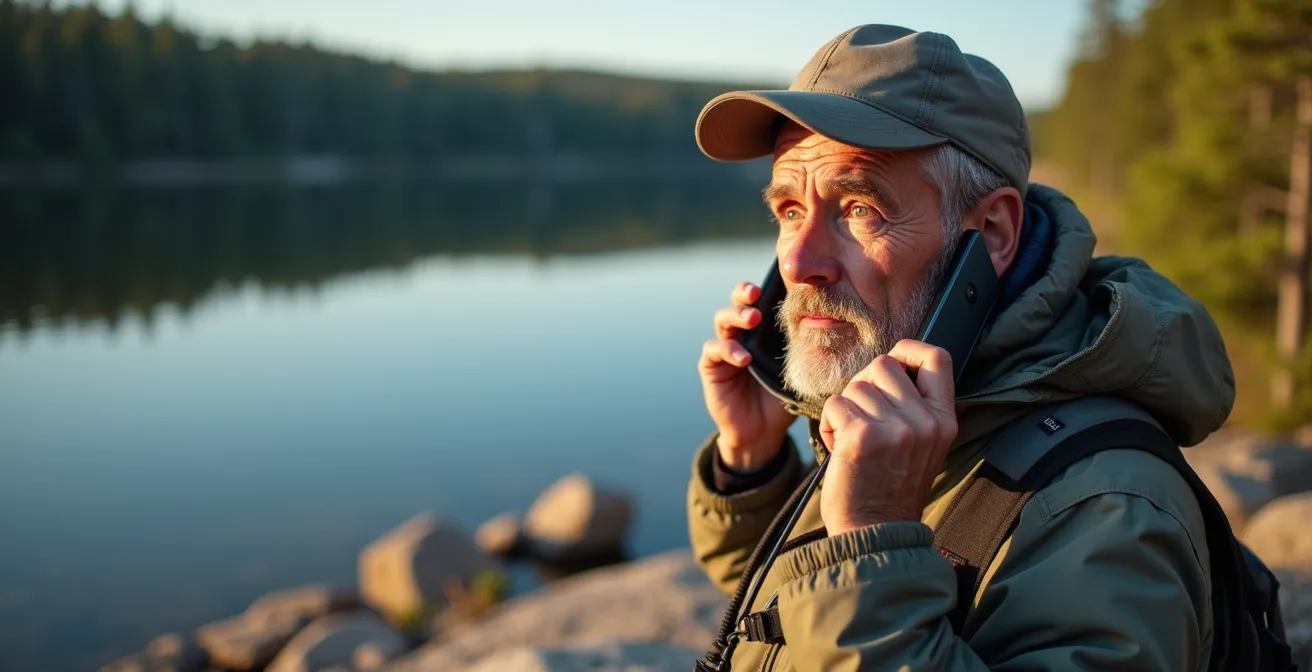
Before you depart, ensuring your communication plan is solid is just as important as packing your rod and reel. It’s a simple step that provides an essential safety net for your entire group.
Your Satellite Communication Action Plan
- Verify your travel/health insurance specifically covers ‘remote wilderness evacuation,’ as private floatplane flights can cost thousands of dollars.
- Choose the right device for your needs: a satellite phone for voice calls, or a device like a Garmin inReach for two-way texting and SOS functions.
- Test your device thoroughly before departure. Ensure you have a full battery and a reliable solar or power-bank charging solution.
- Program all essential emergency contacts, including your outfitter, the air service, and local emergency services, into the device.
- Brief every member of your group on the device’s location in camp and its basic operation procedures for an emergency.
Slot sizes and catch-and-release rules: avoiding fines from conservation officers
The world-class fishing you travel to Northern Ontario for doesn’t happen by accident. It is the direct result of a strong conservation ethos shared by outfitters and enforced by Ontario’s Ministry of Natural Resources and Forestry. Understanding and respecting fishing regulations—particularly slot sizes and possession limits—is not just about avoiding a hefty fine from a Conservation Officer; it’s about being a steward of the resource that makes these trips possible.
Conservation Officers patrol these remote lakes by floatplane, and they will check your catch. Ignorance of the law is not an excuse. Each body of water may have specific regulations, but the general principle is the same: protect the vital, genetically superior breeding stock. A “slot size” means you must release any fish that falls within a protected length range. For example, all walleye between 18 and 23 inches might have to be released. This protects the prime spawners. Your “possession limit” is the total number of fish you are allowed to have, including those already eaten at shore lunch.
Top-tier outfitters often have their own lake-specific rules that are even stricter than the government’s regulations. They do this because they know that sustainable fishing is good for business. Policies that encourage keeping a few smaller fish for a meal while releasing all trophy fish have proven to be incredibly effective. It’s a practice where catch-and-release has been a policy for over 30 years at some lodges, directly contributing to the health of the fishery.
Case Study: Conservation as a Business Model at Northern Wilderness Outfitters
Based in Fort Frances, Ontario, Northern Wilderness Outfitters exemplifies how strict conservation creates a superior product. They enforce their own specific size limits across all their lakes, which are designed to protect the unique fish populations of each body of water. Guests are permitted to keep a conservation limit of smaller fish for meals at the lake, but no take-home fish or trophies are allowed. This strict policy has cultivated a world-class fishery that produces trophy fish year after year, ensuring a high rate of return customers who come back for the quality of the fishing.
Before your first cast, make sure every person in your group has a valid Ontario fishing license and fully understands the specific rules for your lake. Bring a measuring tape and a quality pair of pliers for quick, clean hook removal. Practicing proper catch-and-release is your contribution to the future of the sport.
Carry-on restrictions on Dash-8 prop planes: preventing gate-check surprises
The logistics of a fly-in trip often begin long before you reach the floatplane dock. For many anglers traveling to Northern Ontario, the journey involves a connecting flight on a smaller propeller plane, such as a Dash-8, into a regional hub like Thunder Bay, Sault Ste. Marie, or Timmins. This leg of the journey has its own unique set of baggage restrictions that can catch travelers by surprise. The overhead bins on these smaller aircraft are significantly smaller than on a standard jet.
This means your standard carry-on suitcase, which fits easily on your first flight, will almost certainly be gate-checked on the second. While this is a free service, it can cause problems if your bag contains essential or fragile items like reels, electronics, or medication. Furthermore, your carry-on baggage is often restricted to a maximum of 10 kg or 22 lbs on airlines like Air Canada. A fishing rod in a protective tube is almost always considered checked baggage and is subject to the airline’s specific sports equipment policies.
The key to a smooth transition is to plan for the smallest plane in your itinerary. Pack a smaller, soft-sided duffle or backpack that will fit under the seat in front of you. This bag should contain all your non-negotiable items: medication, travel documents, a change of clothes, and any fragile fishing gear like your reels or fishfinder head unit. Your rods should be in a rigid, protective tube that can withstand the rigors of being handled as checked luggage.
Each Canadian airline has slightly different policies for fishing equipment, so it’s crucial to check their website before you pack. Understanding these rules prevents stress at the airport and ensures your critical gear arrives with you.
| Airline | Rod Policy | Container Requirement | Fee Structure |
|---|---|---|---|
| Air Canada | Part of standard allowance | Rigid/hard shell required | Standard excess baggage fees |
| WestJet | Max 9.8 feet checked | Proper packing required | Standard baggage fees apply |
| Porter | Dash-8 restrictions | Protective case mandatory | Size-dependent fees |
By anticipating the Dash-8 leg of your journey, you can pack strategically and avoid the unpleasant surprise of having to gate-check a bag full of essential equipment. It’s a small detail that makes a big difference in starting your trip off right.
Wind management on open water: when to stay on shore to avoid swamping?
Once you’ve arrived at your remote outpost, the biggest variable you’ll face is weather—specifically, wind. The massive, open lakes of the Canadian Shield can turn from placid to perilous with shocking speed. A 15-20 km/h wind that would be a minor inconvenience on a small southern lake can generate dangerous 3-4 foot waves on a large northern body of water. Understanding when to stay on shore is not a sign of weakness; it’s a mark of an experienced and responsible woodsman.
Many of Northern Ontario’s most famous pike lakes, for instance, are notoriously shallow. Kesagami Lake’s shallow waters, averaging only 7 feet (2 metres) deep, are a prime example. Shallow water allows wind to build steep, choppy waves much faster than deep water. Getting caught on the wrong side of a large lake in a 14-foot aluminum boat during a blow can be a terrifying and life-threatening experience. Your outfitter will provide you with a map and point out potential hazards, but ultimately, you are the captain of your own boat.
The most important rule is simple: if in doubt, don’t go out. No fish is worth risking your life. A “wind day” is a part of the fly-in experience. Use it to organize tackle, read a book, or enjoy the rugged beauty of the shoreline from the safety of your cabin. When you do venture out, always be aware of the wind direction and have a plan that includes sheltered bays and lee sides of islands where you can safely take refuge if the weather turns.
Developing a set of safety protocols for dealing with wind is essential for any group heading to a remote outpost. These simple rules can make the difference between a great story and a tragic one.
- Apply the ‘Whitecaps from the Cabin’ Rule: If you can see whitecaps on the main lake from the safety of your cabin, it’s too rough. Stay put.
- Fish the Leeward Side: Always plan your fishing day around the protected (leeward) side of islands and shorelines to find shelter from the wind.
- Use Weather Apps: Before you lose cell service, download a weather app like Windy.com that provides detailed wind forecasts for your specific location.
- Map Your Safe Harbors: Use offline mapping tools like Navionics on your phone to identify sheltered bays and channels that can serve as safe harbors if you get caught in a storm.
- Respect the Scale: Understand that a 15 km/h wind on a lake that is 20 miles long creates a far more dangerous situation than on a small, enclosed body of water.
Key takeaways
- Weight is a currency: A 24-pack of beer (nearly 30 lbs) has the same weight cost as an entire bag of layered clothing.
- Time is the real value: An American Plan might cost more, but it can return over 20 hours of fishing time on a week-long trip.
- Safety is non-negotiable: A satellite phone isn’t a gadget; it’s your lifeline and the most critical piece of gear in the true wilderness.
Whitewater Rafting in Canada: Choosing Between Family Fun and Class V Adrenaline
Anglers often speak of adventure in terms of adrenaline—the heart-pounding thrill of a big moment. In the broader world of Canadian outdoor adventure, this is often associated with experiences like Class V whitewater rafting. But a fly-in fishing trip offers a different, more profound kind of ‘Class V’ experience. It’s an adventure defined not by a few moments of intense physical rush, but by a sustained immersion in true self-reliance and raw, untamed wilderness.
The real adrenaline of a remote outpost trip comes from a collection of quieter, more meaningful moments. It’s the thrill of navigating a vast, unknown lake using only a map and your own wits. It’s the surge of satisfaction from landing and releasing a trophy fish that you found and caught entirely on your own. It’s the primal awe you feel hearing a wolf pack howl at twilight, a sound that reminds you just how far from civilization you truly are. This is not a manufactured thrill; it is the earned adventure of complete self-sufficiency.
Case Study: Redefining Adventure with Amik Outposts
Amik Outposts, operating a dozen remote lakes 70 to 150 air miles north of Red Lake, Ontario, perfectly illustrates this deeper concept of adventure. Their entire model is built on providing an immersive wilderness experience. For their guests, the ‘Class V’ adrenaline isn’t about running rapids. It’s found in the challenge of navigating a massive, remote wilderness, the strategy involved in battling a trophy northern pike, and the profound peace of achieving complete self-reliance for 3 to 7 days. It’s an adventure that engages the mind and spirit, not just the body, creating memories that last far longer than a brief adrenaline spike.
By mastering the logistics of weight, planning, and safety, you aren’t just preparing for a vacation. You are setting the stage for an authentic expedition. You are earning the right to experience the Canadian wilderness on its own terms—a challenge that offers rewards far greater than any theme park or guided tour ever could. This is the ultimate adventure.
Armed with these logistical strategies, you’re no longer just planning a trip—you’re orchestrating an expedition. The next step is to match your meticulous plan with the perfect remote lake that will serve as the backdrop for your adventure of a lifetime.
Frequently Asked Questions about Fly-In Fishing Logistics
What should I do if I’m wind-bound at the outpost for an extra day?
Pack extra non-perishable food for at least two extra days. Maintain satellite phone communication with your outfitter to keep them informed about delays, and most importantly, embrace it as a genuine part of the wilderness adventure experience rather than a frustration.
How do I identify unmarked reefs on Canadian Shield lakes?
Use high-quality hydrographic maps (like Navionics on your phone) and watch for subtle color changes in the water, from deep blue/green to a lighter brown or tan. Pay attention to where birds like loons or cormorants are gathered, as this often indicates shallow feeding areas. Always proceed slowly and with caution in unfamiliar waters.
What bear safety measures should I take at shore lunch sites?
Keep all food sealed in airtight containers until you are ready to cook. Clean your fish away from your primary camp or cabin area, and dispose of all fish entrails far from shore in deep water. Always carry bear spray and know how to use it, and make consistent noise (talking, playing music) when moving through wooded areas to avoid surprising a bear.