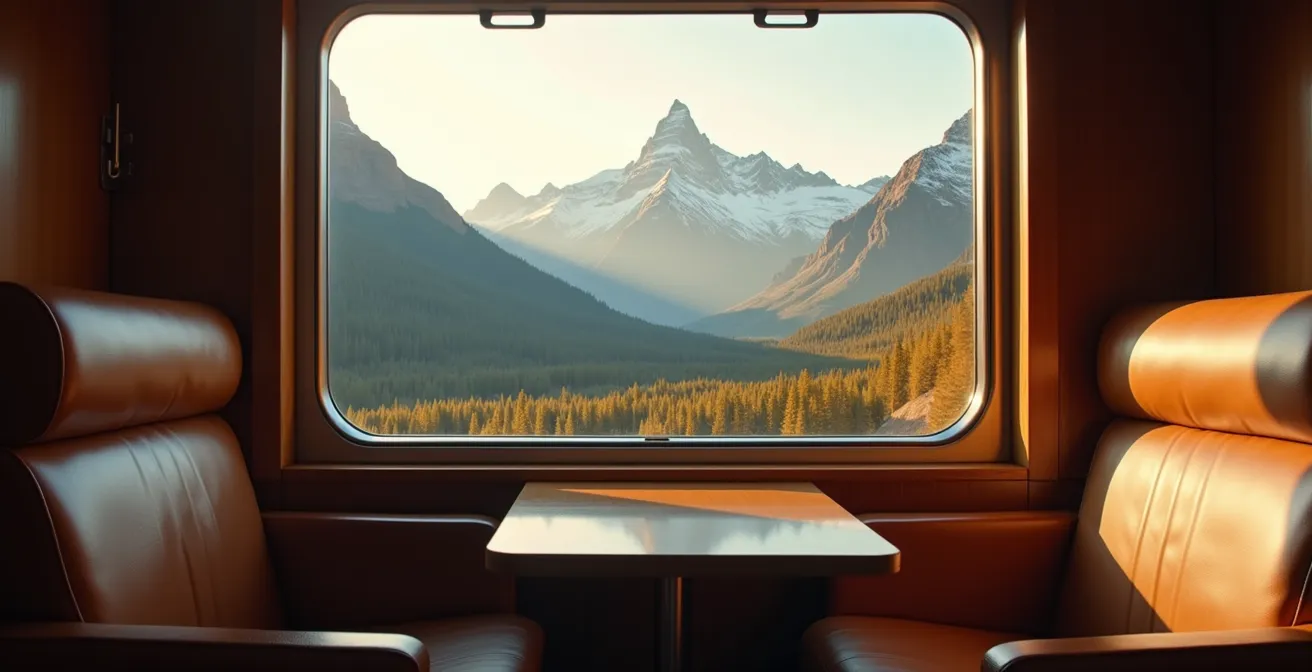
The price difference between VIA Rail’s Sleeper Plus and Prestige Class is significant, but the true value of Prestige isn’t just luxury—it’s the near-total elimination of the inherent frictions of long-distance train travel.
- Prestige offers logistical certainty with private facilities, priority dining, and ample storage, removing common stress points.
- It acts as “experience insurance,” with a dedicated concierge who proactively manages the common and significant delays endemic to the route.
Recommendation: For travellers prioritizing seamless comfort and peace of mind over a more rustic adventure, Prestige Class offers a justifiable and tangible return on comfort.
The romance of a cross-Canada train journey is undeniable. The vision of majestic Rockies, sweeping prairies, and boreal forests unfolding outside your window is a powerful lure for any travel enthusiast. But the four-day, three-night reality of VIA Rail’s flagship “The Canadian” from Toronto to Vancouver involves a series of practical choices. The most significant one, defining the very nature of your trip, is the decision between Sleeper Plus and the opulent Prestige Class.
Most comparisons stop at the brochure’s surface: Prestige boasts a private bathroom, a larger cabin, and an all-inclusive bar. Sleeper Plus offers a more budget-conscious path with shared facilities and compact quarters. While accurate, this simple cost-versus-amenities calculation misses the fundamental question. It fails to account for the subtle, yet constant, frictions inherent to spending 96 hours on a moving train.
What if the true value of Prestige Class lies not in the luxury itself, but in its profound ability to mitigate these frictions? The decision isn’t merely about affordability versus indulgence. It is a conscious choice between a charmingly rustic, authentic rail adventure with its attendant compromises, and a seamlessly polished, insulated journey where potential stressors are systematically removed. This analysis moves beyond the price tag to evaluate the “Return on Comfort”—examining whether the premium paid for Prestige translates into a genuinely superior and more restful experience.
To provide a definitive verdict, this guide deconstructs the day-to-day realities of life on The Canadian. We will explore everything from the critical comfort differences in sleeping arrangements and the delicate etiquette of shared showers to the logistics of a fully-booked dining car and the pervasive, trip-altering issue of track delays. By understanding how each class handles these challenges, you can make an informed decision that aligns with your travel style and priorities.
Summary: An In-Depth Look at The Canadian’s Travel Classes
- Upper vs. Lower Berth: the comfort difference for seniors in semi-private sections
- Shared showers in Sleeper Plus: etiquette and timing for a 4-day journey
- Dining car logistics: how meal sittings work when the train is fully booked?
- Sleeping on a moving train: tips for dealing with track noise and vibration
- Packing for a tiny cabin: why hard-shell suitcases are a mistake on the train?
- The quirks of historic hotels: small rooms vs. grand lobbies in Victorian buildings
- Why amenities are often rustic in heritage lighthouse properties?
- Riding “The Canadian”: Why Delays Are Common on the Toronto-Vancouver Route?
Upper vs. Lower Berth: the comfort difference for seniors in semi-private sections
For many travellers, particularly seniors, the primary concern on a multi-night journey is the quality of sleep and ease of access. In Sleeper Plus, the choice between an upper and lower berth is not merely preferential; it’s a fundamental decision impacting comfort and safety. The upper berth, accessed via a ladder, presents a significant mobility challenge and fall risk, especially in a swaying train car during the night. The lower berth, while avoiding the climb, can feel confined and offers limited personal space.
Prestige Class fundamentally eliminates this friction. Instead of bunk beds, it features a spacious, ground-level Murphy bed that folds down, offering easy access and a much larger sleeping surface. This is more than a luxury; it’s a crucial design choice that enhances safety and provides a true “bedroom” experience. Furthermore, the private ensuite bathroom negates the need for late-night walks down a dimly lit, moving corridor—a major source of anxiety and sleep disruption for many.
The quantitative differences are stark. According to VIA Rail specifications, the Prestige cabin offers 50% more living space than a standard Sleeper Plus cabin, providing ample room to move around without feeling cramped. This extra space delivers a significant ‘Return on Comfort’ for those with any mobility concerns.
| Feature | Upper/Lower Berth | Prestige Class |
|---|---|---|
| Bed Access | Ladder required for upper berth | Ground-level murphy bed |
| Night Bathroom Access | Walk down corridor | Private ensuite |
| Room Size | 36 sq ft | 70 sq ft |
| Fall Risk | High (upper berth) | Minimal |
Ultimately, for senior travellers, the choice transcends simple comfort. Prestige Class provides an environment that actively mitigates physical risks and logistical challenges associated with sleeping on a train, ensuring a more restful and secure journey.
Shared showers in Sleeper Plus: etiquette and timing for a 4-day journey
One of the most frequently discussed “frictions” of Sleeper Plus travel is the shared shower. While impeccably maintained by VIA Rail staff, the reality is that one shower stall serves an entire train car of passengers. This creates a subtle but persistent logistical challenge throughout the four-day trip. Passengers must navigate unwritten rules of etiquette, be mindful of their time, and strategically plan their showers to avoid the morning rush between 6:30 and 8:30 AM.
To manage this, seasoned Sleeper Plus travellers develop a tactical approach. They might book a time slot with the attendant immediately upon boarding, aim for off-peak hours like mid-afternoon or late evening, or even time their shower during a scheduled stop in a city like Winnipeg to ensure a steady supply of hot water. This constant low-level planning, while part of the “adventure” for some, is a clear point of friction for others. The need to carry toiletries back and forth in a portable caddy further adds to the logistical load.
This is where Prestige Class offers one of its most compelling forms of experience insulation. The private, ensuite shower removes this entire layer of planning and social negotiation. The freedom to shower at any time, for any length, without leaving your cabin, is a profound luxury. It’s a key factor in reducing what one travel blogger aptly described:
The knowledge that you don’t have to get dressed and walk down a swaying corridor for the toilet at 3 AM significantly reduces sleep anxiety
– Happy to Wander travel blog, VIA Rail Canadian Train comprehensive review

This same principle applies to the shower. By privatizing this essential daily ritual, Prestige Class transforms a point of potential stress and inconvenience into a moment of private comfort, allowing passengers to fully relax into the rhythm of the journey without compromise.
Dining car logistics: how meal sittings work when the train is fully booked?
The dining car on The Canadian is a highlight of the journey, offering stunning views and exquisite meals prepared on board. However, when the train is at full capacity, the logistics of seating over a hundred passengers for three meals a day become a complex ballet. In Sleeper Plus, this means being assigned a specific meal sitting for lunch and dinner. While the system is efficient, it removes a degree of spontaneity from your day. You may have to pause a conversation or leave the panoramic dome car to make your 5:30 PM or 7:30 PM seating.
This is a classic example of a minor travel friction that can accumulate over a multi-day trip. While dietary restrictions are well-accommodated in both classes with advance notice, the lack of flexibility in timing can be a drawback for those who prefer a more fluid schedule. Breakfast is a more casual, open-seating continental service, but the main meals are structured.
Prestige Class offers what can be described as logistical certainty in dining. This is one of the most underrated perks of the upgrade. Prestige Class passengers have first pick at all dining times, allowing them to choose a reservation that perfectly suits their plans for the day. This simple priority eliminates any anxiety about getting a preferred time. Furthermore, Prestige passengers have access to exclusive premium Canadian wines and can even request in-cabin meal service, a significant advantage for those seeking a more intimate or private dining experience.
This priority access ensures the dining experience remains a pure pleasure, free from the scheduling constraints that can arise in a fully booked train. It’s a subtle but powerful benefit that contributes to a more seamless and personalized journey.
Sleeping on a moving train: tips for dealing with track noise and vibration
Regardless of class, sleeping on a moving train is a unique experience. The rhythmic click-clack of the wheels can be hypnotic for some, but the reality often includes much more than gentle swaying. The train negotiates curves, crosses switch points, and varies its speed, leading to unpredictable jolts, vibrations, and noises. This physical reality of rail travel is a significant “friction point” that directly impacts sleep quality.
For passengers in Sleeper Plus, particularly in the open-section berths, this experience can be more pronounced. As one recent traveller noted, the physical sensations can be disruptive. A passenger in a Sleeper Plus cabin shared their experience:
I had a hard time sleeping at night because the train would rock violently at times, jostling myself awake. The mattresses were okay to sleep on, but nothing too comfortable.
– Cultured Individual, March 2024 review
While high-quality earplugs and eye masks are essential packing items for any passenger, Prestige Class incorporates structural features that help mitigate these disturbances. The larger, heavier Murphy bed in Prestige cabins is less prone to transferring every vibration from the track. The increased cabin size means there’s less chance of bumping against a wall on sharp curves. The sheer quality and thickness of the mattress contribute to a more stable and comfortable sleeping surface, providing a better ‘Return on Comfort’ through improved sleep.
Moreover, the private ensuite bathroom plays another crucial role in sleep quality. By eliminating the need to get up and navigate a moving corridor at night, it removes a major source of disruption and anxiety. While no cabin is immune to the physics of a moving train, Prestige Class is engineered to dampen these effects, providing a more insulated and restful environment for a good night’s sleep.
Packing for a tiny cabin: why hard-shell suitcases are a mistake on the train?
One of the most common rookie mistakes on The Canadian is bringing the wrong luggage. The compact nature of the accommodations, especially in Sleeper Plus, means that storage space is at an absolute premium. A large, rigid-shell suitcase simply will not fit in the cabin or under the berth. This forces passengers to check their main bag and live out of a small carry-on for four days, creating a significant logistical friction.
The key is to pack in soft-sided duffel bags or backpacks that can be compressed and squeezed into the limited available space. In a Sleeper Plus berth, the only personal storage is the space beneath the seat. In a cabin for two, there is some additional shelf space, but it is still restrictive. Smart packing is not just a suggestion; it is a necessity for a comfortable journey in these classes.
Prestige Class, by contrast, largely solves this packing problem. With a dedicated closet and significantly more under-bed storage, it can accommodate standard-sized suitcases, including hard-shell models. This allows for a more traditional “unpacking” experience, where clothes can be hung and items accessed easily without rummaging through a compressed duffel bag. This difference is clearly illustrated in the storage options available across classes.
| Cabin Type | Storage Features | Luggage Recommendation |
|---|---|---|
| Sleeper Plus Berth | Under-seat storage only | 1 soft bag per person |
| Sleeper Plus Cabin | Under-seat + shelf storage | 2 soft bags per person |
| Prestige Class | Closet + under-bed storage | 2-3 pieces including hard-shell |
Action Plan: Packing Essentials for The Canadian
- Choose Luggage: Opt for soft-sided duffel bags that can be compressed under berths, especially for Sleeper Plus.
- Pack Viewing Tools: Bring binoculars for wildlife viewing opportunities, particularly through Jasper National Park and Northern Ontario.
- Prepare for Off-Grid: Include a portable charger, as cell service and power outlets can be sparse during long stretches across the Prairies.
- Layer Clothing: Pack layers to adapt to dramatic temperature shifts, which can vary by 20°C between train stops and air-conditioned cars.
- Prioritize Comfort: Bring slip-on shoes for easy movement in your cabin and high-quality earplugs and an eye mask to improve sleep quality.
Ultimately, the freedom from strict luggage constraints in Prestige Class is another way it provides ‘experience insulation,’ removing a layer of pre-trip planning and in-trip hassle.
The quirks of historic hotels: small rooms vs. grand lobbies in Victorian buildings
To understand the philosophical difference between Sleeper Plus and Prestige, it helps to look at their terrestrial counterparts: Canada’s grand railway hotels. Properties like the Fairmont Royal York in Toronto or the Château Frontenac in Quebec City were built to impress, featuring opulent, cavernous lobbies, grand ballrooms, and soaring ceilings. However, the guest rooms from that era were often small by modern standards, a charming quirk of their heritage.
This creates a perfect analogy for the VIA Rail experience. Choosing Sleeper Plus is like staying in a standard room in one of these historic hotels. You get to enjoy all the magnificent public spaces—the breathtaking views from the dome car are the same for everyone, just as the hotel’s grand lobby is open to all guests. But your private space is compact, functional, and comes with the “charming quirks” of a historic design, such as shared facilities or limited storage.
Prestige Class, in this analogy, is the hotel’s “Gold Floor” or Club Level. It exists within the same historic, beautiful structure but offers an insulated, modern luxury experience. The rooms are larger, the amenities are private and contemporary, and the service is personalized. It allows you to enjoy the romance and history of the grand railway journey while being shielded from its more rustic or inconvenient aspects. As noted in a tour description for the iconic Fairmont Hotel Vancouver, it is known as the “Castle in the City” due to its châteauesque copper pitched roof, a testament to the grand railway heritage that Prestige class seeks to elevate with modern comfort.
Why amenities are often rustic in heritage lighthouse properties?
The journey on The Canadian is a form of heritage tourism. Passengers are travelling in beautiful, refurbished stainless-steel train cars from the 1950s. This history is a core part of the appeal, but it also explains why the base-level experience has “rustic” elements. Much like staying in a historic lighthouse, you are choosing an authentic experience that comes with inherent compromises. The infrastructure was not designed for modern expectations of private space and amenities.
This is a fundamental concept to grasp when choosing a class. Sleeper Plus offers an authentic immersion into this golden age of rail travel. The shared spaces and compact quarters are true to the original design of these cars. For travellers who value this authenticity and see the compromises as part of the adventure, it is a fantastic and rewarding experience. This is the “rustic luxury” model: a genuine heritage setting that prioritizes authenticity over modern convenience.
Prestige Class, on the other hand, represents “polished luxury.” It leverages the same heritage shell but completely overhauls the interior to deliver contemporary comfort. It acknowledges that many travellers desire the romance of the historic journey without the associated sacrifices. It is for the traveller who wants the 1950s streamliner exterior and the 21st-century hotel room interior. The fact that VIA Rail’s Canadian uses refurbished 1950s-era cars, while its new short-haul corridor trains are fully modern and accessible, highlights this distinction. The Canadian is intentionally a heritage product.
Therefore, the choice is not simply budget vs. luxury. It’s a conscious decision about what kind of experience you are seeking: an authentic, slightly rustic adventure, or a polished, comfortable journey through a historic landscape.
Key Takeaways
- The true value of Prestige Class lies in its ability to mitigate the inherent “frictions” of a long train journey, such as shared facilities, logistical planning, and delay management.
- Sleeper Plus offers an authentic, more “rustic” heritage rail experience, which can be an adventure for some but a source of stress for others.
- The most significant, and often overlooked, benefit of Prestige is the dedicated concierge service that handles rebookings and logistics during the frequent and often lengthy delays on the route.
Riding “The Canadian”: Why Delays Are Common on the Toronto-Vancouver Route?
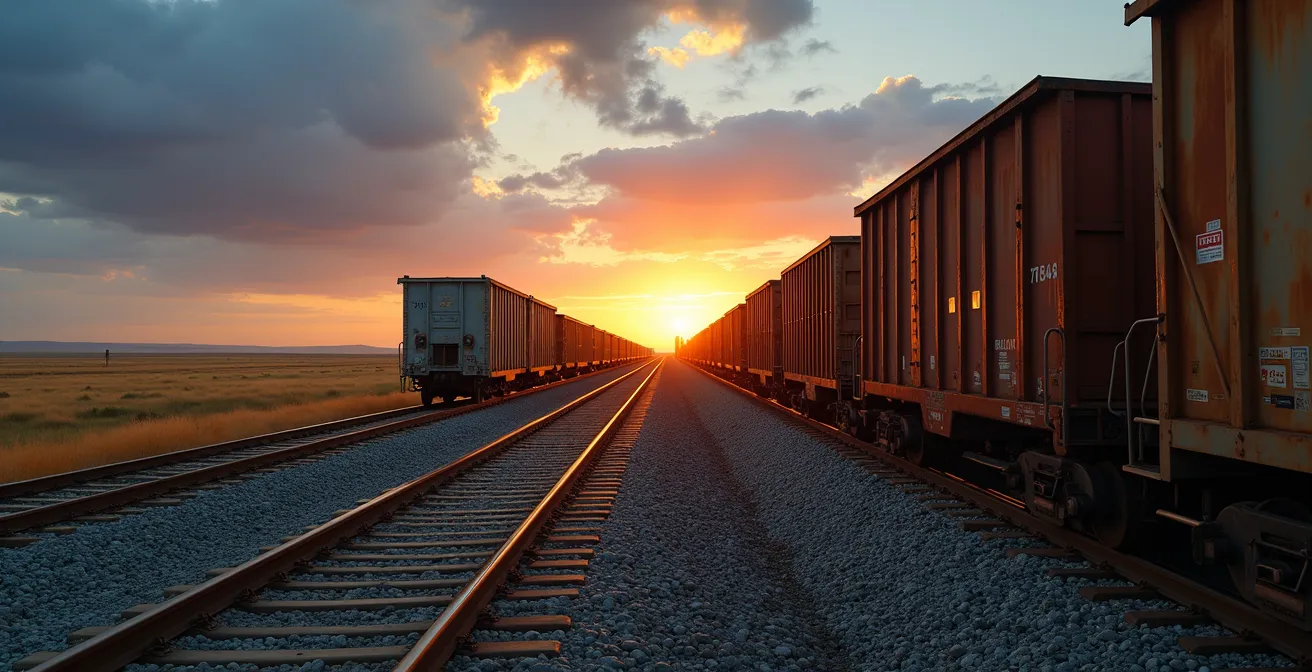
The single most important “friction point” of a journey on The Canadian is the high probability of delays. This is not a fault of VIA Rail’s operations but a structural reality of the Canadian rail network. It’s a critical piece of information that many first-time travellers overlook. The core issue is that VIA Rail owns only 3% of the track on which it operates. The vast majority of the Toronto-Vancouver route runs on tracks owned by freight companies like CN Rail.
By law and by economic reality, freight trains have priority. These massive trains carrying grain, lumber, and other goods are the economic backbone of the country and will always take precedence. This means The Canadian frequently has to pull onto sidings to let freight trains pass, leading to delays that can range from a few hours to, in some cases, over a day. Building a 24-hour buffer into your post-train travel plans is not just recommended; it is essential.
Case Study: The Reality of a Major Delay
In a 2024 review, a passenger on a short-haul VIA trip reported their three-hour journey from Quebec City to Montreal turned into nine hours because their train had to assist a broken-down freight train. For their significant delay, compensation was limited to a travel voucher and pizza. This incident highlights a crucial point for transcontinental travellers: in the event of a major delay, Sleeper Plus passengers are largely on their own to rebook missed flights, hotels, and connections, often with limited compensation. The financial and logistical stress can be immense.
This is where Prestige Class offers its ultimate and most valuable form of experience insurance. Each Prestige car has a dedicated concierge whose primary role during a delay is to proactively manage the consequences for their passengers. While the train is stopped, they are on the phone rebooking flights, arranging hotels, and ensuring connections are met. The all-inclusive meal and bar service continues unabated, insulating passengers from the stress unfolding outside. This service transforms a potential travel disaster into a minor inconvenience, providing invaluable peace of mind that, for many, justifies the entire cost of the ticket.
For travellers where a seamless, stress-free experience is paramount, the investment in Prestige Class is not a splurge, but a strategic choice for a truly restful journey across Canada. The next step is to evaluate your own travel priorities against this framework of comfort, logistics, and risk management.