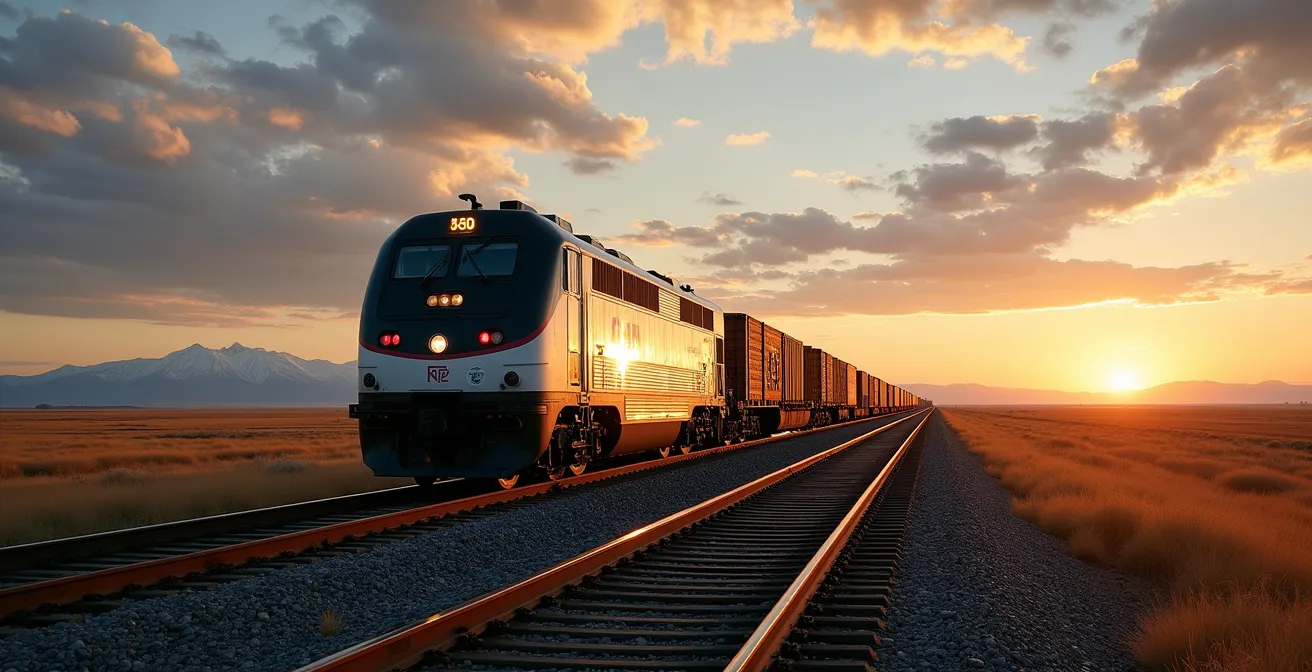
The key to a successful journey on The Canadian isn’t hope; it’s understanding you’re a guest on a freight line, not a passenger on a dedicated service.
- Canada’s national rail network is owned and prioritized for multi-billion dollar freight operations, making passenger delays a systemic feature, not a bug.
- Significant delays are not just possible but probable, especially during summer construction season.
Recommendation: Shift your mindset from a rigid schedule to a land cruise with a flexible arrival date. The single most important action is to book a “buffer day” and never schedule connecting travel on your arrival day.
The journey aboard “The Canadian” is one of the world’s great travel experiences, a ribbon of steel stitching together the vast, disparate landscapes of the country from Toronto to Vancouver. The romantic vision is one of gazing at majestic Rockies from a panoramic dome car, lulled by the gentle rhythm of the rails. For many travelers accustomed to the clockwork precision of European or Japanese rail, however, this dream can collide with a frustrating reality: significant, unpredictable delays.
The common advice is simply to “be flexible,” but this misses the fundamental point. Travelers often assume passenger service is the priority, as it is on many national networks. This is the core misunderstanding. The truth lies not in operational failures, but in a rigid economic hierarchy that governs every mile of track. The Canadian doesn’t run on its own railway; it operates as a tenant on tracks owned by Canadian National (CN) Railway, a freight behemoth.
But what if the key to a successful trip wasn’t just tolerating delays, but understanding their systemic inevitability? This guide reframes the experience. We won’t just tell you the train might be late; we’ll explain the logistical and economic reasons why, transforming you from a frustrated passenger into an informed traveler. By grasping the concept that you are a guest on a freight line, you can move beyond frustration and adopt a strategic approach to planning that makes the journey as rewarding as the destination.
This article will dissect the operational realities of the Toronto-Vancouver route. We’ll explore the primacy of freight, the critical importance of buffer planning, and strategies to maximize your enjoyment, regardless of the schedule. By the end, you’ll have a clear, realistic framework for one of Canada’s most iconic adventures.
Summary: The Realities of Riding The Canadian Train
- Freight over passenger: why your train might stop for 2 hours in a siding?
- The “buffer day” rule: never booking a flight home the same day the train arrives
- Getting a seat in the Skyline car: strategy for peak scenic hours in the Rockies
- Why the Prairie provinces section takes 24 hours and how to stay entertained?
- Winter vs. Summer crossing: trade-offs between daylight hours and snow scenery?
- Why construction season delays travel by hours in summer months?
- Missing local ferry connections due to tide schedules: a planning risk
- Rail Journeys in Canada: Is “Prestige Class” Worth the Price Tag?
Freight over passenger: why your train might stop for 2 hours in a siding?
The single most important concept to understand about The Canadian is the economic hierarchy of the rails. Unlike many national passenger carriers that own their infrastructure, VIA Rail is a tenant on tracks primarily owned and operated by Canadian National (CN) Rail. CN’s business is moving freight—billions of dollars worth of grain, potash, lumber, and manufactured goods—across the continent. The Canadian passenger train, in this context, is a secondary user of the system.
This reality becomes most apparent when your train grinds to a halt on a siding, a short stretch of parallel track, often in the middle of nowhere. This isn’t a breakdown; it’s by design. Much of the cross-country route is single-tracked. When a passenger train and a freight train are headed towards each other, one must yield. Given the legal and economic imperatives, it is almost always the passenger train. You will wait as monster freight trains, sometimes over two miles long, thunder past.
The on-time performance statistics paint a stark picture of this reality. While VIA Rail strives for punctuality, its performance is subject to the whims of freight traffic, a situation that saw its on-time performance which had plummeted, with just 8% arriving on schedule in 2017, a dramatic drop from previous years. Understanding this dynamic is key: a two-hour stop in a siding isn’t an anomaly; it’s a standard operational procedure that prioritizes the movement of goods that are the lifeblood of the Canadian economy.
Embracing this reality transforms a frustrating wait into a moment of insight into the sheer scale of Canada’s industrial logistics.
The “buffer day” rule: never booking a flight home the same day the train arrives
Given the systemic nature of delays, the most critical piece of practical advice is the “buffer day” rule. This is a non-negotiable principle for stress-free travel on The Canadian: never book a connecting flight, ferry, or crucial appointment on the same calendar day your train is scheduled to arrive. To do so is to gamble against a system designed to prioritize freight over your schedule. Delays are so common that VIA Rail itself has factored them in; in response, the official schedule was permanently lengthened to four days and four nights to create a more realistic timeline, yet significant additional delays persist.
A “buffer day” means planning to stay overnight in your arrival city (Vancouver or Toronto) and booking onward travel for the following day at the earliest. For international flights, a 48-hour buffer is even wiser. This single planning decision is the difference between a relaxed conclusion to an epic journey and a frantic, expensive scramble to rebook flights and find last-minute accommodation. The frustration is palpable for travelers who watch their flight’s departure time tick closer while the train is stationary in the Fraser Canyon.

Proactive planning is your best tool. Research hotels near your arrival station (Pacific Central in Vancouver or Union Station in Toronto) in advance. Know the public transit routes to the airport, like the Canada Line SkyTrain from Vancouver’s station area to YVR. While VIA Rail may offer travel credits for significant delays, they do not cover consequential costs like missed flights or hotels. The responsibility for managing this logistical risk lies entirely with the traveler.
Action Plan: Navigating Arrival Delays on The Canadian
- Commit to the Buffer: Never book connecting travel for the same day as your scheduled arrival. Build in a minimum 24-hour buffer.
- Prepare for Rebooking: Keep the phone numbers for major Canadian airlines like Air Canada (1-888-247-2262) and WestJet readily accessible.
- Research Accommodations: Pre-select a few hotel options near Pacific Central Station (Vancouver) or Union Station (Toronto) in case of a late-night arrival.
- Map Your Escape: Familiarize yourself with the transit route from the train station to the airport, such as the Canada Line SkyTrain’s path to YVR.
- Understand Compensation: Know that VIA Rail compensation is typically limited to travel credits for future journeys, not cash refunds for your missed connections.
By treating the scheduled arrival time as an estimate rather than a guarantee, you align your expectations with the operational reality of the journey.
Getting a seat in the Skyline car: strategy for peak scenic hours in the Rockies
While delays are a major theme, the unparalleled scenery, especially through the Rocky Mountains, remains the primary draw of the journey. The best vantage point is from the panoramic dome of a Skyline or Park car. These iconic stainless-steel cars, a hallmark of the service, feature an upper level encased in glass, offering 360-degree views. However, securing a seat here during the most spectacular stretches—particularly between Jasper and Kamloops on the westbound route—requires a strategy, as demand far outstrips supply.
The key is anticipation. Don’t wait until you see mountains out your cabin window. For prime viewing of landmarks like Mount Robson, you should aim to be in the dome car 30 to 45 minutes before the train is expected to approach the area. Onboard staff can often provide a rough estimate of when you’ll hit these key scenic points. Furthermore, be mindful of etiquette; these are shared spaces. A good rule of thumb is a 60-90 minute rotation, allowing others a chance to enjoy the view.
There are also tactical times to visit. The dome cars are often less crowded during meal service hours in the dining car. If you opt for an early or late dinner seating, you can use the intervening time to enjoy a quieter dome car experience. Another excellent option is the rear-facing dome in the Park Car (accessible to sleeper class passengers), which often has better availability and offers a unique perspective of the tracks receding into the distance. Early mornings are also a fantastic time, catching the first light on the peaks with only a few other passengers for company.
A little bit of planning transforms the competition for a seat into a guaranteed front-row experience for one of the world’s most beautiful train rides.
Why the Prairie provinces section takes 24 hours and how to stay entertained?
After the rugged Canadian Shield and before the grandeur of the Rockies lies the vast expanse of the Prairies. This 24-hour-plus stretch across Manitoba and Saskatchewan can feel monotonous to the unprepared, a long, flat interlude between scenic highlights. However, understanding the operational reasons for its length and embracing the onboard experience can turn this segment into a surprisingly enjoyable part of the journey. The sense of scale is immense, and the “Living Skies” of Saskatchewan offer sunsets and cloud formations unlike anywhere else.
A significant portion of this time is accounted for by the long stop in Winnipeg, which can last up to four hours. This is a major operational hub for VIA Rail. Here, a complete crew change takes place, the dining car is fully re-provisioned with fresh supplies for the next leg of the journey, and the train undergoes major refueling and water refills. Rather than being an idle delay, it’s a critical logistical reset. It also provides a rare opportunity for passengers to disembark, stretch their legs, and explore the area around the historic station.
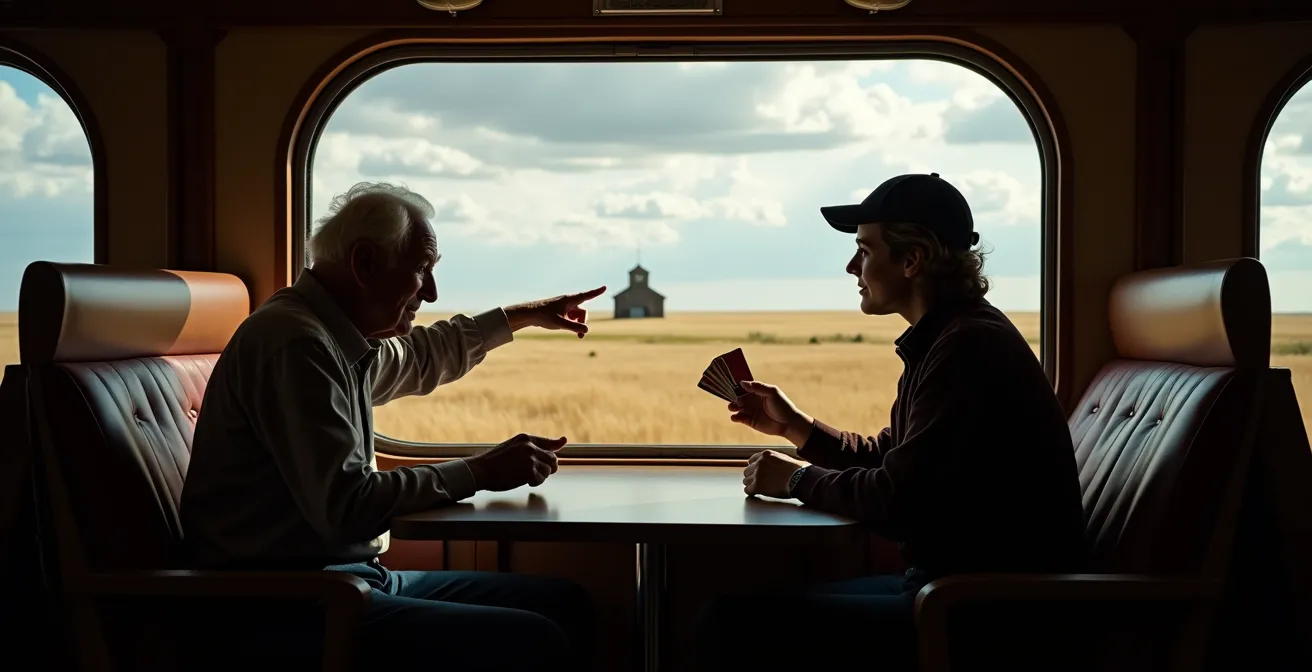
This slower-paced section is the perfect time to engage with the social fabric of the train. VIA Rail staff often use these quieter hours to share stories about railway history, and the lounge car becomes a hub for card games and conversation. The onboard activity schedule, often posted in the Skyline car, will feature events like wine or beer tastings showcasing Canadian products. It’s also the best time to learn about the history of the grain elevators that dot the landscape or to spot wildlife like pronghorn antelope. Instead of a segment to be endured, the Prairie crossing is an invitation to slow down and appreciate the journey itself.
By shifting your focus from “getting through it” to “engaging with it,” the Prairies become an integral and memorable chapter of the cross-Canada saga.
Winter vs. Summer crossing: trade-offs between daylight hours and snow scenery?
Choosing when to travel on The Canadian involves a significant trade-off between the long, bright days of summer and the magical, snow-covered landscapes of winter. There is no single “best” time; the ideal season depends entirely on your priorities. Summer offers the maximum daylight for scenery viewing, but it’s also the peak season for both tourism and track maintenance, which can exacerbate delays.
Summer travel, particularly in June, July, and August, provides up to 16 hours of daylight, ensuring that you’ll pass through the most scenic parts of the Rockies during waking hours. The landscape is a vibrant green, and the mountain lakes are a stunning turquoise. However, this is also peak season, a fact confirmed by travel data showing May and September are the busiest months, with the summer months close behind. This means more competition for dome car seats and higher prices. Crucially, it’s also construction season, a topic we’ll explore in detail next.
Winter, conversely, offers a completely different, arguably more dramatic, experience. The Rockies draped in a thick blanket of snow is a breathtaking sight, and the train feels like a cozy refuge against the cold. The cars are less crowded, creating a more intimate atmosphere. The primary drawback is the limited daylight. With as little as 8 hours of sun, you are guaranteed to traverse some scenic sections in darkness. Winter weather can also introduce its own delays, with heavy snow and extreme cold affecting track conditions, though freight and construction delays are typically less frequent.
| Feature | Summer Crossing (May-Sept) | Winter Crossing (Nov-Mar) |
|---|---|---|
| Daylight Hours | Excellent (14-16+ hours) | Poor (8-9 hours), some scenery missed in darkness |
| Scenery | Green forests, turquoise lakes, visible wildlife | Dramatic snow-covered peaks, “winter wonderland” feel |
| Delay Risk | High (peak freight traffic, construction season) | Moderate (severe weather risk, but less freight/construction) |
| Onboard Atmosphere | Busy, social, high energy | Quieter, cozy, more intimate |
| Cost & Availability | Higher prices, book well in advance | Lower prices, better availability |
Ultimately, you must decide what you value more: seeing everything under the summer sun or experiencing the serene, stark beauty of a Canadian winter from the warmth of the train.
Why construction season delays travel by hours in summer months?
While freight traffic is the chronic cause of delays on The Canadian, the acute cause, especially during the summer, is track construction. The same window of warm weather that makes for pleasant travel is also the only time CN can perform essential, large-scale maintenance on its network. This work is not optional; it’s required to keep the multi-billion dollar freight corridor safe and operational. For passengers, this means entire sections of the track can be closed for hours at a time.
This work, known as a “work block,” involves replacing rails, ties, and ballast (the gravel bed that supports the track). During these periods, all train traffic, including passenger trains, must either be rerouted or held. The result is a compounding effect on the already congested network. A scheduled 4-hour work block can easily lead to a 6 or 8-hour delay for The Canadian as it waits for the track to reopen and then contends with the backlog of freight trains that were also held up.
The impact can be extreme. There have been periods where delays reached nearly two full days in length during peak summer maintenance schedules. As noted in reports on CN’s infrastructure challenges, the combination of high freight volume and summer construction work blocks creates a perfect storm for passenger rail. It underscores the reality that passenger schedules are entirely subordinate to the integrity and maintenance of the freight network. When choosing a summer departure, a traveler isn’t just booking a train ticket; they’re booking passage through a live, heavy-industrial work zone.
Therefore, a summer traveler must approach the journey with an even greater degree of temporal elasticity, understanding that the schedule is subject to the pressing needs of both freight traffic and infrastructure renewal.
Missing local ferry connections due to tide schedules: a planning risk
For westbound travelers, the journey’s end in Vancouver is often the start of another adventure, frequently involving a connection to BC Ferries for travel to Vancouver Island or the Sunshine Coast. This final leg introduces a new and unforgiving variable: tide schedules. A delay of several hours on the train can easily cause you to miss the last sailing of the day, a risk that requires specific contingency planning.
BC Ferries operates on a tight schedule, and reservations are typically forfeited if you don’t check in at the terminal (like Tsawwassen for Victoria) at least 30 minutes prior to sailing. Unlike an airline that might have another flight in a few hours, the last ferry, often around 9 PM, is final. Missing it means an unplanned overnight stay. On a busy summer weekend, even if you arrive in time for an earlier sailing than the one you booked, you may have to wait for several sailings (6-8 hours) for available space if you’ve lost your reservation.
Your best defence is proactive monitoring and a backup plan. In the 24 hours before your scheduled arrival, keep a close watch on VIA Rail’s service updates. If a significant delay becomes apparent, use the BC Ferries mobile app to try and modify your booking for a later sailing. You should also have a pre-researched list of hotels near the ferry terminal or back in downtown Vancouver. For connections to Victoria, know that Harbour Air Seaplanes, which fly from downtown Vancouver’s harbour, offer a faster, albeit more expensive, alternative for the next day. This specific, high-stakes risk at the journey’s end highlights the cascading effect of the train’s temporal elasticity.
Managing this risk is the final test of the savvy traveler, capping the trans-continental journey with a last piece of logistical jiu-jitsu.
Key Takeaways
- The Canadian operates as a guest on tracks owned by CN Rail, whose priority is freight. Delays are a built-in feature of this system.
- The “Buffer Day Rule” is essential: never book connecting travel on your arrival day. Plan for an overnight stay.
- Summer brings long daylight hours but also peak construction, increasing delay risks. Winter offers dramatic snowscapes but limited daylight.
Rail Journeys in Canada: Is “Prestige Class” Worth the Price Tag?
For travelers with a flexible budget, a compelling question arises: can you simply pay to solve the delay problem? VIA Rail’s Prestige Class is the highest level of service, positioned as an all-inclusive, luxury experience. While it cannot prevent delays, it fundamentally changes how you experience them, transforming a potential ordeal into a comfortable, even pleasant, wait.
The cost is substantial. As one analysis notes, it’s a C$10,000+ price tag for a couple, which puts it in the same financial league as a premium international trip.
For a Canadian couple, the C$10,000+ price tag is equivalent to a business class trip to Europe.
– Travel comparison analysis, Canadian travel cost comparison
So, what does that investment buy you in the context of a 6-hour siding stop? The value lies in amenities that directly mitigate the inconvenience. Prestige cabins are the only ones with a private, full-size washroom including a shower. They feature a sectional couch for lounging, a larger picture window, and all-inclusive bar service. A long delay ceases to be a confinement and becomes an extended period in your own private, mobile lounge.
Perhaps the most significant benefit is the dedicated Prestige concierge. This individual acts as a personal logistics manager. During a major delay, while other passengers are scrambling on their phones, the concierge is proactively rebooking connections, arranging hotels, and managing the fallout. This service transforms the stress of uncertainty into a background problem being handled by a professional. Therefore, the value proposition of Prestige Class is not about arriving faster; it’s about insulating yourself from the discomfort and stress that the inherent delays of the system can cause.
Ultimately, the decision rests on a personal calculation: whether the high price is a worthy investment for transforming systemic unpredictability into a seamless, stress-free luxury experience.
Frequently Asked Questions about The Canadian’s Schedule and Connections
What happens if The Canadian’s delay causes me to miss my BC Ferry?
Your reservation is automatically cancelled if not claimed 30 minutes before sailing. You’ll need to wait for space on the next available ferry, which could be 3-4 sailings (6-8 hours) on busy summer weekends.
Can I get compensation from VIA Rail for missed ferry connections?
VIA Rail’s compensation policy provides travel credits for train delays but does not cover consequential losses like missed ferries, hotels, or other transportation.
What are alternatives if I miss the last ferry to Victoria?
Options include staying overnight near Tsawwassen or downtown Vancouver, then taking the first morning ferry, or booking a Harbour Air Seaplane from downtown Vancouver’s harbour.