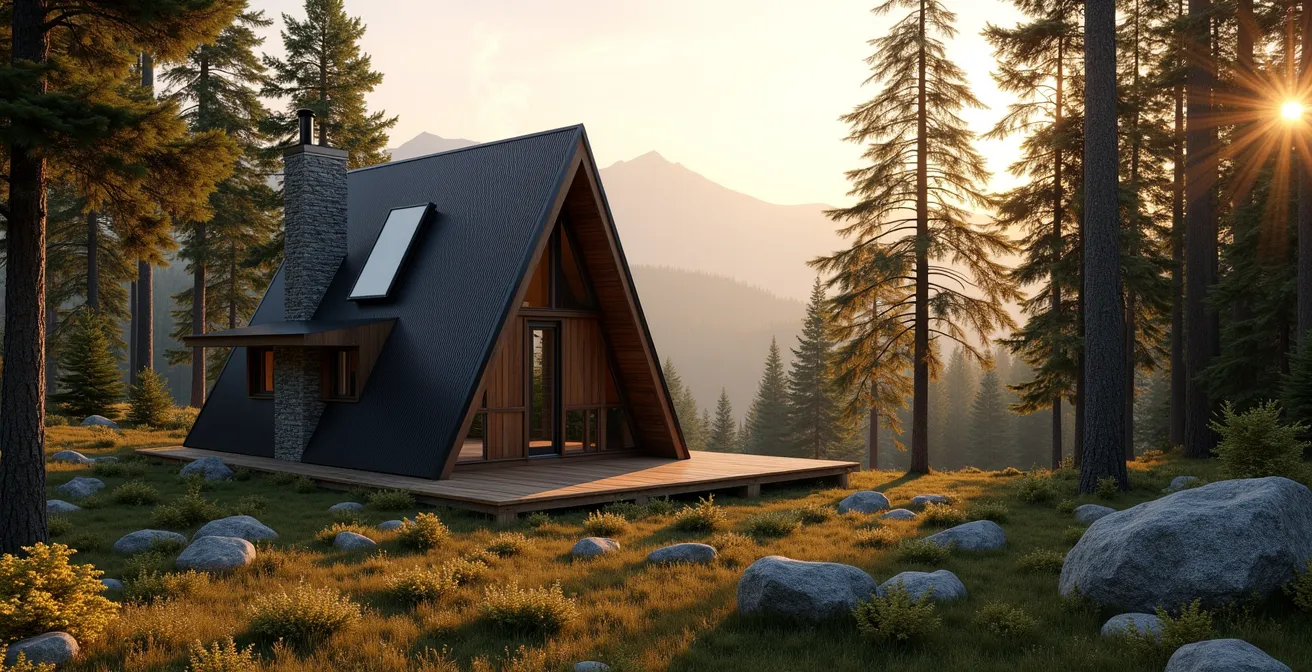
The fantasy of a Canadian eco-retreat is a luxury hotel in the wild; the reality is a valuable lesson in the operational limits of true sustainability.
- Off-grid comfort relies on managing a finite “energy budget,” not unlimited power.
- Modern “closed-loop” systems like composting toilets are odourless and hygienic, but require user participation.
Recommendation: Before booking, audit a retreat’s claims by asking specific questions about their energy, waste, and water systems to ensure their definition of “comfort” matches yours.
The image is alluring: a sleek cabin nestled in the vast Canadian wilderness, a warm glow emanating from within, promising a comfortable escape from the daily grind. Marketing materials for eco-retreats sell a dream of seamless, sustainable luxury. They showcase king-sized beds, panoramic windows, and serene landscapes, suggesting you can have all the comforts of home while being completely off-grid. But as a sustainable tourism auditor, my role is to look past the glossy photos and examine the operational reality. What happens when you try to plug in your hair dryer? What is the real story behind the plumbing?
Most travelers focus on location and aesthetics, overlooking the fundamental systems that make an off-grid stay possible. The truth is, genuine eco-lodges operate on principles of conservation and resource management, not unlimited abundance. This doesn’t mean sacrificing comfort, but it does require a shift in perspective. The true luxury of these stays isn’t about replicating urban convenience; it’s about understanding and participating in a more intentional way of living. It’s about appreciating the elegant engineering that provides a hot shower from solar power or a clean, odour-free toilet that creates compost instead of waste.
But if the core of the experience isn’t about unlimited amenities, what is it? The key lies in understanding the non-negotiable trade-offs and brilliant innovations that define authentic sustainable travel. This guide moves beyond the marketing hype to give you an auditor’s perspective. We will deconstruct the core systems of a Canadian eco-retreat, from the hard limits of solar power to the surprisingly sophisticated science of composting toilets. By understanding these realities, you can set the right expectations, spot greenwashing, and choose a retreat that delivers a genuinely comfortable and restorative off-grid experience.
This article provides an in-depth look at the realities of staying in an off-grid eco-retreat, helping you navigate your choices with an expert’s eye. The following summary outlines the key systems and strategies we’ll explore.
Summary: Your Field Guide to Off-Grid Realities
- Solar power limits: why you can’t use your hair dryer in an eco-cabin?
- Compost toilets 101: overcoming the “ick” factor for first-time users
- Why “glamping” in a geodesic dome costs more than a downtown hotel?
- Green Key Global vs. self-proclaimed eco: how to spot greenwashing?
- The detox reality: coping with zero Wi-Fi when you need to check emails?
- Booking eco-lodges 12 months in advance for prime season access
- Why light pollution guidelines are strict in dark sky preserves?
- Nordic Wellness Centers: Etiquette and Benefits of the Thermal Cycle
Solar power limits: why you can’t use your hair dryer in an eco-cabin?
The most common point of friction between guest expectations and off-grid reality is power. An eco-cabin isn’t connected to a massive, stable electrical grid. It operates on a self-contained system, usually solar, which functions like a daily energy budget. The solar panels collect energy during the day, storing it in a battery bank. This stored power must last through the evening, night, and potentially through cloudy days. It’s a finite resource that must be managed consciously.
The issue with appliances like hair dryers, electric kettles, or space heaters isn’t just their consumption, but the *type* of demand they create. These are “high-wattage resistive loads” that draw an enormous amount of power instantly, which can overwhelm the system’s inverter (the device that converts DC battery power to AC household power) and drain the battery at an alarming rate. Even with impressive advancements—a recent report confirms Canada’s solar energy capacity grew 92% in the last five years—an individual cabin’s system is designed for efficiency, not peak demand. Using one forbidden appliance can deplete the power needed for essentials like lights, a water pump, or charging a laptop for an entire evening.
Responsible hosts provide clear guidelines on what is safe to use. Understanding this energy budget is part of the experience. It encourages a mindful approach to consumption that is simply not required in a typical hotel.
- Go Ahead: Phone charging (5-10W), LED lights (7-15W), laptop charging (45-65W)
- Ask First: CPAP machine (30-60W), small fan (20-40W), camera battery charging (50W)
- Forbidden: Hair dryer (1200-1875W), electric kettle (1500W), space heater (1500W)
Compost toilets 101: overcoming the “ick” factor for first-time users
For many travellers, the term “compost toilet” conjures images of a smelly, unpleasant outhouse. This is perhaps the greatest misconception about modern eco-retreats. Today’s systems are sophisticated, odour-free, and a cornerstone of sustainable water management. They are not primitive; they are a highly engineered closed-loop system designed to turn human waste into a safe, nutrient-rich soil amendment while conserving massive amounts of water.
The “ick” factor almost always stems from a lack of understanding of the process. Modern composting toilets work by separating liquids from solids and providing a carbon-rich environment (usually with sawdust or peat moss) that facilitates aerobic decomposition. A built-in ventilation fan continuously pulls air down through the toilet and vents it outside, ensuring no odours escape into the bathroom. In reality, a well-maintained compost toilet is often less odorous than a conventional flush toilet.
Places like Nature’s Harmony Ecolodge in Ontario have successfully operated for years with private compost toilets, demonstrating their efficacy and guest acceptance. Using one is simple: use it as you normally would, then add a scoop of the provided dry material. It’s a small, mindful action that connects you directly to the retreat’s conservation efforts.
The following table addresses the most common myths, contrasting them with the reality of the advanced systems found in Canadian eco-retreats.
| Common Myth | Reality in Modern Systems |
|---|---|
| They smell terrible | Modern ventilation systems and dry materials like wood shavings make them less odorous than many outhouses |
| They’re unsanitary | Waste composts down to 3% of original volume and creates pathogen-free compost |
| They’re complicated to use | Simple process: use normally, add one scoop of sawdust after each use |
| They waste water | Save 70 gallons of water daily compared to traditional flush toilets |
Why “glamping” in a geodesic dome costs more than a downtown hotel?
A frequent point of confusion for travellers is the price tag of “glamping” (glamorous camping). How can a night in a tent or dome in the middle of nowhere cost as much, or more, than a four-star hotel in a city? The answer lies in the fundamental difference between operational costs and infrastructure investment. A city hotel plugs into existing, publicly funded infrastructure: the electrical grid, municipal water and sewer lines, and paved roads. Its primary costs are operational—staffing, maintenance, and property taxes.
An off-grid retreat, by contrast, must build every single one of those systems from scratch in a remote location. The price of your stay isn’t just covering the cost of the beautiful dome; it’s paying for the significant capital expense of the solar power system, the battery bank, the well that was drilled for water, the septic or composting system, and the private road needed to access the site. These are enormous upfront costs that must be amortized over the life of the business.
A case in point is an off-grid retreat built in Ontario, which required not only the initial construction but also upgraded solar systems, foam-insulated floors for year-round comfort, specialized propane appliances, and a backup generator. This high initial infrastructure investment is what delivers the “comfort” in a remote setting. You are paying for the privilege of having a hot shower, a comfortable bed, and a warm shelter in a place where none of those things would naturally exist.
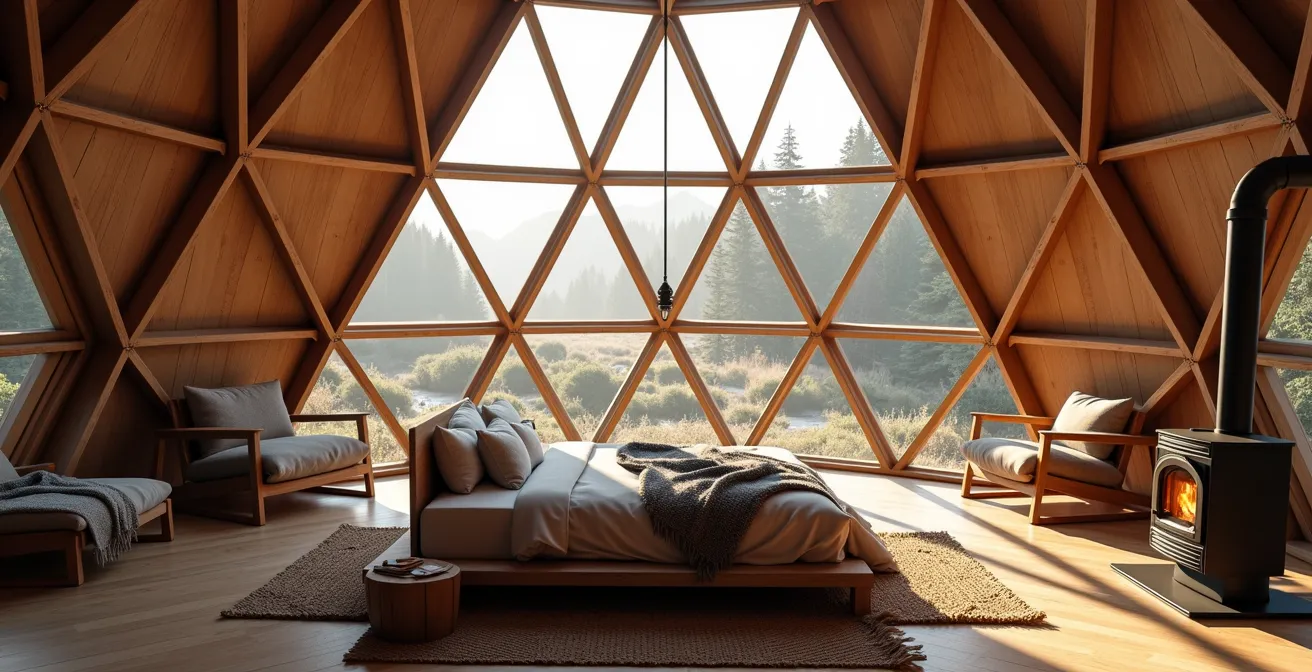
This image showcases the end result of that investment: a luxurious interior seamlessly integrated into the wilderness. The cost reflects the complexity of creating this experience, not just the nightly rental.
Green Key Global vs. self-proclaimed eco: how to spot greenwashing?
In the booming market of sustainable travel, the word “eco” is used so frequently it has often lost its meaning. Many establishments engage in “greenwashing”—making vague or misleading claims about their environmental practices. So how does a discerning traveller conduct an authenticity audit? The key is to look for specifics and third-party validation, rather than relying on self-proclaimed labels.
In Canada, one of the most reliable indicators is the Green Key Global certification program. This internationally recognized system rates hotels and lodges on a scale of 1 to 5 Keys based on a rigorous audit of their environmental performance. A property with a 1-Key rating has taken initial steps, while a 5-Key property is a leader in sustainable practices. As the official standards note:
A 5-Key property in Canada has implemented significant innovations in energy conservation and community engagement
– Green Key Global Standards, Canadian Eco-Certification Guidelines
If a property isn’t certified, it doesn’t automatically mean it’s not sustainable, but it does mean you need to do more homework. A truly eco-conscious operator will be transparent and proud to answer specific questions about their practices. Vague answers or a focus solely on “being in nature” are red flags. Use the following checklist to probe deeper and verify their claims.
Your Greenwashing Detective Checklist: Questions to Ask a Retreat
- Indigenous partnerships: “How do you partner with local First Nations communities?”
- Waste management: “Can you describe your wastewater treatment or composting system?”
- Energy sources: “What percentage of your power is generated on-site from renewable sources?”
- Local sourcing: “Where do you source your firewood and building materials?”
- Certifications: “Are you certified by Green Key Global, Biosphere, or another third-party program?”
The detox reality: coping with zero Wi-Fi when you need to check emails?
The promise of a “digital detox” is a major draw for many eco-retreats. The idea of unplugging, escaping the constant barrage of notifications, and reconnecting with nature (and oneself) is deeply appealing. However, the reality of having absolutely zero connectivity can be jarring, especially for those who feel a professional or personal obligation to be reachable. The initial peace can quickly turn to panic when you remember an important email you need to check.
This is a normal part of the process. Establishments like Pine Brae Eco Resort in Lanark County, Ontario, are designed around this experience. Guests at these Zen-like cabins often report an initial anxiety that gives way to a profound sense of peace and a slower pace of life. They rediscover activities like reading, board games, or simply having long conversations. The absence of a screen creates a vacuum that is filled by more present and mindful activities.
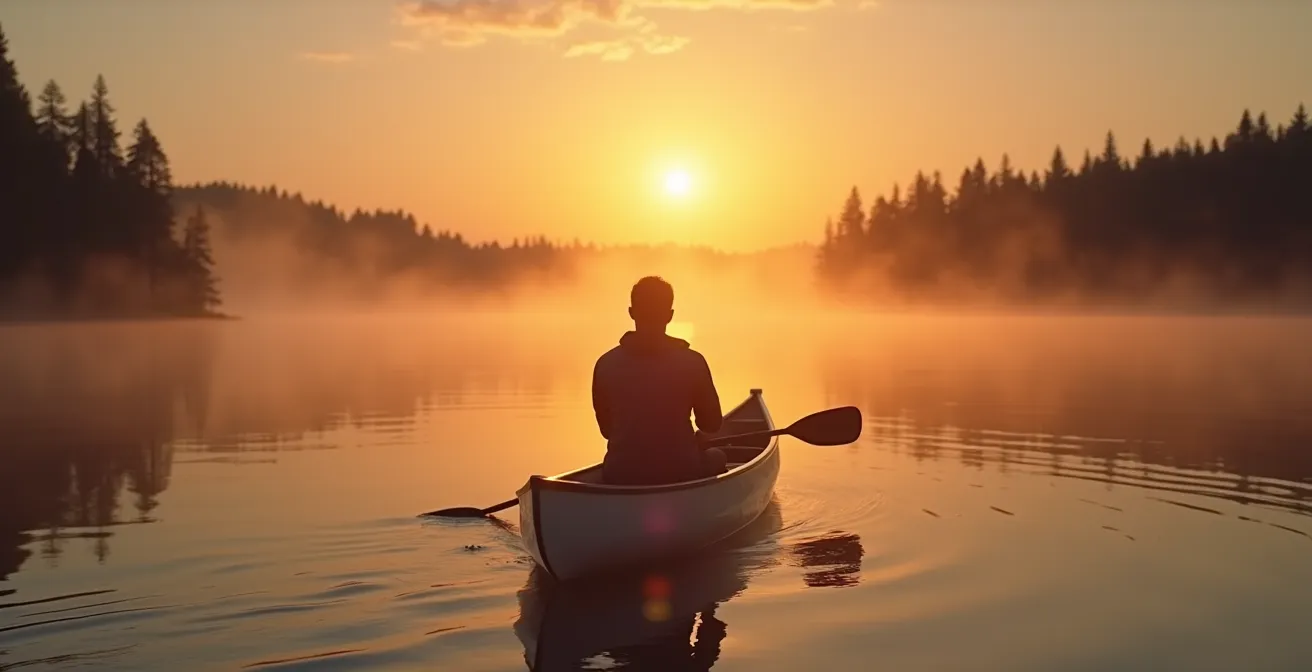
Successfully navigating a digital detox isn’t about ignoring your responsibilities; it’s about planning for disconnection. A few proactive steps can alleviate the anxiety and allow you to fully embrace the benefits of being offline.
- Download offline maps: Use apps like Google Maps or download official Parks Canada maps before you lose service.
- Set a clear auto-responder: Craft a detailed email auto-reply explaining you are off-grid with no access and when you will return.
- Identify a connectivity oasis: Research the nearest town with a library or café that offers Wi-Fi for a scheduled, once-a-trip check-in, if absolutely necessary.
- Inform key contacts: Let family and colleagues know your exact dates of disconnection.
- Prepare for re-entry: Have a plan for managing the flood of information upon your return to avoid feeling immediately overwhelmed.
Booking eco-lodges 12 months in advance for prime season access
One of the most surprising operational realities of booking a top-tier Canadian eco-lodge is the lead time required. Unlike large hotel chains with hundreds of rooms, authentic eco-retreats are, by nature, small-scale operations. They might have only two to ten cabins available. This limited supply, combined with a surge in demand for authentic, sustainable travel, means that prime dates get booked up far in advance—often a full year or more.
This is especially true for destinations tied to specific seasonal events, such as viewing the Aurora Borealis in the Yukon, seeing the fall colours in the Laurentians, or catching iceberg season in Newfoundland. Waiting until a few months before your desired travel date will almost certainly lead to disappointment. The best lodges, those with verifiable green credentials and stellar reviews, cultivate a loyal following of repeat guests who often book their next stay upon checkout.
As an auditor, I advise treating the booking process with the same diligence as planning a major international trip. You must be strategic and proactive. The table below provides a general guideline for booking windows in popular Canadian regions, but the cardinal rule is always: the earlier, the better. For the most sought-after properties, as soon as booking opens for the next year, you should be ready to secure your spot.
This planning is not an inconvenience; it is a direct reflection of the exclusivity and high demand for these unique, low-impact travel experiences.
| Region/Event | Prime Season | Book By |
|---|---|---|
| Yukon Aurora Season | September-April | 12-14 months ahead |
| Laurentians Fall Colors | September-October | February |
| Cabot Trail Summer | July-August | January |
| Rocky Mountain Larch Season | September | January |
| Newfoundland Icebergs | May-July | November prior year |
Why light pollution guidelines are strict in dark sky preserves?
Many premier eco-lodges are located within or near designated Dark Sky Preserves. While guests anticipate spectacular stargazing, they are often surprised by the strict rules governing light usage, such as “lights out by 10 PM” or requirements to use only red-light flashlights. These guidelines aren’t just for improving the view; they are a critical component of the ecological mandate of these preserves.
Artificial light at night has a profound and often detrimental impact on ecosystems. It can disrupt the navigational abilities of migratory birds, alter the predator-prey dynamics of nocturnal animals, and interfere with the reproductive cycles of numerous species, from amphibians to insects. The primary goal of a Dark Sky Preserve is to protect the natural nocturnal environment. The stunning starry sky is a wonderful consequence of that primary mission of conservation. In this, Canada is a world leader, hosting major dark sky preserves including Jasper, Mont-Mégantic, and Grasslands National Park.
When you stay in or near one of these preserves, you are a temporary resident of a sensitive habitat. Adhering to the light pollution guidelines is your part of the conservation agreement. Your host isn’t being difficult by asking you to draw your blinds or turn off exterior lights; they are upholding their commitment to the preserve’s integrity. Following the code of conduct is a sign of respect for the environment you came to enjoy.
- Use red light: Red-light flashlights are required as they do not compromise human night vision and have less impact on wildlife.
- Shield your lights: Keep cabin window coverings closed after dark to prevent light from leaking into the surrounding environment.
- Mind your headlights: When arriving or leaving at night, park your vehicle so that headlights do not point toward observation areas or other cabins.
- Respect quiet hours: Adhere to the “lights out” times designated by the preserve or your host.
Key Takeaways
- True off-grid comfort is about managing finite resources like power and water, not replicating unlimited urban convenience.
- Third-party certifications like Green Key Global are your most reliable tool for identifying genuinely sustainable operators and avoiding greenwashing.
- The most valuable luxuries of an eco-retreat—disconnection, silence, and darkness—require advance planning and a willingness to adapt your habits.
Nordic Wellness Centers: Etiquette and Benefits of the Thermal Cycle
While some amenities are limited by off-grid realities, one that aligns perfectly is the Nordic wellness experience. From rustic, wood-fired saunas on a lake to sophisticated spa complexes in Quebec’s Eastern Townships, the thermal cycle is a core part of the Canadian retreat experience. This ritual, involving a sequence of hot, cold, and rest, offers profound physical and mental benefits. However, to fully enjoy it, one must understand the process and the etiquette.
The experience is built around the thermal cycle. First, you spend 10-15 minutes in a hot environment (sauna, steam room) to open pores and increase circulation. This is followed by a brief but crucial plunge into cold water (a lake, a cold pool) for 10-30 seconds, which constricts blood vessels and creates a stimulating rush. Finally, a rest period of 15-20 minutes allows your cardiovascular system to regulate. Repeating this cycle 3-4 times induces deep relaxation and a sense of well-being.
From the rustic simplicity of a wood-fired sauna and lake plunge at a place like Camp Blaze Retreat to the highly structured spas of Quebec, a common etiquette ensures a peaceful experience for all. Respecting silent zones, showering before entering pools, and staying hydrated are universal rules. Understanding these small protocols allows everyone to benefit from this powerful wellness practice, which is perfectly suited to the mindful, restorative atmosphere of an eco-retreat.
Your Guide to Canadian Spa Etiquette
- Follow the circuit: Adhere to the sequence of Hot (10-15 min) → Cold (10-30 sec) → Rest (15-20 min).
- Respect the zones: Be mindful of designated silent areas versus social sections.
- Stay hydrated: Drink plenty of water between cycles to replenish fluids.
- Shower first: It is mandatory etiquette to shower before entering any communal pools or hot tubs.
- Plan your time: A complete experience with 3-4 cycles will typically take 2-3 hours.
By approaching your next eco-retreat booking with the curious and critical eye of an auditor, you can move beyond the marketing and choose an experience that is not only truly sustainable, but also genuinely and deeply comfortable. The next step is to start your research with these questions in mind.