True exploration of Canadian craft beer means understanding the nation’s unwritten rules and complex provincial quirks.
- Regional styles are deeply tied to local identity, from British Columbia’s piney IPAs to Nova Scotia’s juicy hazies.
- What you eat (or don’t eat) in a brewery is directly shaped by specific provincial food and liquor licensing laws.
Recommendation: Before you visit, check local regulations and a brewery’s license type to manage your expectations and drink like an insider.
The explosive growth of Canada’s craft beer scene is impossible to ignore. For the discerning beer geek, this landscape offers a thrilling frontier of flavour and culture to explore. Yet, many guides stop at the most basic advice: “try a tasting flight.” This only scratches the surface. The true ale trail experience isn’t just about what’s in your glass; it’s about understanding the context surrounding it.
Navigating this world requires more than a palate for hops. It demands an appreciation for the provincial patchwork of regulations that dictates everything from food service to where you can enjoy your can of hazy IPA. It’s about recognizing the terroir of hops—how a West Coast IPA can taste like a British Columbia forest—and respecting the unspoken etiquette of the tasting room. This is the difference between being a tourist and being a temporary local.
This guide provides that insider knowledge. We’ll decipher the codes of ordering and sharing, explain the logistics of taking fresh beer home, and dive into the regional style wars. You’ll learn why one brewpub serves a full menu while another offers only pretzels, and discover the history behind iconic post-pint food rituals. This is your map to the authentic Canadian craft beer experience.
To help you navigate this rich and varied landscape, we’ve structured this guide to answer the most practical questions a beer traveler might have. From coast to coast, these insights will enhance every sip.
Summary: Exploring Craft Breweries: The ‘Ale Trail’ Culture and Etiquette
- Ordering tasting flights: the etiquette of sharing and tasting order
- How the refillable Growler system works for taking fresh beer to the hotel?
- West Coast IPA vs. East Coast Hazy: knowing what to expect in BC vs. NS?
- Brewpub food laws: why some tasting rooms only serve popcorn and others full meals?
- Drinking in parks: which cities allow open consumption of craft beer?
- Waiving the tasting fee: how many bottles do you need to buy?
- Kensington Market vs. St. Lawrence Market: which Toronto food tour fits your vibe?
- Pizza Corner history: why this intersection is the holy grail of late-night eats?
Ordering tasting flights: the etiquette of sharing and tasting order
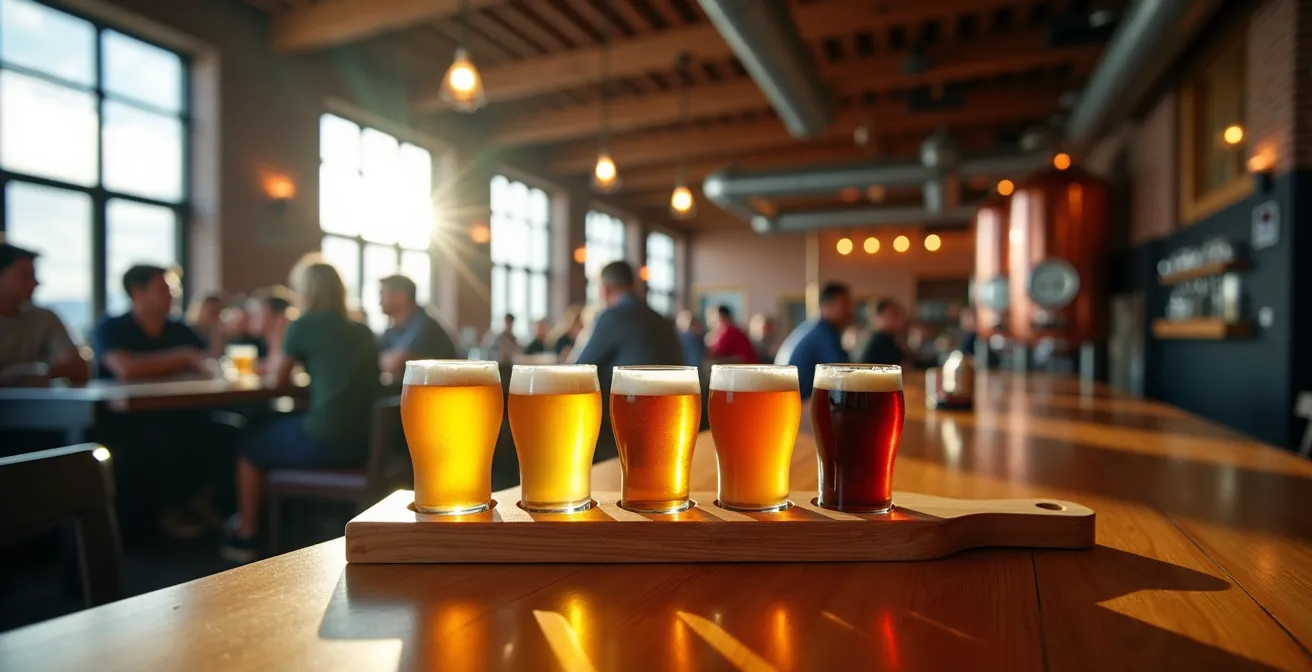
The tasting flight is the quintessential tool for exploring a new brewery’s portfolio, but navigating it with finesse separates the novice from the seasoned enthusiast. The goal is to appreciate the brewer’s art, not just to consume. This starts with the order of tasting. A common mistake is to go by colour, but the guiding principle should always be intensity and palate impact. Begin with lighter-bodied beers like pilsners, lagers, or wheat beers. From there, progress to hoppier styles like pale ales and IPAs, then move on to darker or more robust beers like porters and stouts. Sours and heavily fruited beers can be tricky; sample them either in their own progression or at the end, as their acidity can overwhelm your palate for more delicate styles.
Sharing a flight is a communal experience, but it has its own unspoken rules. The best protocol is to pour half-samples for each person, allowing everyone to taste from their own glass. Discuss your impressions after each beer, creating a shared dialogue. When it comes to tipping, the context is key. At a tasting-room-only counter where you just order drinks, tipping $1-2 per person (similar to a coffee shop) is standard. However, if you are at a full-service brewpub with table service, the standard 15-20% restaurant tip applies. Remember to take a sip of water between contrasting styles—especially between a sour and an IPA—to cleanse your palate and give each beer a fair tasting.
Finally, don’t be shy about engaging with the staff. Most Canadian breweries rotate their taps weekly, so asking about the rotation schedule or upcoming special releases is a great way to show genuine interest and plan your next “ale-venture.”
How the refillable Growler system works for taking fresh beer to the hotel?
One of the greatest joys of visiting a craft brewery is taking fresh, draft-only beer back to your hotel or home. In Canada, the primary vessel for this is the growler, a 64 oz (1.89L) reusable glass or steel jug. The process is simple: you purchase a branded growler from the brewery (or sometimes bring your own clean, unbranded one) and have it filled directly from the tap. It’s the most authentic way to enjoy draft beer outside the brewery walls, but its freshness is fleeting. Once opened, a growler should be consumed within 2-3 days for optimal flavour and carbonation.
For the beer-loving traveler, choosing the right take-home container depends on your plans. A glass growler is perfect for evening consumption at your hotel but can be cumbersome and is often prohibited in parks with glass bans. This is where its smaller cousins, the crowler and howler, come in. A crowler is a 32 oz (946ml) aluminum can that is filled and sealed on-site, offering a much longer shelf life of weeks or even months if kept cold. It’s lightweight and perfect for day trips or packing in a suitcase. A howler is simply a half-sized, 32 oz growler, ideal for sampling a special release without committing to a larger volume.
This comparative guide can help you decide which vessel best suits your travel needs. Note how freshness and portability are the key trade-offs in this decision.
| Container Type | Size | Best For | Freshness Window | Travel Considerations |
|---|---|---|---|---|
| Glass Growler | 64 oz (1.89L) | Hotel consumption | 2-3 days after fill | Not allowed in parks with glass restrictions |
| Crowler | 32 oz (946ml) | Day trips & hikes | 2-3 weeks sealed | Lightweight, single-use aluminum |
| Standard Cans | 355-473ml | Extended travel | 3-6 months | Ultimate convenience, stackable |
| Howler | 32 oz (946ml) | Sampling variety | 2-3 days after fill | Half-size glass option |
Ultimately, the choice comes down to intent. For immediate enjoyment of a taproom-exclusive beer, the growler is king. For long-term transport or gifting, the crowler or standard cans offer superior stability and convenience.
West Coast IPA vs. East Coast Hazy: knowing what to expect in BC vs. NS?
The India Pale Ale (IPA) is the undisputed champion of the craft beer world, but in Canada, its expression is a tale of two coasts. Understanding the fundamental differences between a British Columbia West Coast IPA and a Nova Scotia East Coast Hazy is crucial for any beer geek. The divergence isn’t just stylistic; it’s a reflection of local identity and brewing philosophy. With a market size that has reached 1.8 million hectolitres in 2024, regional diversification is a key driver of growth.
The West Coast IPA, with its spiritual home in British Columbia, is a tribute to the hop itself. Its defining characteristics are bitterness, a resinous or “piney” character, and brilliant clarity. This style finds its roots in Canada’s first-ever brewpub, Spinnakers, which opened in Victoria in 1984 and helped lay the foundation for a hop-forward tradition that reflects BC’s vast coniferous forests. Expect a crisp, dry finish and assertive aromas of citrus peel and pine needles. It’s a style built on precision and the bold expression of hops like Chinook and Centennial.
In contrast, the East Coast Hazy IPA (or New England IPA), popularized in hubs like Halifax, Nova Scotia, is all about texture and aromatic expression. These beers are intentionally opaque, with a soft, full-bodied mouthfeel that has been described as “juicy.” The focus is on late-addition and dry hopping with fruit-forward hops like Citra and Mosaic, which produce intense tropical fruit and stone fruit aromas (think mango, passionfruit, and peach) with very little perceived bitterness. It’s a softer, more aromatic take on the style.
However, the story doesn’t end there. As a testament to Canada’s evolving beer identity, the Prairie provinces are now creating their own distinct IPA styles. Often using local grains like barley and wheat, these beers strike a unique balance that is neither aggressively bitter like their western counterparts nor overwhelmingly juicy like those from the east, showcasing a truly Canadian middle ground.
Brewpub food laws: why some tasting rooms only serve popcorn and others full meals?
You walk into a brewery in Vancouver and find a full-service restaurant. The next day, you visit another one just blocks away and are met with a simple counter serving only pre-packaged snacks. This common scenario isn’t a reflection of the brewery’s culinary ambition; it’s a direct result of Canada’s provincial licensing DNA. The type of food a brewery can serve is dictated by the specific liquor license it holds, and these regulations vary significantly from province to province.
Generally, there are two main tiers. A “Tasting Room” or “Manufacturing” license is often easier and cheaper to obtain. It allows a brewery to serve samples and glasses of its own beer but strictly limits food to pre-packaged, non-perishable items like chips, popcorn, or pretzels. This model keeps the focus squarely on the beer. To serve more, a brewery needs a “Brewpub” or “Restaurant” license. This is a far more complex and expensive undertaking, requiring a full commercial kitchen, adherence to stringent food safety regulations, and often different staffing requirements. Many brewers opt for the simpler license to focus their capital and energy on what they do best: brewing.
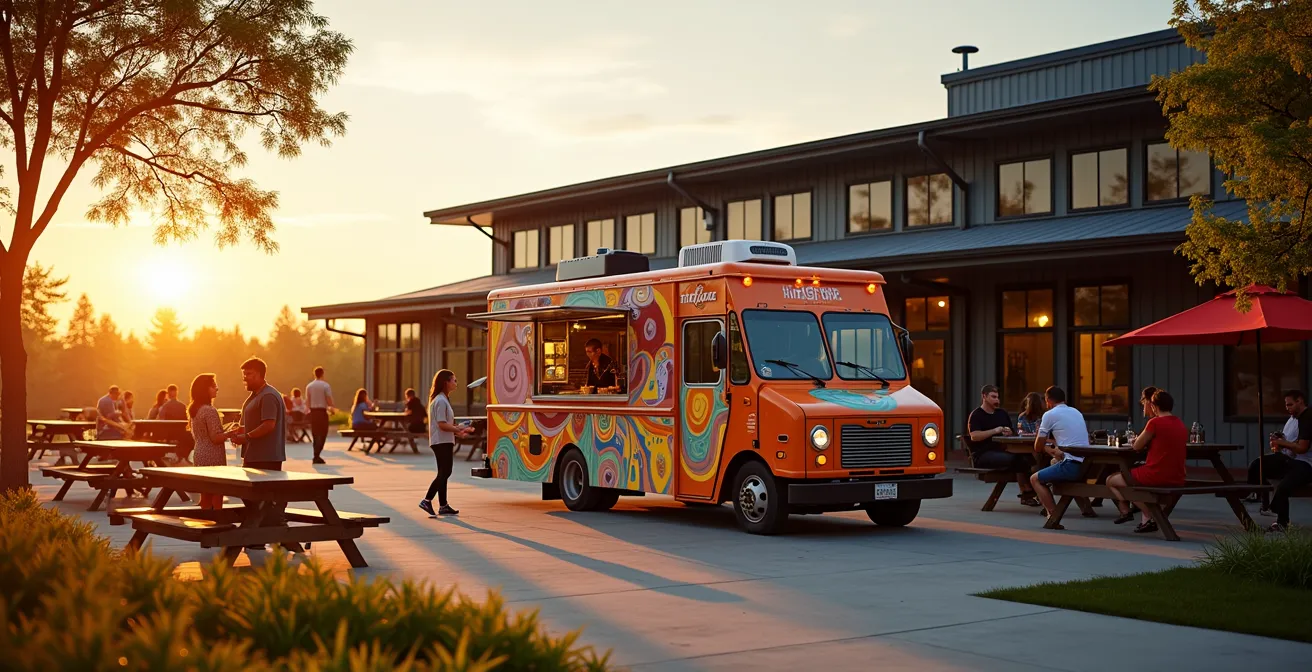
However, a brilliant compromise has emerged across Canada: the food truck partnership. Breweries with tasting-room-only licenses can partner with independent, rotating food trucks that park on their property. This allows them to offer patrons a diverse and high-quality food experience without the immense overhead of running their own kitchen, creating a vibrant and dynamic community atmosphere, which is confirmed by an analysis of Ontario’s move to loosen its sales rules.
A Beer Drinker’s Guide to Brewery Food Rules
- Tasting Room License: Expect pre-packaged snacks only (chips, popcorn). The focus is 100% on the beer. Some may allow you to bring your own food, but always ask first.
- Brewpub/Restaurant License: Features a full commercial kitchen and menu. These are destinations for both food and beer.
- The Food Truck Option: A popular solution for tasting rooms to offer full meals. Check the brewery’s social media for the daily truck schedule.
- The Brewer’s Philosophy: Don’t forget that some brewers intentionally choose minimal food options to maintain an unadulterated focus on beer appreciation.
- Check Provincial Rules: Every province is different. Researching your destination’s specific regulations will help you know what to expect.
So, the next time you wonder about the food menu, remember you’re not just seeing a culinary choice, but a direct expression of the brewery’s business model and its place within the local regulatory framework.
Drinking in parks: which cities allow open consumption of craft beer?
For a beer tourist, there’s little that compares to the simple pleasure of enjoying a locally brewed can of beer in a beautiful city park. However, in Canada, this practice has historically been prohibited by provincial law. The default rule across the country is that consuming alcohol in unlicensed public spaces, including parks, is illegal. But the tide is turning. In recent years, driven by public demand and a desire to create more vibrant European-style public spaces, several major Canadian cities have launched pilot programs allowing alcohol consumption in designated park areas.
These programs are hyper-local and subject to change, so it is absolutely essential to check the current municipal website for the specific city you are visiting. The rules are often seasonal (summer months only) and restricted to specific zones within a park, typically away from playgrounds and sports fields. Cities leading this change include:
- Vancouver: A growing number of parks across the city feature designated “alcohol-allowed” zones during the summer.
- Calgary & Edmonton: Both cities have been expanding programs, allowing responsible drinking at designated picnic sites that can often be booked in advance.
- Toronto: After several years of debate, the city has launched limited pilot programs in specific parks. Verifying the current list of participating parks is crucial.
Even where it’s permitted, a certain etiquette is expected. According to an Ontario-based guide to these evolving regulations, best practices include pouring your beer into a cup to be discreet, always using waste and recycling bins, and being mindful and respectful of other park users who may not be drinking. The success of these pilot programs depends heavily on responsible public behaviour.
As these programs evolve, they represent a significant shift in Canadian social culture, increasingly aligning the enjoyment of public space with the appreciation of local craft products.
Waiving the tasting fee: how many bottles do you need to buy?
If you’re familiar with wine touring in regions like Niagara or the Okanagan Valley, you’ll know the common practice of having a tasting fee waived with the purchase of a certain number of bottles. It’s a logical question to ask if this tradition carries over to Canada’s craft breweries. The simple answer is: rarely. The business models and cultural norms are fundamentally different.
In the craft brewery world, the tasting fee is generally considered a charge for service and for the product you are consuming on-site. It is not typically seen as a deposit towards a future purchase. This distinction is a core part of the culture. Unlike wineries that often rely on high-volume cellar-door sales, many urban breweries function more like specialized bars. The fee covers the cost of the beer, the staff’s time and expertise, and the overhead of the tasting room. Expect to pay for your flight or glass, and then pay separately for any beer you decide to take away.
“Waiving tasting fees is a tradition rooted in Canadian wine regions like Niagara and Okanagan, but is far less common in the urban craft brewery scene where most tasting fees are fixed.”
– Ontario Craft Brewers Association, Industry Practice Guidelines
This separation of on-site consumption and take-home sales is even codified in some regulated systems. For example, when the LCBO (Liquor Control Board of Ontario) ran its growler pilot program, it clearly separated the cost of the beer from the vessel. Customers paid a deposit for the growler, which was fully refundable, and then paid a separate, tiered price for the beer itself. This demonstrates the principle at work: the tasting experience and the product purchase are two distinct transactions.
So, approach your brewery visit with the mindset that you are paying for an experience. See the tasting fee not as a credit, but as the fair price for sampling a curated selection of a brewer’s craft.
Kensington Market vs. St. Lawrence Market: which Toronto food tour fits your vibe?
For the beer geek visiting Toronto, the city’s legendary markets offer more than just food; they are gateways to a perfect beer-and-food pairing adventure. But the city’s two most famous markets, St. Lawrence and Kensington, offer vastly different experiences. Choosing the right one depends entirely on your vibe and what you’re looking to drink. This focus on curated, high-quality experiences aligns with a broader trend; though Statistics Canada reports beer consumption at 65.1 litres per capita in 2022 was down from previous years, the interest in craft quality and pairings has never been higher.
St. Lawrence Market is the historic, classic choice. Housed in a grand brick building, it’s a temple of Canadian culinary tradition. This is the place to try the iconic peameal bacon sandwich. The vibe is established and orderly. For beer pairing, the clean, crisp character of a well-made pilsner or lager cuts perfectly through the richness of the sandwich. The market’s proximity to the Distillery District, home to Mill Street Brewery, makes it a logical stop on a tour of Toronto’s foundational craft beer scene.
Kensington Market, by contrast, is a bohemian, wonderfully chaotic, and eclectic hub of global street food. Designated a National Historic Site, its vibrant, graffiti-adorned streets are packed with vendors selling everything from Jamaican patties to Tibetan momos and gourmet tacos. This is the place for the adventurous palate. The beer pairing here calls for something equally bold and experimental—think a tart, funky sour ale to complement spicy food or a big, juicy hazy IPA to stand up to complex flavours. Its location puts it closer to the city’s west-end brewery cluster, including acclaimed spots like Bellwoods Brewery and Blood Brothers Brewing.
To help you decide, here is a breakdown of the vibe and pairings for each market:
| Market | Vibe | Best For Beer Lovers | Nearby Breweries | Food Pairing |
|---|---|---|---|---|
| St. Lawrence Market | Historic, Classic | Clean lagers & pilsners | Distillery District (Mill St.) | Peameal bacon sandwich + crisp lager |
| Kensington Market | Bohemian, Eclectic | Sours & hazy IPAs | West End (Bellwoods, Blood Brothers) | Global street food + experimental brews |
In essence, choose St. Lawrence for a taste of Toronto’s history paired with a classic beer style. Choose Kensington for a global food journey fueled by the city’s most innovative and experimental brews.
Key Takeaways
- Brewery rules regarding food and tasting fees are dictated by provincial licensing, not random choice.
- Canadian beer styles have a distinct “terroir”: West Coast IPAs are piney like BC forests, while East Coast Hazies are soft and juicy.
- Tasting room etiquette is key: order flights from light to heavy, and tip differently at a tasting bar versus a full-service brewpub table.
Pizza Corner history: why this intersection is the holy grail of late-night eats?
In Halifax, Nova Scotia, the corner of Grafton and Blowers streets is more than just an intersection; it’s a cultural landmark known to generations of locals as “Pizza Corner.” Its legendary status as the holy grail of late-night eats stems from its strategic location at the foot of Argyle Street, the city’s primary entertainment and bar district. For decades, it has served as the final stop after a night out, with rival pizzerias serving up slices to hungry crowds spilling out of the bars at closing time.
But the quintessential Pizza Corner experience isn’t just about pizza. It is the birthplace of another Halifax icon: the donair. This unique creation features spiced ground beef, shaved from a vertical spit, served on a warm pita with tomatoes and onions, and slathered in a famously sweet, garlicky condensed milk sauce. It is the definitive post-bar food of the Maritimes, a comforting and caloric reward at the end of an evening.
In recent years, however, Pizza Corner’s identity has evolved alongside Halifax’s booming craft beer scene. What was once a purely late-night destination is now buzzing during the daytime. The arrival of world-class beer gardens and taprooms nearby, most notably the acclaimed Stillwell Beer Garden just a stone’s throw away, has transformed the area. The modern Pizza Corner experience is now as much about a daytime craft beer paired with a slice or a donair as it is about the late-night rush. This evolution shows how modern craft beer tourism can revitalize and add new dimensions to cherished local traditions, turning nightlife hubs into all-day destinations.
To truly experience the soul of Halifax’s hospitality, a visit to Pizza Corner is non-negotiable. Whether you go for a late-night donair or a sunny afternoon IPA and slice, you are participating in a tradition that beautifully bridges the city’s past and its vibrant, craft-fueled present.