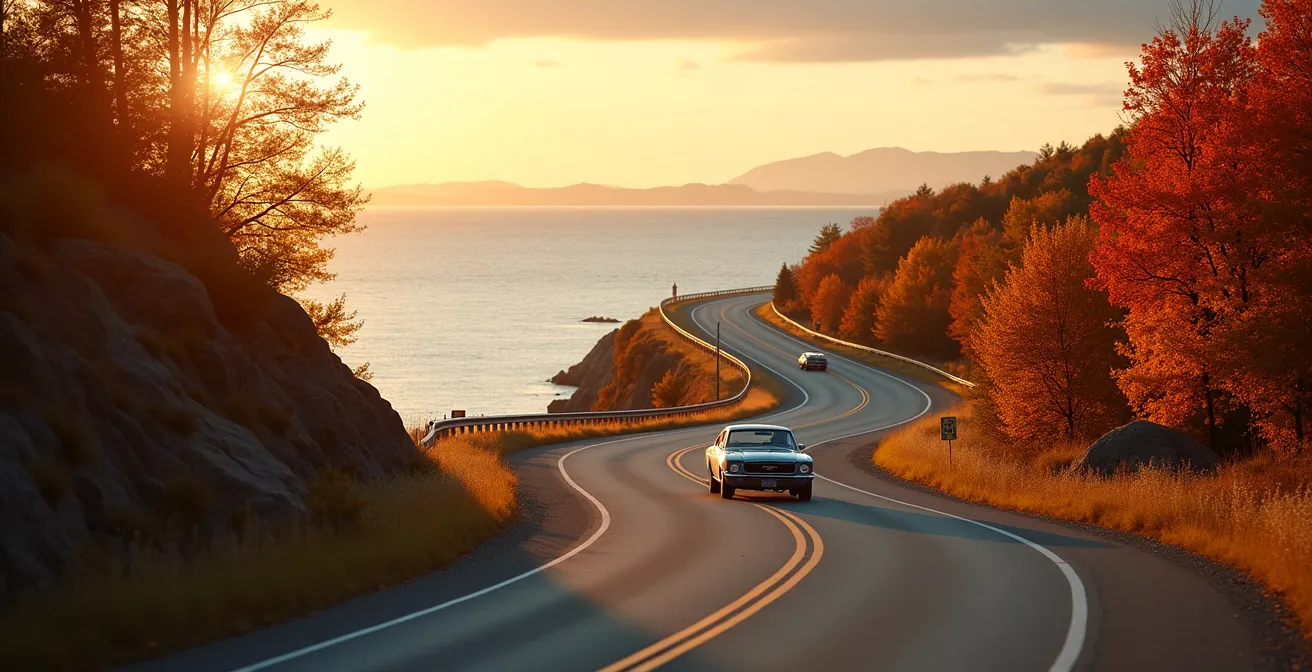
The Route des Navigateurs is best experienced not by the kilometre, but by the flavour.
- The journey’s magic lies in its hyper-local tastes, from fresh morning cheese curds to seasonal lobster.
- The rhythm of the drive is dictated by the St. Lawrence River itself, from its dramatic tides to its world-class sunsets.
Recommendation: Plan your trip around producers and tide charts, not just towns, to truly taste the region’s maritime terroir.
There’s a moment on Quebec’s Route 132 where the city fades from the rearview mirror and the air changes. You roll down the window and the scent is unmistakable: the cool, salty breath of the St. Lawrence Estuary. This is the start of the Route des Navigateurs, a journey along the river’s south shore. Many guides will point you to the charming villages and scenic lookouts, treating the drive as a simple A-to-B itinerary. But to do so is to miss the soul of the region entirely.
The true essence of this road trip isn’t found on a map, but on your palate and in the rhythm of your days. The secret is to understand that the St. Lawrence is not just a backdrop; it is the main character. It’s a powerful force that dictates the pace of travel, influences the flavour of the cheese, and paints the sky in impossible colours each evening. This is the concept of a maritime terroir—a unique sense of place you can taste, see, and feel, shaped by the massive body of water beside you.
This guide abandons the checklist approach. Instead, it offers a sensory itinerary, teaching you how to plan your stops around the freshest cheese, the most dramatic sunsets, the peak of lobster season, and the inescapable pulse of the tides. Forget simply driving the route; it’s time to savour it.
To help you craft this unforgettable journey, we will explore the essential elements that define the region. From the artisanal producers dotting the countryside to the practicalities of navigating a landscape ruled by the river, this article provides the keys to unlocking a deeper, more delicious experience.
Summary: A Culinary Journey on the Route des Navigateurs
- How to plan stops at artisanal fromageries along Route 132?
- Kamouraska vs. Rimouski: where to stay for sunset views and dining?
- Why the Bas-Saint-Laurent sunsets are considered some of the best in the world?
- Missing local ferry connections due to tide schedules: a planning risk
- Combining the drive with a cycling tour of the islands nearby
- Why lobster is cheaper in May/June vs. December in the Maritimes?
- How to spot a ‘toit à la canadienne’ curved roofline from the road?
- Touring Historic Maritime Harbors: Tracing Canada’s Naval Roots in the Atlantic
How to plan stops at artisanal fromageries along Route 132?
To truly understand the terroir of the Bas-Saint-Laurent, your first stop must be a fromagerie. The region’s cheese is a direct expression of its landscape, with salty breezes and lush pastures influencing the final product. Planning these stops is not just about finding a location on a map; it’s about timing your visit to experience the cheese at its absolute peak. The ultimate prize for any foodie is “le fromage en grains” (cheese curds) when they are still warm and squeak between your teeth, a delicacy typically available between 9 and 10 a.m.
The south shore of the St. Lawrence is a key part of Quebec’s vibrant cheese scene, which contributes significantly to the fact that Canada produced a record-breaking 528,207 metric tonnes of cheese in a recent year. To find the most authentic producers, keep an eye out for road signs that say “Fromage à la ferme” (farmstead cheese) or “Vente directe” (direct sales). These signs are your invitation to pull over and buy directly from the artisans who craft their cheese just steps from where their animals graze.

As the image above illustrates, the variety is astounding, from creamy bries to sharp, aged cheddars. A successful cheese tour requires a bit of practical preparation. Allocate around 45 to 60 minutes for each fromagerie to allow for tastings and browsing. More importantly, a cooler with ice packs is non-negotiable. It’s the only way to preserve your precious purchases as you continue your journey along the river, ensuring your cheese remains in perfect condition for a picnic later in the day.
Your Action Plan: The Perfect Fromagerie Tour
- Start your day early to arrive at fromageries between 9-10 a.m. for the chance to taste famously fresh and warm cheese curds.
- Watch for “Fromage à la ferme” and “Vente directe” signs along Route 132 to discover authentic farm-gate producers.
- Budget 45-60 minutes per stop to fully enjoy the tasting experience and make your selections without rushing.
- Bring a cooler equipped with ice packs; this is essential for preserving the quality and freshness of your cheese purchases throughout your road trip.
- Pair your fromagerie visits with stops at nearby “boulangeries” (bakeries) and “cidreries” (cider producers) to gather all the supplies for an unforgettable local picnic.
Kamouraska vs. Rimouski: where to stay for sunset views and dining?
Choosing where to lay your head along the Route des Navigateurs is as much a culinary decision as it is a logistical one. The two primary hubs, the village of Kamouraska and the city of Rimouski, offer distinct atmospheres that cater to different types of slow travelers. Your choice will define your evening’s dining experience and your front-row seat for the region’s legendary sunsets.
Kamouraska is the heart of romance and gastronomy. As an active member of the Association of the Most Beautiful Villages of Quebec, its charm is palpable. The main street is lined with ancestral homes, art galleries, and renowned restaurants focused on farm-to-table cuisine and inventive tasting menus. Accommodation here leans towards boutique inns and historic B&Bs, offering an intimate and immersive experience perfect for food-focused couples.
Case Study: The Allure of Kamouraska
Kamouraska has successfully branded itself as a premier destination by leveraging its exceptional built heritage and stunning natural setting. The village offers a unique blend of innovative agri-food businesses, such as its famous bakeries and smokehouses, alongside high-quality tourism facilities. Attractions like its riverside beaches, the Kamouraska Regional Museum, and a wealth of accommodation options from quaint auberges to grand heritage B&Bs make it a complete and compelling stop for travelers seeking both culture and comfort.
Rimouski, on the other hand, provides a more diverse and adventurous base. As a larger city, it features a wider range of hotels and motels, often at a more varied price point. Its dining scene is equally diverse, from bustling bistros and a lively public market to sophisticated fine dining. For travelers looking to explore the rugged coast of Parc National du Bic or those traveling with families, Rimouski offers more amenities and serves as a practical gateway to outdoor activities.
This decision ultimately comes down to your travel style, and this detailed comparison of the two towns can help clarify the choice.
| Aspect | Kamouraska | Rimouski |
|---|---|---|
| Average Hotel Price | $120-131 USD/night | $95-150 USD/night |
| Accommodation Style | Boutique inns, B&Bs, heritage properties | Hotels, motels, varied options |
| Dining Focus | Farm-to-table, tasting menus, seafood specialties | Diverse: bistros to fine dining, public market |
| Sunset Quality | West-facing over Charlevoix mountains | Gateway to Parc National du Bic |
| Best For | Romantic couples, food enthusiasts | Adventure seekers, families |
Why the Bas-Saint-Laurent sunsets are considered some of the best in the world?
It doesn’t take long on the south shore for a traveler to hear the claim: the sunsets in Bas-Saint-Laurent are among the best on the planet. This isn’t just local pride; it’s a phenomenon rooted in the unique geography of the St. Lawrence. The reason these sunsets are so spectacular is that you are watching the sun set over a vast expanse of water, but you are on the river’s *eastern* shore. The river here is so wide—up to 50 kilometres in some places—that it behaves like an inland sea. This vastness, combined with the west-facing orientation of villages like Kamouraska, creates a perfectly unobstructed, water-level horizon.
The magic is amplified by two key factors: the atmosphere and the tides. The salty, humid air from the estuary acts as a natural diffuser, scattering sunlight and saturating the sky with intense hues of orange, pink, and purple. As the sun dips lower, its light has to travel through more of this particle-rich atmosphere, filtering out blue light and leaving behind the fiery colours that make these sunsets so dramatic. It’s a daily masterclass in atmospheric optics.
The second factor is the tide. At low tide, the river reveals immense tidal flats known as “les battures.” These wet, shimmering sandbars act as a colossal mirror, reflecting the sky’s vibrant colours and doubling the spectacle. The landscape becomes an infinite canvas of light, with the sky above and its perfect reflection below, creating an immersive and almost surreal experience.

What makes these sunsets a true “slow travel” event is that they aren’t fleeting. The combination of the wide horizon and atmospheric conditions means the light show often lasts for the better part of an hour, from the golden hour glow to the final deep purple twilight. It’s a natural performance that invites you to stop, find a bench, and simply watch the day come to a breathtaking close.
Missing local ferry connections due to tide schedules: a planning risk
Embracing the rhythm of the St. Lawrence means accepting that the river is in charge. Nowhere is this more apparent than when planning to cross it. The local ferries that connect the south shore to the north shore or to the nearby islands are not just transportation; they are lifelines whose schedules are inextricably linked to the dramatic tides of the estuary. The risk of a missed connection is a real part of traveling here, turning what seems like a simple crossing into a logistical puzzle that demands respect and careful planning.
The Bay of Fundy may be more famous for its tides, but the St. Lawrence Estuary boasts an impressive tidal range that can exceed five metres. This massive movement of water affects water levels at the ferry docks, and in some cases, certain departures can be delayed or even cancelled during extreme low tides. The crossing from Saint-Siméon to Rivière-du-Loup, for example, is an essential link that operates for much of the year, but its schedule can vary. The 70-minute journey offers spectacular views and a chance to spot marine mammals, but arriving at the terminal without a reservation or a clear understanding of the day’s tide chart can lead to long waits or a completely upended itinerary.
To mitigate this risk, a modern traveler must become a part-time navigator. Building flexibility into your schedule is the first and most important step. Don’t plan tight connections on a ferry-crossing day. Assume that a delay is possible and treat it as an opportunity to explore the area around the terminal, rather than a frustrating setback. Meticulous pre-planning is also key, as outlined in Quebec Maritime’s travel recommendations.
Your pre-trip toolkit should include downloading the official tide charts, double-checking seasonal ferry schedules, and booking vehicle reservations well in advance, especially during the peak summer months from July to August. Having screenshots of this information on your phone is also a wise move, as cell service can be spotty in some coastal areas. This proactive approach transforms the tide from a potential threat into a respected travel partner.
Combining the drive with a cycling tour of the islands nearby
While the Route des Navigateurs is a magnificent driving experience, some of the region’s most intimate charms are best discovered at a slower pace. For the ultimate slow-travel immersion, consider parking your car for a day and taking to two wheels. The islands of the St. Lawrence, accessible by local ferries, offer idyllic cycling routes that allow you to connect with the landscape in a more personal and profound way.
Islands like Île Verte and Île aux Lièvres are havens for cyclists. Île Verte, with its relatively flat 15-kilometre loop, is perfect for a leisurely ride. You can pedal past the oldest lighthouse on the St. Lawrence, watch for seals basking on the rocks, and feel the salty spray on your face. For a more rugged challenge, Île aux Lièvres offers 45 kilometres of trails through pristine wilderness, managed by the conservation society Duvetnor. A bit further west, near Rimouski, a short boat ride takes you to Île Saint-Barnabé, where a network of over 20 km of trails awaits hikers and nature lovers.
Planning an island cycling day trip requires a few logistical steps but is straightforward with a bit of preparation. Most ferries accommodate bicycles for a small fee, and long-term parking is usually available and free at the ferry terminals, such as the one at L’Isle-Verte. The key is to pack smart: bring plenty of water, snacks from a local boulangerie, insect repellent, and a screenshot of the tide chart and return ferry schedule. This preparation is essential, as the last ferry back to the mainland often departs in the mid-afternoon. Following a step-by-step island cycling guide ensures a smooth adventure.
This combination of driving and cycling offers the best of both worlds. You can cover the vast distances of the Route des Navigateurs by car, then switch to a bicycle to zoom in on the details: the scent of wild roses, the sound of seabirds, and the quiet rhythm of island life. It’s an opportunity to create a more dynamic and memorable journey, fully embracing the spirit of slow travel.
Why lobster is cheaper in May/June vs. December in the Maritimes?
For any food lover traveling through Quebec’s maritime regions, the promise of fresh lobster is a powerful draw. However, the price and availability you encounter are dictated by a concept central to the foodie experience: hyper-seasonality. The reason a lobster roll tastes so much better—and is significantly more affordable—in late spring versus the holiday season has everything to do with supply, demand, and the cold waters of the Atlantic.
The primary factor is the fishing season. Lobster fishing in Eastern Canada is managed through a system of Lobster Fishing Areas (LFAs), each with a strictly regulated season to ensure sustainability. The seasons are staggered throughout the year, but the peak season for the nearby Gaspé Peninsula and Magdalen Islands (Îles de la Madeleine) runs from late April/early May to late June/early July. During this time, the supply is at its absolute maximum. Fishermen are bringing in daily catches, and the market is flooded with fresh, local, hard-shell lobster. This abundance drives prices down, making it the best possible time to indulge.
Conversely, in December, most local fishing seasons are closed. The lobster available in restaurants and markets is either imported from areas with a winter season (like parts of Nova Scotia or the US), or it’s lobster that was caught during the peak season and has been held in saltwater pounds. Both scenarios add significant costs: transportation for imports and the expense of feeding and maintaining the stored lobster. Furthermore, demand skyrockets during the holiday season, as lobster is a traditional celebratory meal. This combination of lower supply and peak demand inevitably leads to much higher prices.
So, when you enjoy an affordable and incredibly fresh lobster in June, you are tasting the peak of the season. It’s a flavour that is directly tied to a specific time and place. Planning a trip to coincide with these short, precious windows of abundance is the ultimate foodie move, ensuring you experience the region’s delicacies at their very best.
How to spot a ‘toit à la canadienne’ curved roofline from the road?
As you meander through the historic villages along Route 132, the architecture itself becomes part of the scenic feast. Beyond the stunning river views, the buildings tell a story of heritage and adaptation. One of the most distinctive and charming architectural features to watch for is the “toit à la canadienne,” also known as a bell-cast roof. Spotting these elegant, curved rooflines becomes a delightful game for the observant traveler, a visual treasure hunt through Quebec’s history.
This roof style is a beautiful solution to a practical problem. Developed by early French-Canadian settlers, the gentle slope at the top allows it to hold a blanket of snow for insulation, while the dramatic, flared curve at the eaves—like the bottom of a bell—is designed to shed heavy snow and rain away from the home’s foundation. What began as a clever adaptation to harsh winters has evolved into a cherished symbol of Quebec’s architectural identity. The Kamouraska region, in particular, showcases an exceptional concentration of these ancestral homes.
To become an expert roof-spotter from your car, here’s what to look for:
- Focus on the eaves (the edges of the roof overhanging the walls). Look for a distinct, graceful swoop or bell-shaped curve that extends two or three feet beyond the walls.
- Pay close attention as you drive through the villages of the Kamouraska Regional County Municipality, especially Saint-Pascal and Saint-Denis-De La Bouteillerie, which are renowned for their pristine examples.
- Notice how the curve is not uniform; it typically starts as a gentle slope at the peak and becomes progressively more dramatic as it approaches the edge.
- Learn to distinguish it from the Mansard roof, another common style in the area, which has a straight-lined, double-sloped profile.
This “living heritage” is not confined to the past. As you drive, you may notice modern architects reinterpreting this traditional roofline in contemporary homes, a testament to its enduring aesthetic appeal. Stopping at the heritage interpretation panels often found in village centers can provide further architectural context and enrich your appreciation for the craftsmanship on display.
Key takeaways
- The St. Lawrence River’s ‘maritime terroir’ defines the region’s food, culture, and pace of travel.
- Hyper-seasonality is key: plan around peak times for delicacies like fresh cheese curds (mornings) and local lobster (May-June).
- Embrace the river’s rhythm by planning logistics like ferry crossings around the tide charts to avoid disruption.
Touring Historic Maritime Harbors: Tracing Canada’s Naval Roots in the Atlantic
While the title of this section might evoke images of grand naval fleets, the maritime history along this stretch of the St. Lawrence is more intimate and arguably more fascinating. It’s a story of human ingenuity, courage, and a deep, hard-won knowledge of a treacherous waterway. The historic harbors you’ll encounter are living museums that trace their roots not to military might, but to the everyday workhorses of the river: the schooners, icebreakers, and the legendary pilots who mastered their currents.
A visit to the Musée maritime du Québec in L’Islet is the perfect anchor for this historical exploration. Here, you can step aboard a real hydrofoil and an icebreaker, vessels that were crucial for keeping the river navigable. Themed exhibitions vividly portray the life of sailors and preserve the memory of the “goélettes” (schooners), the wooden sailing ships that were the backbone of trade and transport on the river for centuries. The museum makes a fascinating connection between the region’s historic wooden shipbuilding industry and the present-day identity of nearby Saint-Jean-Port-Joli as a hub for wood sculptors and artisans.
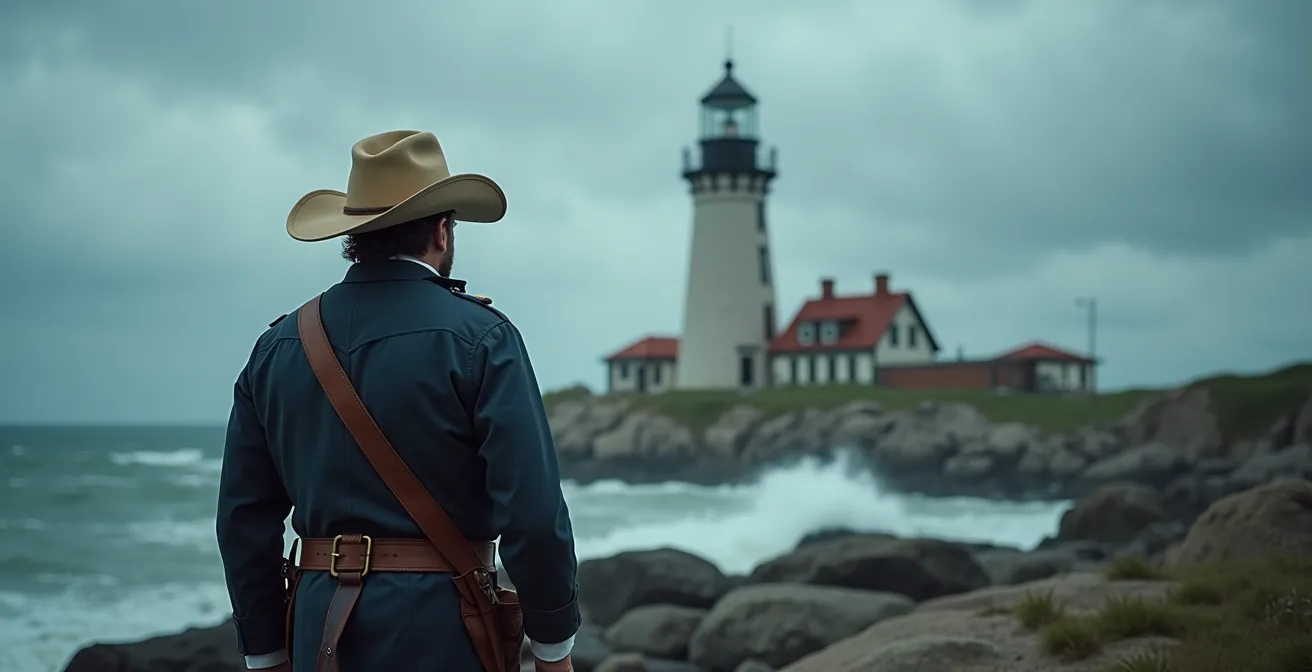
This deep connection to the river’s challenges is the true naval root of the region. As one expert from the Quebec Maritime Historical Society notes, the story here is distinct from that of the broader Canadian naval tradition.
The history here is less about the Royal Canadian Navy and more about the legendary St. Lawrence pilots who mastered this treacherous waterway
– Maritime Heritage Expert, Quebec Maritime Historical Society
This perspective shifts the focus from battles to the daily struggle and triumph over nature. Every historic harbor, from Rimouski with its Pointe-au-Père lighthouse to the smaller fishing ports, tells a piece of this story. They are monuments to the navigators who, through generations of experience, learned to read the tides, currents, and weather, making life and commerce possible on one of the world’s great rivers.
Your sensory itinerary of the Route des Navigateurs is now complete. The next logical step is to turn these ideas into a tangible plan. Start by mapping out your key foodie destinations and begin checking the tide charts and ferry schedules for your desired travel dates.