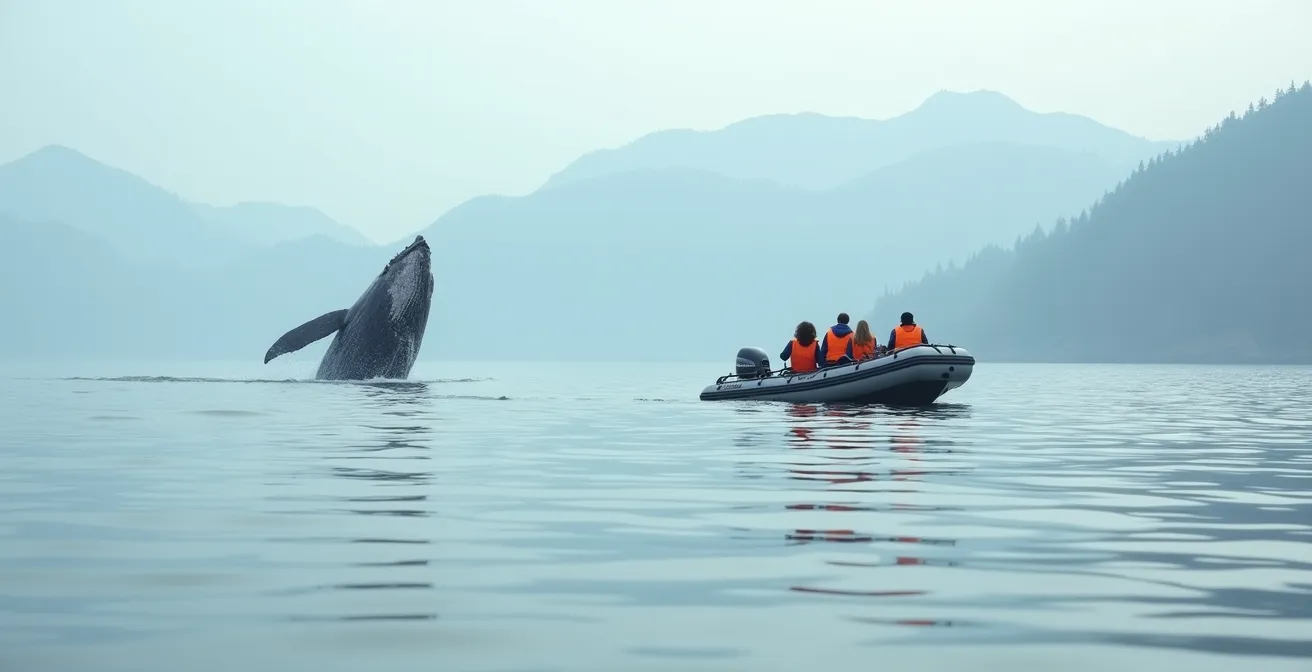
Your success in whale watching depends less on luck and more on understanding the underlying marine biology of your chosen location.
- Vessel choice directly impacts your physiological experience and proximity to wildlife; stability often trumps speed.
- Whale sightings are tied to predictable feeding patterns, meaning timing your trip to align with specific prey cycles is crucial.
Recommendation: Prioritize operators who demonstrate a deep knowledge of local ecology and adhere strictly to Canada’s Marine Mammal Regulations—their success rate is a direct reflection of this expertise.
The sight of a humpback whale breaching the surface or a pod of orcas gliding through coastal waters is a profound, almost primal experience. For many visitors to Canada’s coasts, it’s the number one item on their bucket list. Yet, the dream can easily be met with disappointment: a fruitless search, a trip cut short by seasickness, or a fleeting glimpse from a frustrating distance. Many guides offer generic advice to “book in advance” or “dress in layers,” but they miss the most critical factor that separates a magical encounter from a missed opportunity.
The secret isn’t just about being in the right place at the right time; it’s about understanding why it’s the right place and time from a scientific perspective. The behaviour of these magnificent creatures is not random. It is dictated by complex factors like oceanography, prey availability, and their own intricate social structures. A successful expedition is one that is planned with this ecological context in mind. Simply choosing a tour is not enough; you must choose the right vessel for the specific sea conditions and the right season for the species you hope to see.
This guide abandons platitudes in favour of principles. From the perspective of a marine biologist, we will decode the science behind the spectacle. We will explore how the choice between a Zodiac and a cruiser is a trade-off between thrill and vestibular stability, why timing your trip to Vancouver Island is a matter of understanding trophic cascades, and why ethical operators who keep their distance often provide the most rewarding sightings. This is your guide to making informed, science-based decisions for a truly meaningful wildlife encounter.
To help you navigate these critical decisions, this article breaks down the key scientific and practical considerations for planning your Canadian whale watching expedition. The following sections will guide you through choosing the right vessel, timing your trip for specific species, and ensuring your experience is both successful and ethical.
Summary: A Scientist’s Guide to Canadian Whale Watching: Choosing the Right Boat & Season
- Zodiac vs. Covered Cruiser: balancing thrill with seasickness risks?
- Orcas vs. Humpbacks: timing your trip to Vancouver Island for specific species?
- Preventing nausea on the Atlantic swell: remedies that actually work
- Why ethical operators turn off engines and keep distance?
- Why you need gloves and tuques even in July on the Bay of Fundy?
- Guided tours vs. self-drive viewing: success rates compared for spotting wolves?
- Missing the tide changes at Bay of Fundy harbors: a scheduling error
- Exploring the Great Bear Rainforest: A Guide to B.C.’s Coastal Wilderness
Zodiac vs. Covered Cruiser: balancing thrill with seasickness risks?
The choice of vessel is the first and perhaps most critical decision you’ll make. It dictates not only your comfort but the very nature of your interaction with the marine environment. The two primary options, the Zodiac and the covered cruiser, offer fundamentally different experiences rooted in physics and physiology. A Zodiac, an open-hulled, rigid inflatable boat, places you at water level. This proximity creates an exhilarating, intimate feeling of being part of the ocean. However, this design means you are fully exposed to the elements—wind, spray, and the boat’s every movement. On choppy seas, the rapid, sharp motions can overstimulate the vestibular system in your inner ear, significantly increasing the risk of seasickness.
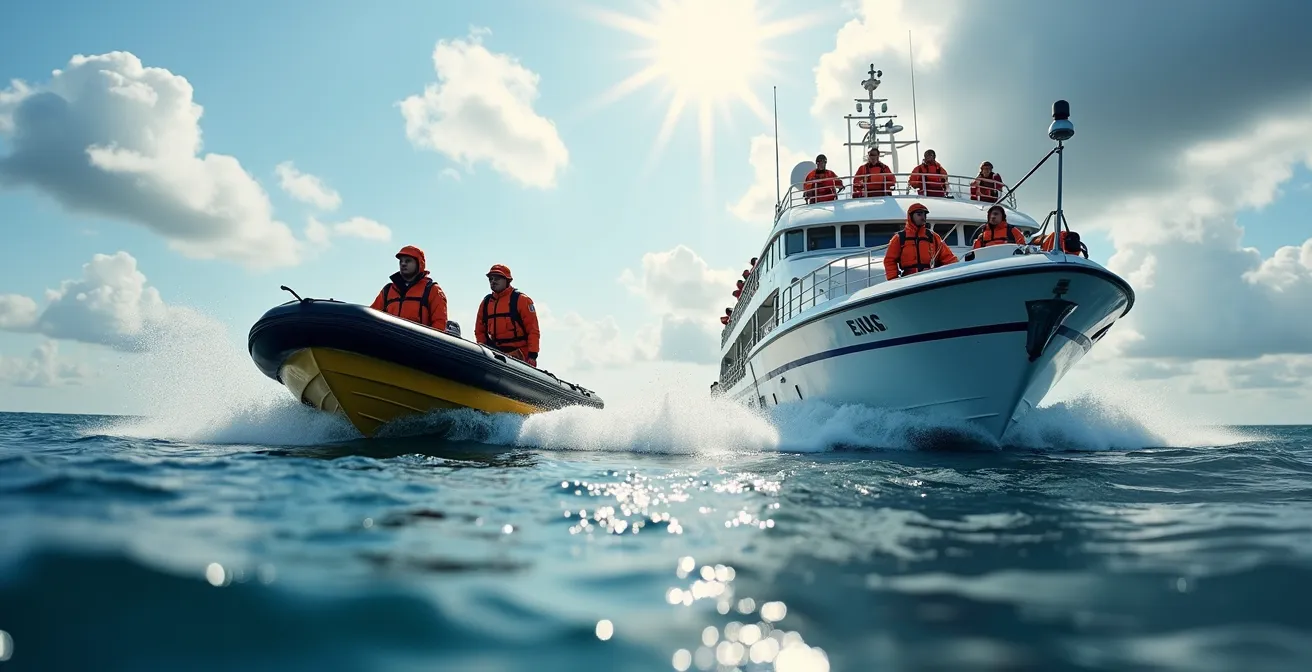
In contrast, the larger, heavier covered cruiser offers stability. Its higher vantage point and enclosed cabin provide protection from weather and a much smoother ride. This stability dampens the ocean’s swell, making it the superior choice for those prone to motion sickness or anyone prioritizing comfort and photo opportunities from a steady platform. As demonstrated by operators like Eagle Wing Tours in the Salish Sea, which has maintained a 98% whale sighting success rate since 2007, the type of vessel doesn’t limit success, but it does define the experience.
This comparative table breaks down the key trade-offs between the two main vessel types in Canadian waters.
| Feature | Zodiac | Covered Cruiser |
|---|---|---|
| Distance to Water | Right on water level | Higher vantage point |
| Weather Protection | Open to elements | Protected from rain/wind |
| Seasickness Risk | Higher on rough seas | Lower, more stable ride |
| Mobility Access | Limited, requires agility | Better for wheelchairs |
| Experience Type | Exhilarating, intimate | Comfortable, stable |
| Group Size | 12-24 passengers | 50-95 passengers |
Orcas vs. Humpbacks: timing your trip to Vancouver Island for specific species?
Observing whales is not a matter of chance; it is a matter of understanding their behavioural ecology. The presence of specific species in a given area is almost always driven by one primary factor: food. Around Vancouver Island, the timing of your trip should be directly aligned with the seasonal movements of the whales’ prey. This is a classic example of a trophic cascade, where the abundance of a primary food source dictates the presence of its predators.
For example, the resident orcas of the Johnstone Strait are specialists, primarily feeding on Chinook salmon. Their most reliable appearance, therefore, is from June to October, coinciding with the major salmon runs. Humpback whales, on the other hand, are generalist feeders, consuming krill and small schooling fish. Their spectacular bubble-net feeding is more commonly witnessed from July onwards, particularly in the rich waters near the Great Bear Rainforest. An impressive study confirms that around 300 orca whales travel in pods around Vancouver Island, a population whose movements are tied to these feeding opportunities.
Transient orcas, also known as Bigg’s killer whales, have a different diet—seals, sea lions, and porpoises—and their hunting patterns peak from August to September in the Gulf Islands. Gray whales undertake one of the planet’s longest migrations and are best seen passing the western shore of Vancouver Island from March to June. Understanding this ecological calendar is the key to targeting the species you most want to see. Each whale’s presence tells a story about the health and rhythm of the entire marine ecosystem.
Preventing nausea on the Atlantic swell: remedies that actually work
The long, rolling swells of the Atlantic Ocean are a formidable challenge to the human body’s equilibrium. Motion sickness, or kinetosis, occurs when your brain receives conflicting signals from your eyes, muscles, and the vestibular system of your inner ear. On a boat, your eyes may see a stable horizon inside the cabin, but your inner ear feels the relentless rise and fall of the waves. This sensory mismatch triggers the nausea, dizziness, and fatigue that can ruin an expedition. While many folk remedies exist, a scientific approach offers more reliable prevention.
From a pharmacological standpoint, several effective medications are available. According to an analysis by the CDC on travel-related motion sickness, common options fall into distinct categories. H1 antihistamines, such as dimenhydrinate (the active ingredient in the Canadian brand Gravol), are highly effective but can cause drowsiness. Scopolamine, available as a transdermal patch, is also effective and slightly less sedating. It’s crucial to use these preventatively; medication must be taken before you feel sick—typically an hour before boarding—to allow for absorption. Never cut a scopolamine patch, as this disrupts its controlled-release mechanism.
Beyond medication, practical steps can significantly reduce your risk. Staying hydrated, getting a full night’s sleep, and eating a light, non-greasy meal beforehand are all vital. Onboard, stay on deck and fix your gaze on the stable horizon. This helps your brain reconcile the signals from your eyes and inner ear, restoring a sense of equilibrium. For many, a combination of medication and these behavioural strategies is the most effective defense against the Atlantic swell.
Why ethical operators turn off engines and keep distance?
It may seem counterintuitive that the best whale watching operators are the ones who intentionally keep their distance and cut their engines. This practice, however, is not a sign of timidness but a hallmark of a deep commitment to conservation and a sophisticated understanding of marine mammal biology. Whales, particularly cetaceans like orcas and humpbacks, navigate, communicate, and hunt using sound. The underwater world is an acoustic environment, and the low-frequency rumble of a boat engine can mask these vital sounds, a phenomenon known as acoustic bleaching. This noise can disrupt feeding, cause chronic stress, and interfere with mother-calf communication.
Recognizing this, Canada has implemented some of the world’s most stringent regulations. As stated by the Department of Fisheries and Oceans (DFO), there are mandatory approach distances designed to protect animals from disturbance. For instance, federal law requires boats to keep 200 metres away from most killer whales, and this increases to 400 metres for the endangered Southern Resident Killer Whales in their critical habitat. Ethical operators not only adhere to these minimums but often exceed them. They understand that a quiet, patient approach allows the whales to become comfortable, often resulting in the animals choosing to approach the vessel on their own terms—a far more magical and authentic encounter.
Case Study: The First Conviction Under Marine Mammal Regulations
The seriousness of these regulations was underscored in 2019 when a tour guide in British Columbia was found guilty of violating the rules. As reported by the DFO, the guide was ordered to pay a $2,000 fine for approaching a humpback whale too closely. This landmark case sent a clear message: protecting marine mammals from human disturbance is not just a guideline but an enforceable legal requirement.
Our government is committed to protecting our oceans and the marine mammals that call our oceans home. These stronger rules will help to ensure our whales and marine mammals can still be enjoyed, but at a safe distance.
– The Honourable Dominic LeBlanc, former Minister of Fisheries, Oceans and the Canadian Coast Guard
Why you need gloves and tuques even in July on the Bay of Fundy?
Packing for a whale watching trip on Canada’s coasts requires a scientific understanding of thermoregulation. It is a common and serious mistake to judge the on-water temperature by the weather on land. Even on a warm July day in a town like St. Andrews, New Brunswick, the conditions on the Bay of Fundy can be dramatically different and dangerously cold. This is due to two primary factors: cold water upwelling and wind chill.
The Bay of Fundy’s massive tides create powerful currents that pull deep, frigid water to the surface. Air temperature over this cold water can be 10-15°C lower than on the shore. The second factor is wind chill. A moving boat generates its own wind, and when combined with the natural marine breeze, the “feels like” temperature can plummet. A 15°C day with a 40 km/h wind (easily achieved on a moving boat) feels like 9°C. This is why experienced captains and guides insist on layers, even in summer. Your body loses heat much faster in cold, damp air, and without proper gear like gloves and a tuque (a classic Canadian winter hat), you risk hypothermia, which can set in subtly and ruin your trip.
A visitor reported having a wonderful whale-watching trip out of Tofino, but noted the small boat and rough sea conditions… The marine wind chill factor can make July temperatures feel much colder on the water than on land.
– Visitor on Fodor’s Travel Forum
Action Plan: Dressing for Marine Conditions
- Base Layer: Start with moisture-wicking materials like merino wool to draw sweat away from your skin and maintain warmth.
- Mid Layer: Add an insulating layer, such as a fleece jacket, to trap body heat effectively.
- Outer Layer: Your outermost shell must be wind and waterproof. Many operators provide wind pants or full survival suits.
- Extremities: Protect your hands and head, where heat loss is greatest, with waterproof gloves and a warm tuque or hat.
- Eye and Skin Protection: Use polarized sunglasses to cut sea glare, which helps spot whales sooner, and high-SPF sunscreen to guard against UV rays reflected off the water.
Guided tours vs. self-drive viewing: success rates compared for spotting wolves?
While this question pertains to terrestrial wildlife, the underlying principle of comparing guided versus self-directed success rates is critically important in the marine environment. The equivalent in whale watching is the choice between a professional, guided boat tour and attempting to spot whales from shore (a “self-drive” equivalent). While land-based whale watching is possible in some fortunate locations like the St. Lawrence or parts of Vancouver Island, the success rates are vastly different for clear biological and logistical reasons.
Guided tour operators are, in essence, a collaborative network. Their vessels are equipped with hydrophones to listen for whale calls and high-quality marine radios. Captains and naturalists are in constant communication with other boats in the area. If one vessel spots a pod of orcas or a feeding humpback, the information is shared across the network, dramatically increasing the search area and the probability of a sighting for everyone. This cooperative effort functions as a massive, dynamic grid search that an individual on shore simply cannot replicate.
Furthermore, many whale species feed on prey found in offshore banks, shelf edges, and areas of nutrient upwelling that are often invisible and inaccessible from land. A guided tour has the mobility to travel several kilometres to where the known feeding hotspots are. Ultimately, while the allure of a chance sighting from a coastal viewpoint is strong, for those wanting to ensure they see whales, the data is clear: the resources, expertise, and collaborative network of a professional guided tour offer an exponentially higher rate of success.
Missing the tide changes at Bay of Fundy harbors: a scheduling error
The Bay of Fundy is home to the highest tides on Earth, a phenomenon that is not just a dramatic spectacle but the very engine of its marine ecosystem. For a whale watcher, failing to schedule an expedition around the tide changes is more than a logistical mistake; it’s a fundamental misunderstanding of the area’s biology. The immense tidal exchange, with over 160 billion tonnes of water flowing in and out twice a day, creates intense vertical mixing in the water column.
This powerful tidal mixing causes nutrient upwelling, pulling cold, nutrient-rich water from the depths to the sunlit surface. These nutrients fuel massive blooms of phytoplankton, the foundation of the marine food web. The phytoplankton are consumed by zooplankton like copepods and krill, which in turn become a concentrated food source for small fish like herring and mackerel. This abundance of prey is precisely what draws large baleen whales—including Fin, Minke, and the majestic Humpback—to the Bay of Fundy each summer.
The most intense feeding activity often occurs on a changing tide, particularly the flood tide, as it concentrates krill and fish in specific areas. Experienced captains in the Bay of Fundy don’t just know where the whales were yesterday; they know where the tidal currents will be concentrating their food source today. Planning your tour to coincide with these periods of peak tidal movement directly increases your chances of witnessing active feeding behaviour. Ignoring the tide schedule is akin to looking for wildlife in the desert at high noon—you’re missing the moment of peak activity.
Key Takeaways
- Ecological Timing is Everything: Whale presence is dictated by prey availability. Match your trip to the seasonal feeding cycles (e.g., salmon runs for orcas, krill blooms for humpbacks) to maximize sighting probability.
- Vessel Choice is a Physiological Decision: The stability of a covered cruiser mitigates seasickness by reducing vestibular disruption, while a Zodiac offers a more visceral but challenging experience.
- Ethical Distance Equals Better Sightings: Respecting legal approach distances and minimizing engine noise reduces stress on the animals, often leading to more natural and prolonged encounters.
Exploring the Great Bear Rainforest: A Guide to B.C.’s Coastal Wilderness
The Great Bear Rainforest is not merely a destination; it is one of the planet’s last vast, intact temperate rainforests and a perfect case study where all the principles of scientific whale watching converge. This remote and wild stretch of British Columbia’s coast is an ecosystem where the forest, the sea, and the wildlife are inextricably linked. Planning an expedition here requires a holistic understanding of both marine and terrestrial ecology.
The region’s deep, glacier-carved fjords are incredibly rich in nutrients, making them prime summer feeding grounds for humpback whales. Here, more than anywhere, you can witness their complex cooperative behaviours, such as bubble-net feeding, against a stunning backdrop of old-growth forest. The timing of your visit is critical, with peak humpback activity occurring from July to September. This is also a region where you can see orcas, both resident and Bigg’s killer whales, hunting seals near rocky haul-outs or following salmon returning to their natal streams.
Given the remoteness and often challenging sea conditions, vessel choice becomes paramount. Most expeditions in this area use sturdy, comfortable covered cruisers that can serve as a base for multiple days, allowing for deeper exploration. Ethical practices are the standard here, as operators work in a sensitive environment that is also the home of the iconic Spirit Bear. An expedition to the Great Bear Rainforest is the ultimate synthesis of your knowledge: choosing the right time for humpback feeding, on a vessel equipped for wilderness travel, with guides who understand the profound connection between the salmon in the rivers and the whales in the sea.
Now that you are equipped with the scientific principles for a successful expedition, your next step is to research the ethical, science-led tour operators in your chosen region who embody this conservation-first approach.