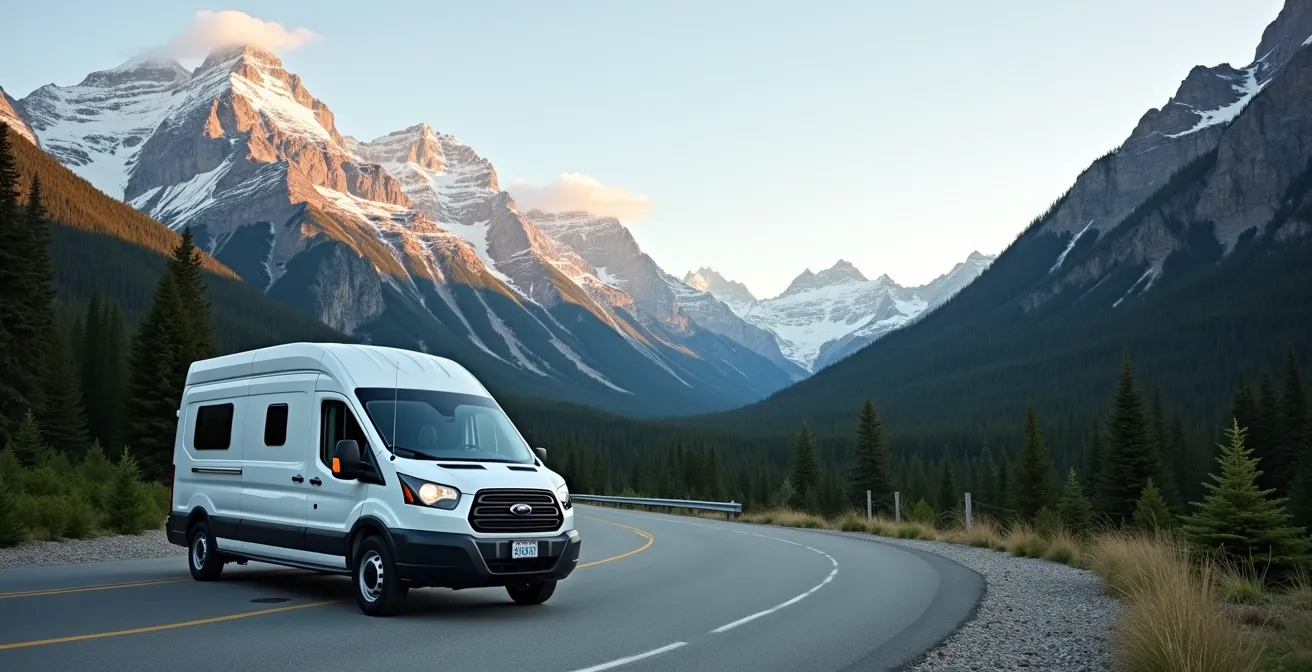
The romantic vision of parking your campervan anywhere in Canada quickly collides with a complex reality of local regulations. Contrary to popular belief, “free camping” is rarely legal in towns, and relying on outdated advice leads to fines. True freedom on the road comes not from finding secret spots, but from mastering the patchwork of municipal bylaws, understanding seasonal infrastructure limits, and preparing for the unique logistical challenges of Canadian travel.
The dream is potent: a campervan, the open Canadian road, and the freedom to pull over wherever the landscape captivates you. But for many vanlifers and tourists renting an RV, this dream shatters at the first sight of a “NO OVERNIGHT PARKING” sign, especially in picturesque but heavily regulated towns like Canmore, Alberta. The initial confusion quickly turns to frustration as you realize the unwritten rules you heard about—”just be discreet” or “park at any Wal-Mart”—don’t apply here.
The common advice often revolves around using apps to find spots or sticking to major campgrounds. While helpful, this approach overlooks the fundamental challenge of Canadian vanlife: a dizzying legal and logistical landscape that changes from one town to the next. The real skill isn’t just finding a place to sleep; it’s navigating a bureaucratic maze of conflicting municipal bylaws, understanding the fine print of your rental insurance before you hit a gravel road, and anticipating the “capacity bottlenecks” of a country where ferries and parks fill up months in advance.
This guide moves beyond the platitudes. We will not just tell you where to park; we will equip you with the strategic knowledge to be a legally compliant, financially prepared, and self-sufficient traveler. We’ll delve into the reasons behind parking bans, the hidden costs that can ruin a trip, the critical etiquette of waste disposal, and the essential techniques for safely navigating Canada’s vast and demanding terrain. This is your playbook for avoiding the fines, the stress, and the unexpected costs of a Canadian campervan adventure.
To navigate this journey successfully, it’s essential to understand each specific challenge you’ll face on the road. This article breaks down the most critical aspects of Canadian campervan travel, from local laws to cross-country logistics.
Summary: A Guide to Navigating Canada’s Campervan Rules
- Why “boondocking” in Wal-Mart parking lots is increasingly banned in tourist towns?
- RV rental insurance deductibles: the hidden cost of windshield cracks on gravel roads
- Dumping black water: the etiquette and location of sanitary stations for beginners
- Brake management on mountain passes: avoiding overheating with a heavy vehicle
- Booking BC Ferries for over-height vehicles: why you can’t just show up in summer?
- How to manage fuel stops on long stretches without service stations?
- Provincial vs. National Parks: finding availability when the big names are full?
- Driving the Trans-Canada Highway: Crossing the Continent Safely
Why “boondocking” in Wal-Mart parking lots is increasingly banned in tourist towns?
The long-standing, informal agreement that allowed RVers to park overnight in big-box store lots is rapidly eroding, especially in Canadian tourist hotspots. The core issue is the strain on municipal resources and infrastructure. Towns like Canmore, Banff, and Tofino are grappling with a surge in vehicle camping that leads to problems with waste, noise, and the occupation of limited commercial parking. In response, they are enacting and enforcing strict bylaws that specifically target overnight sleeping in vehicles, turning these once-safe havens into fine traps.
This creates a confusing “jurisdictional roulette” for travelers. For instance, while the City of Calgary might allow an RV to be parked on a residential street for a few days, the rules change dramatically just an hour down the road. In Canmore, the regulations are severe: parking a recreational vehicle for the purpose of sleeping between 10 p.m. and 8 a.m. can result in a fine. According to Canmore’s municipal bylaws, a person sleeping in their vehicle could face a $100 fine, with vehicle-specific violations carrying penalties from $45 to $90. This isn’t a suggestion; it’s a costly penalty for those who assume the rules are the same everywhere.
The only defense is proactive research. Assuming a town’s rules based on its neighbour’s is a recipe for a ticket. Before you even arrive in a new municipality, you must become an expert on its specific traffic and parking bylaws. This isn’t just good practice; it’s a non-negotiable part of legal and responsible vanlife in Canada.
Your Action Plan: Finding a Canadian Town’s Overnight Parking Bylaws
- Initial Search: Use a search engine to look for “[Town Name] bylaws” to locate the official municipal website.
- Locate the Bylaw: On the town’s website, navigate to the bylaw section and search for documents titled ‘Traffic and Road Use Bylaw’ or ‘Parking Bylaw’.
- Keyword Scan: Once the document is open (usually a PDF), use the search function (Ctrl+F or Cmd+F) for keywords like “recreational vehicle”, “RV”, “overnight”, “camping”, or “sleeping”.
- Verify Clarity: Note the specific hours for overnight restrictions and the associated fine amounts. These details are your most important clues.
- Direct Confirmation: If the online bylaws are unclear or ambiguous, do not guess. Call the town’s bylaw services department directly to ask for clarification on overnight parking rules for RVs.
RV rental insurance deductibles: the hidden cost of windshield cracks on gravel roads
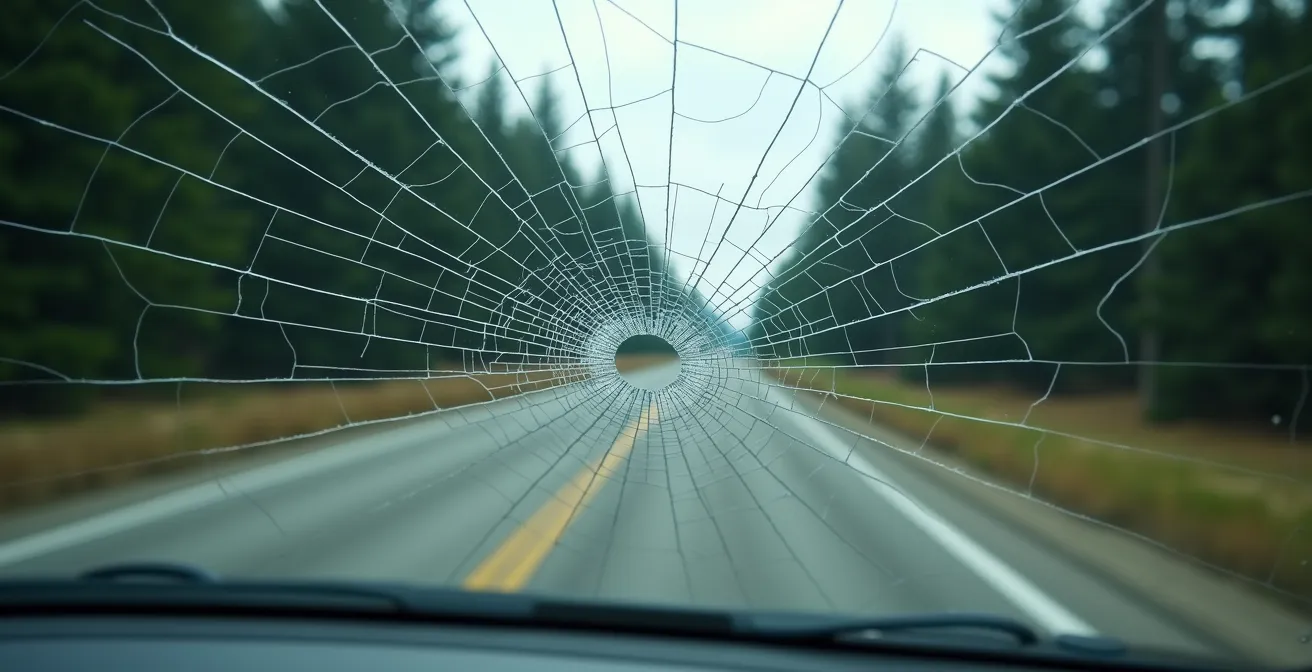
The allure of exploring Canada’s backcountry roads comes with a significant, often overlooked financial risk: windshield damage. Gravel highways, logging roads, and even the main Trans-Canada Highway in construction zones are notorious for kicking up rocks. What might be a minor chip on a car can become a catastrophic, full-width crack on a large, expensive RV windshield. This is where the fine print of your rental insurance policy becomes critically important.
Many renters are shocked to discover their insurance carries a high deductible for glass damage, sometimes ranging from $500 to $2,000 in Alberta or Ontario. Filing a claim can also lead to increased premiums. The replacement cost itself is staggering; Canadian RV owners report costs anywhere from $5,500 to $7,200 CAD for a Class A RV windshield. Your “free” adventure down a scenic gravel road can quickly turn into a multi-thousand-dollar liability.
The insurance landscape also varies dramatically by province, adding another layer to the “jurisdictional roulette.” A traveler’s experience in one part of the country does not predict their coverage in another. Before you rent, you must demand a clear explanation of your glass coverage, deductible, and the claims process. If the coverage is inadequate, inquire about purchasing a specific windshield protection policy or a “buy-down” option for the deductible.
This table, based on owner-reported experiences, illustrates the significant differences in potential out-of-pocket costs across various regions.
| Province | System | Typical Deductible | Example Cost |
|---|---|---|---|
| British Columbia | ICBC (Public) | $300 | $6,000 CAD total with $300 deductible |
| Alberta/Ontario | Private Insurance | $500-$2,000 | Deductible of $2,000 with potential premium increase |
| Florida (Comparison) | Private | $0 | 100% coverage with no deductible |
Dumping black water: the etiquette and location of sanitary stations for beginners
Properly managing your RV’s waste—specifically “black water” from the toilet—is one of the most fundamental responsibilities of vanlife. It is illegal and environmentally harmful to dump black water anywhere other than a designated sanitary dump station, or “sani-dump.” For beginners, finding these stations and understanding the etiquette can be intimidating, especially when navigating the challenges of seasonal Canadian infrastructure.
A critical reality of RVing in Canada is that many public sani-dumps, particularly those at visitor centres and in provincial parks, are not operational year-round. They typically close from October to May to prevent pipes from freezing and bursting. This “great Canadian shutdown” catches many off-season travelers by surprise, forcing them to find alternatives. These often include:
- Truck Stops: National chains like Flying J and Pilot often have year-round sani-dumps available for a fee, typically ranging from $5 to $15.
- Private RV Parks: Many campgrounds will allow non-guests to use their dump station for a higher fee, often between $10 and $25.
- Municipal Facilities: Some towns maintain heated, year-round public stations, but these are rare and require research to locate.
Beyond just finding a station, there is a strict, unwritten Canadian etiquette that must be followed. According to a guide on off-season RV camping practices, the golden rule is to leave the facility cleaner than you found it. This means rinsing the area thoroughly after you’re done, using your own hose for flushing (not the potable water hose), and wearing gloves for hygiene. When using a private campground’s facilities as a non-guest, it is considered good form to thank the staff and even offer a small tip for the convenience.
Brake management on mountain passes: avoiding overheating with a heavy vehicle
Navigating the steep, winding mountain passes of the Rocky Mountains or British Columbia’s coastal ranges in a heavy campervan is not like driving a car. The sheer weight of an RV puts immense strain on its braking system during long descents. The most common and dangerous mistake a novice driver can make is “riding the brakes”—maintaining constant light pressure on the brake pedal. This generates a massive amount of heat, which can cause the brake fluid to boil (“brake fade”) or the brake pads to glaze over, leading to a catastrophic loss of stopping power.
The professional technique for descending a steep grade is a combination of engine braking and “snub braking.” Before you even begin the descent, you must downshift into a lower gear. A good rule of thumb is to use the same gear you would need to climb that same hill (often 2nd or 3rd gear). The engine’s resistance will do most of the work in controlling your speed, saving your brakes for when you truly need them.

Snub braking is used in conjunction with engine braking. Instead of constant pressure, you apply the brakes firmly for a short period to reduce your speed 5-10 km/h below the safe limit, and then you take your foot off the brake completely. This on-off cycle gives the brakes crucial time to cool down between applications. On major Canadian mountain highways, you will see mandatory “Brake Check” pull-outs before major descents. These are not suggestions. You must pull over, inspect your brakes for any signs of overheating (like a burning smell), and allow them to cool before proceeding. Knowing the location of emergency runaway lanes, marked with large red and white signs, is also a critical part of your safety plan.
Booking BC Ferries for over-height vehicles: why you can’t just show up in summer?
For any campervan trip involving Vancouver Island or BC’s other coastal destinations, navigating the BC Ferries system is a mandatory logistical hurdle. The critical mistake many travelers make is assuming they can simply drive up to the terminal and get on the next boat, as they would with a car. This assumption is a recipe for disaster during the peak season (June to September) due to a severe “capacity bottleneck” for oversized vehicles.
The problem is simple physics: a campervan or RV is “over-height” (typically over 7 feet tall) and takes up space on the main car deck where trucks and buses are placed. According to BC Ferries’ own information, only 5-25% of the total deck space on most vessels is allocated for these larger vehicles. During the summer, this limited space is often fully booked weeks, or even months, in advance. Showing up without a reservation often means being forced to wait at the terminal for multiple sailings, potentially for an entire day, until a rare open spot becomes available.
To manage this, BC Ferries uses a reservation and dynamic pricing system. They often release “Saver” fares for those who book well in advance, offering significant discounts. For example, a recent promotion offered over-height vehicle travel for a base fare of $76.10 including a reservation, with additional savings per foot. However, the crucial detail is that these fares must be fully prepaid and are not available at the terminal. The only strategy for success is to plan your ferry crossings as the very first part of your itinerary. You must monitor the BC Ferries website and book your spot the moment reservations for your travel dates are released, which can be several months prior. Setting a calendar reminder for the booking window opening is an essential pro-tip for summer travel in BC.
How to manage fuel stops on long stretches without service stations?
The sheer scale of Canada means that “the next town” can be hundreds of kilometers away, a reality that creates vast “fuel deserts” with no service stations. Running out of gas in a remote area of Northern Ontario or the Trans-Labrador Highway is not an inconvenience; it’s a serious survival situation. Effective fuel management is a non-negotiable skill for any Canadian road trip, requiring a strategic mindset that overrides normal driving habits.
The cardinal rule is to abandon the habit of waiting for your tank to be nearly empty. Once you enter a remote region, you must adopt a “half-tank rule”: the moment your fuel gauge drops below half, you must fill up at the very next available station, regardless of the price. In truly remote areas like the Cassiar Highway in BC or stretches of the Trans-Labrador Highway, carrying one or two approved jerry cans of extra fuel is not just a suggestion, it is mandatory for safe passage.
Using apps like GasBuddy is helpful for planning, but you must also be prepared for significant price variations. Fuel in remote locations can easily cost $0.20 to $0.40 more per litre than in urban centers. This must be factored into your budget. For travel in the rural Prairies, a Co-op membership can be invaluable, granting access to 24/7 unmanned cardlock stations that are often the only option in small agricultural communities.
This table highlights some of Canada’s most notorious fuel deserts, where proactive planning is essential.
| Route | Distance Without Services | Last Fuel Stop | Strategy |
|---|---|---|---|
| Highway 17 (Northern Ontario) | 200+ km stretches | Sault Ste. Marie or Thunder Bay | Fill up at every opportunity |
| Trans-Labrador Highway | 400+ km sections | Happy Valley-Goose Bay | Carry jerry cans mandatory |
| Highway 37 (Cassiar) | 150-250 km gaps | Kitwanga or Watson Lake | Plan stops at Dease Lake |
| Icefields Parkway | 230 km | Lake Louise or Jasper | One station at Saskatchewan Crossing |
Provincial vs. National Parks: finding availability when the big names are full?
The dream of camping in iconic National Parks like Banff or Jasper often meets the harsh reality of a “SOLD OUT” sign on the reservation website. Parks Canada campsites for the entire summer season are often booked solid within minutes of the reservation window opening in January or February. While this can seem like a dead end, savvy campers know that this is where Provincial, Regional, and Municipal parks become your strategic advantage.
Canada’s camping system is a multi-layered network. While National Parks get the most international attention, every province operates its own extensive park system (e.g., BC Parks, Ontario Parks, SEPAQ in Quebec) which are often just as beautiful and far more accessible. The key is understanding their different booking windows. While Parks Canada requires you to book up to 4 months in advance, Alberta Parks uses a 90-day window, and BC Parks uses a 4-month rolling window. This staggering of dates means that if you missed the National Park rush, you still have opportunities to secure a spot elsewhere.
The ultimate strategy for finding a last-minute spot is mastering the First-Come, First-Served (FCFS) system. Many campgrounds, especially along the Icefields Parkway, deliberately hold back 30-50% of their sites from the reservation system for walk-in campers. Success here is not about luck; it’s about tactics.
- Timing is Everything: Arrive mid-week (Tuesday or Wednesday) for the best chance. Avoid arriving on a Friday or Saturday at all costs during peak season.
- Check-out Time is Your Check-in Time: Most campgrounds have a check-out time of 11 a.m. and a check-in time of 3 p.m. Showing up right as the check-in window opens, as recommended by some experienced vanlifers, puts you at the front of the line to claim a site being vacated that day.
- Have a Backup: Always have a list of two or three potential FCFS campgrounds in an area. If the first is full, you can proceed to the next without losing precious time.
Key Takeaways
- Local bylaws are king: Always research a town’s specific overnight parking rules before you arrive to avoid fines.
- Seasonal preparedness is mandatory: Plan for winter closures of sani-dumps and book summer ferries and campsites months in advance.
- Your vehicle is not a car: Master heavy vehicle driving techniques for mountain passes and understand the high costs of RV-specific repairs like windshields.
Driving the Trans-Canada Highway: Crossing the Continent Safely
Driving the Trans-Canada Highway is the quintessential Canadian road trip, a nearly 8,000-kilometre journey through wildly diverse landscapes. But completing this epic drive safely in an RV requires more than just a full tank of gas; it demands preparation for two major Canadian challenges: wildlife and the complete absence of connectivity.
Wildlife collisions are a serious and often fatal threat. The risk is not uniform; it is concentrated in specific regions and at specific times of day. According to travel experts, the peak collision risk for moose is at dawn and dusk along the northern shores of Lake Superior in Ontario, while elk present the greatest danger in the Rocky Mountain parks of Alberta and BC during the same low-light hours. Constant vigilance is your only defense. Scan the ditches on both sides of the road, reduce your speed in signed wildlife corridors, and avoid driving during twilight hours in these high-risk zones if at all possible.
The other major challenge is the prevalence of cellular “black holes.” There are vast stretches of the Trans-Canada, particularly the 300+ km section north of Lake Superior and sections of Rogers Pass in British Columbia, with absolutely no cell service. A breakdown or medical emergency in these zones can be catastrophic without a backup plan. Before entering a known dead zone, you must:
- Download Offline Maps: Use Google Maps’ offline feature or an app like Maps.me to save the maps for the entire region to your phone.
- Carry a Satellite Communicator: Devices like a Garmin inReach or ZOLEO are essential. They allow you to send emergency SOS messages and basic texts via satellite, completely independent of cell networks.
- Check Conditions Before You Go: Always check the provincial road condition websites (like DriveBC.ca or Ontario 511) for closures, accidents, or construction delays before you lose service.
A safe crossing of the continent is the result of respecting the scale of the country and preparing for its inherent risks. It’s about acknowledging that for long stretches, you are entirely on your own.
Now that you are equipped with the strategies to navigate the legal, financial, and logistical hurdles of Canadian campervan travel, the next step is to put this knowledge into practice. Begin planning your next trip by actively researching the bylaws of your intended destinations and building a realistic itinerary that accounts for booking windows and travel times.