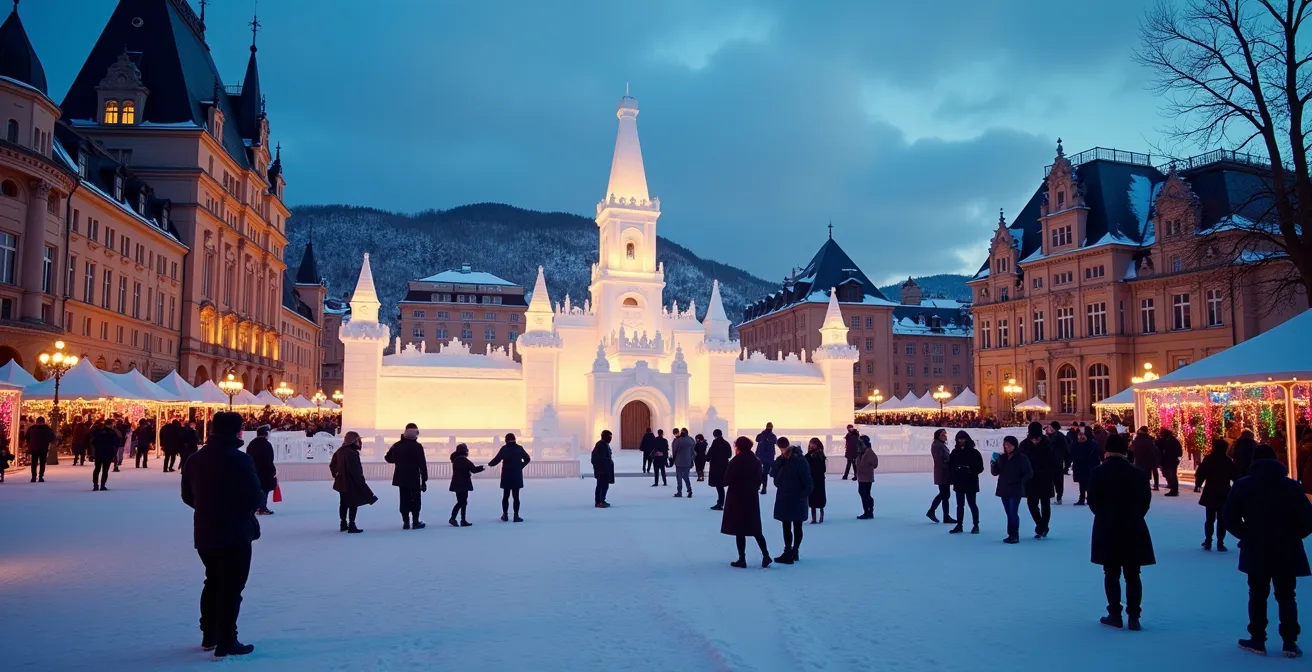
The secret to a magical Quebec winter holiday isn’t avoiding the cold, but mastering it with the right strategy.
- Learn the difference between dressing for static cold (parades) and active cold (skiing).
- Discover the logistical lifelines for holiday dining and finding authentic local treasures.
Recommendation: Use this guide to shift your focus from temperature anxiety to fully immersing yourself in the festive spirit.
The idea of a Quebec winter holiday conjures images of sparkling snow, festive lights, and the joyful energy of the Carnaval de Québec. Yet, for many visitors, this magical picture is shadowed by a practical fear: the cold. Temperatures dipping to -20°C, or even -40°C with wind chill, can seem daunting, turning the dream trip into a source of anxiety. The common advice to simply “dress in layers” or “book in advance” barely scratches the surface of what it truly takes to thrive in this environment.
This approach often misses the crucial nuances of local life and thermal science. It overlooks the specific strategies for staying warm while standing still for hours at a parade versus staying dry while cross-country skiing. It fails to prepare you for the cultural realities that dictate which restaurants are open on Christmas Day or why New Year’s holds a special significance for local families.
But what if the key wasn’t to fight the cold, but to understand and embrace it? The true magic of a Quebec winter lies in mastering this art. This guide moves beyond the platitudes to offer a concrete thermal and logistical strategy. It’s about transforming the challenge of the cold from a source of worry into a key part of an enchanting and authentic experience. We’ll explore the specific gear, cultural traditions, and practical knowledge that allow you to not just survive, but to revel in the unique beauty of the season.
This article will provide you with a complete roadmap to navigate your Quebec winter adventure with confidence. From the precise science of dressing for extreme temperatures to understanding the local holiday customs that shape your dining and shopping options, you’ll gain the insider knowledge needed for a truly memorable trip.
Summary: A Strategic Guide to Quebec’s Winter Wonders
- Bonhomme’s dress code: how to stand outside for 4 hours at the parade at -20°C?
- Caribou alcohol kick: respecting the potency of the traditional warm wine mix
- German Christmas Market vs. Jean-Talon: finding authentic local crafts?
- Dining out on December 24th/25th: which restaurants are actually open?
- Why New Year’s Day is traditionally more important than Christmas for families?
- How to dress for -40°C active sports without sweating and freezing?
- Kamouraska vs. Rimouski: where to stay for sunset views and dining?
- Alpine Skiing in Canada: Budgeting for a Slope-Side Vacation
Bonhomme’s Dress Code: How to Stand Outside for 4 Hours at the Parade at -20°C?
The biggest challenge of the Quebec Winter Carnival isn’t the crowds; it’s the static cold. Standing still for hours watching a parade generates no body heat, making you feel the -20°C temperature far more intensely than when you’re walking. The generic advice to “layer up” is insufficient. You need a specific thermal strategy designed for inactivity. The foundation of this strategy is the three-layer system, but the materials are what make all the difference.
Your base layer, worn directly against the skin, must be a moisture-wicking fabric like merino wool or a high-quality synthetic. Never wear cotton. Cotton absorbs sweat and moisture, then freezes, creating a dangerous layer of cold against your body. The mid-layer’s job is insulation; this is where a fleece or down jacket traps your body’s warm air. Finally, the outer shell must be both windproof and waterproof. The wind chill is a significant factor, and a shell that blocks it is non-negotiable. This combination ensures that moisture is moved away from your body, heat is trapped, and the elements are kept out.
To truly master the parade experience, consider a fourth “emergency” layer, like a packable insulated vest, that you can add when you feel the chill setting in. Don’t forget critical accessories: insulated mittens are far warmer than gloves, a single pair of wool socks is better than multiple cotton pairs (which cause sweat), and a balaclava is essential for protecting your face from frostbite. This isn’t just about clothes; it’s about deploying a personal environmental system.

As this image highlights, the texture and function of each layer are distinct and complementary. The fine fibers of the merino wool manage moisture, the lofty fleece traps air, and the dense outer shell acts as a shield. Understanding this system is the first step to truly enjoying Quebec’s outdoor festivities in comfort and safety, no matter how long Bonhomme’s parade lasts.
Caribou Alcohol Kick: Respecting the Potency of the Traditional Warm Wine Mix
As you wander through the Winter Carnival, you’ll inevitably encounter Caribou, the legendary hot alcoholic beverage of Quebec. Served from decorative canes, it’s more than a drink; it’s a piece of “cultural insulation,” a tradition dating back to the *coureurs des bois* that provides both physical and social warmth. However, underestimating its strength is a common mistake for first-time visitors. This is not your average mulled wine.
The traditional Caribou served at festival kiosks is a potent mix of red wine, Canadian whisky or brandy, and maple syrup. The homemade nature of these batches means the alcohol content can be surprisingly high. With carnival kiosk servings reaching a potent 15-20% alcohol content, it’s a drink to be respected, especially in the cold where its effects can be deceptive. This is significantly stronger than the commercial version you can buy in a bottle at the SAQ (Quebec’s liquor board), which is standardized at a more predictable 12.5% ABV.
Many local bars and restaurants in Old Quebec also pride themselves on their unique house recipes during the carnival season, each with its own twist and potency. While the Caribou is an essential part of the experience, moderation is key. Its warmth can make you feel invincible to the cold, leading to poor judgment about your exposure to the elements. Enjoy it slowly, alternate with non-alcoholic beverages like hot chocolate, and treat it as the powerful winter warmer it is.
To help you navigate your options, the following table breaks down what to expect from Caribou at different locations. This allows you to make an informed choice and fully enjoy the tradition without any unwelcome surprises.
| Location | Alcohol Content | Serving Style | Price Range |
|---|---|---|---|
| Carnival Kiosks | 15-20% | Traditional cane | $8-12 CAD |
| SAQ Stores | 12.5% | 750ml bottle | $15-20 CAD |
| Old Quebec Bars | 14-18% | Glass or mug | $10-15 CAD |
| Hotel Bars | 12-15% | Premium presentation | $12-18 CAD |
German Christmas Market vs. Jean-Talon: Finding Authentic Local Crafts?
When searching for holiday gifts, Quebec City and Montreal present two very different market experiences, each with its own charm. The choice between them comes down to a question of “atmospheric authenticity”: are you seeking a transported European fantasy or a genuine connection to Quebec’s local terroir? The Quebec City German Christmas Market, held at the City Hall gardens, masterfully recreates a European winter village with its charming wooden kiosks, bratwurst, and imported German crafts. It’s an enchanting, immersive experience that feels like stepping into a fairytale.
In contrast, markets like Montreal’s Jean-Talon Market offer a different kind of authenticity. As a year-round hub for Quebec producers, the focus here is squarely on local craftsmanship and regional foods. Instead of imported ornaments, you’ll find Charlevoix wool, artisanal cheeses, and seasonal delicacies like *tourtière* and an endless variety of maple products. While it may lack the curated “Christmas village” aesthetic, it provides a direct line to the region’s artisans and their stories.
For visitors truly wanting to bring home a piece of Quebec, the key is to look beyond the immediate ambiance and learn to identify genuinely local products. This is especially true at smaller, seasonal markets where imported goods can be mixed with local ones. Being able to spot the difference between a mass-produced souvenir and a true *Fait au Québec* item elevates your shopping from a simple transaction to a meaningful cultural exchange.
To do this effectively, you need to know what to look for. An artisan’s signature, the use of regional materials, and a price that reflects skilled labor are all tell-tale signs of an authentic product. Don’t be afraid to engage with vendors and ask about their workshop; a true artisan will be proud to share their story.
Your Checklist for Identifying Authentic ‘Fait au Québec’ Products
- Look for artisan signatures or stamps directly on products, not just on display cards.
- Check for regional materials like Charlevoix wool, Quebec maple wood, or local ceramics.
- Ask vendors about their workshop location—authentic artisans will eagerly share their story.
- Recognize certified labels like ‘Les Créateurs Québécois’ or ‘Signé Québec’ for authentication.
- Compare prices: genuine handmade items reflect labor costs, so suspiciously cheap often means imported.
Dining Out on December 24th/25th: Which Restaurants Are Actually Open?
One of the most critical logistical lifelines for any tourist visiting Quebec during the Christmas holidays is securing a dinner reservation for December 24th and 25th. Many visitors arrive assuming restaurants will be open for the festive rush, only to discover that the opposite is true. Quebec has a strong tradition of the Réveillon, a grand family feast held at home on Christmas Eve, meaning the vast majority of independent restaurants close their doors to allow staff to be with their families.
This cultural reality makes advance planning absolutely essential. The most reliable dining options during this period are overwhelmingly the restaurants located within major hotels. Establishments in places like the Fairmont Le Château Frontenac or the Auberge Saint-Antoine become the city’s culinary hubs for travelers. These establishments offer special prix fixe menus that often range from $85 to $150 per person, requiring reservations months in advance. Bookings for these coveted spots typically open in October and are often full by early December.
If you’ve missed the window for hotel reservations or are staying in an Airbnb, other solutions exist. Many *traiteurs* (caterers) at markets like Jean-Talon or Atwater offer complete Réveillon feast packages that you can order in advance and enjoy in your rental. Another strategy is to research ethnic restaurants, particularly in Montreal’s diverse neighborhoods, as many do not observe the same holiday closures. A final option is to plan for a special holiday brunch on December 25th or 26th, which are typically easier to book than the prime-time dinners. Without a strategy, you risk a holiday dinner of last-minute convenience store snacks.
Ultimately, navigating the holiday dining scene is a direct encounter with Quebec’s deep-rooted family traditions. Rather than seeing it as an inconvenience, viewing it as an opportunity to plan a unique experience—whether a lavish hotel dinner or a cozy catered meal—is part of the adventure. The key is to know the rules of the game long before you arrive.
Why New Year’s Day is Traditionally More Important Than Christmas for Families?
For many visitors from North America and Europe, Christmas is the undisputed peak of the holiday season, centered around family gatherings and gift-giving. In Quebec, however, the cultural emphasis is historically different. While Christmas is a significant religious and festive occasion, it is New Year’s Day (Le Jour de l’An) that has traditionally been the cornerstone of multi-generational family celebration. Understanding this distinction is key to deciphering many local customs and logistical realities you’ll encounter.
This tradition is rooted in Quebec’s Catholic heritage, where the Christmas midnight mass was the main event, leaving the grand family feast and gift exchange for New Year’s Day. This day was marked by the *Bénédiction Paternelle*, a tradition where children would visit their parents to receive a father’s blessing for the year ahead. As the Quebec Tourism Office notes, this historical focus has a lasting impact on the culture.
The Christmas midnight mass was the religious focus, leaving family celebrations and gift-giving for ‘Le Jour de l’An’. While this tradition has evolved, New Year’s remains the focal point for multi-generational family gatherings in Quebec culture.
– Quebec Tourism Office, Quebec Winter Cultural Heritage Guide
Even in modern, secular Quebec, the legacy of this tradition endures. This cultural emphasis is so strong that more businesses close on January 1st than on Christmas Day, a surprise to many tourists. While families now blend old customs with new, the large New Year’s feast featuring classics like *tourtière* (meat pie) and *tarte au sucre* (sugar pie) remains a cherished ritual.
For a visitor, this means two things. First, expect even more limited services on January 1st than on December 25th. Second, it offers an opportunity to participate in the public side of the celebration. While families gather privately, huge outdoor parties take over streets like Grande Allée in Quebec City, with live music, fireworks, and a collective countdown that is electric. Embracing the New Year’s celebration is embracing the true heart of Quebec’s holiday spirit.
How to Dress for -40°C Active Sports Without Sweating and Freezing?
While mastering the “static cold” is crucial for watching parades, an entirely different thermal strategy is required for active winter sports like cross-country skiing, snowshoeing, or fat biking. Here, the challenge is not just staying warm, but managing the intense heat and sweat your body produces during high-output activity. Dressing too warmly is as dangerous as dressing too lightly. Sweat that can’t escape will soak your base layers, and the moment you stop moving, that moisture will freeze, leading to rapid and dangerous chilling. This is the “sweat and freeze” cycle every winter athlete dreads.
The solution lies in a dynamic layering system focused on maximum breathability rather than maximum insulation. Your three layers serve the same functions—wicking, insulating, and shielding—but the materials and thickness are different. For high-exertion activities, a lightweight merino base layer is ideal. Your mid-layer should be much thinner, perhaps just a light fleece vest instead of a thick jacket, to avoid overheating. Your outer layer is the most critical component: a softshell jacket with vents (like “pit zips”) is often preferable to a fully insulated, waterproof hardshell. A softshell breathes better, allowing sweat vapor to escape, and the vents provide a quick way to dump excess heat without having to remove a layer.
The goal is to start your activity feeling slightly cold. Within ten minutes of moving, your body will generate enough heat to be comfortable. You must constantly regulate your temperature by using vents or adjusting your layers *before* you start to sweat heavily. This proactive approach to thermal management is the key to staying comfortable and safe when pushing your body in temperatures as low as -40°C.
The table below, drawing from guidelines for Quebec winter activities, details the ideal layering system for different exertion levels, illustrating the stark contrast between dressing for active versus static cold.
| Activity Level | Base Layer | Mid Layer | Outer Layer | Key Features |
|---|---|---|---|---|
| High Output (XC Skiing) | Lightweight merino | Thin fleece vest | Softshell with vents | Pit zips essential |
| Medium (Snowshoeing) | Midweight merino | Light insulated jacket | Breathable hardshell | Adjustable ventilation |
| Low (Ice Fishing) | Heavyweight merino | Down or thick fleece | Insulated parka | Maximum insulation |
Kamouraska vs. Rimouski: Where to Stay for Sunset Views and Dining?
For visitors looking to experience the majestic winter landscapes of the St. Lawrence River beyond the major cities, the Bas-Saint-Laurent region offers breathtaking scenery. Two popular bases are the village of Kamouraska and the city of Rimouski, but they provide very different winter experiences. Choosing between them depends entirely on your priorities: romantic tranquility or practical convenience.
Kamouraska is a picture-perfect village renowned for having some of the most beautiful sunsets in the world. In winter, this translates to spectacular views over the vast, frozen expanses and moving ice floes of the river. It’s an incredibly quiet and romantic retreat. However, this charm comes with a trade-off: many of its quaint B&Bs, artisan shops, and acclaimed restaurants close for the winter season. Accommodation is limited and must be booked far in advance, and dining options can be scarce.
Rimouski, on the other hand, is a larger, more functional city. While its coastal scenery is more rugged than panoramic, it serves as a reliable year-round hub. It offers a wider range of hotels and a dining scene that remains active throughout the winter. It is also a more practical base for exploring nearby attractions like the stunning Parc national du Bic, which is only a 15-minute drive away compared to 45 minutes from Kamouraska. For travelers who prioritize access to activities and amenities, Rimouski is the safer bet.
Regardless of your choice, driving Quebec’s Route 132 in winter requires serious preparation. This coastal route is susceptible to “poudrerie” (blowing snow), a dangerous condition that can cause whiteouts and road closures with little warning. Ensure your vehicle has mandatory Quebec winter tires (required by law from December 1 to March 15), check weather forecasts vigilantly, and always travel with a full tank of gas and an emergency kit.
| Aspect | Kamouraska | Rimouski |
|---|---|---|
| Winter Sunset View | Wide open ice floe vistas | Rugged coastal scenery |
| Accommodation | Quaint B&Bs, limited winter | Year-round hotels, more options |
| Dining Scene | Seasonal closures common | Reliable year-round restaurants |
| Best For | Romantic quiet retreat | Practical base for activities |
| Distance to Bic Park | 45 minutes | 15 minutes |
Key Takeaways
- Mastering a thermal strategy—differentiating between static and active cold—is more important than simply “layering.”
- Logistical planning is crucial, as Quebec’s holiday traditions dictate restaurant closures and peak booking periods.
- Authentic experiences often lie beyond the main attractions, in local markets and by understanding regional customs.
Alpine Skiing in Canada: Budgeting for a Slope-Side Vacation
While Quebec is famous for its culture and scenery, it’s also a premier destination for alpine skiing, boasting world-class resorts. However, a slope-side vacation can be a significant investment, and understanding the costs is the first step in planning an affordable trip. With daily lift tickets ranging from $95 to over $180 CAD at top resorts, costs can add up quickly before you even factor in accommodation, food, and rentals.
Quebec’s “big three” resorts—Mont-Tremblant, Mont-Sainte-Anne, and Le Massif de Charlevoix—each offer a unique experience at a different price point. Tremblant, with its vibrant pedestrian village, is typically the most expensive, especially for slope-side lodging. Mont-Sainte-Anne offers a great balance of challenging terrain and more affordable options, while Le Massif is renowned for its breathtaking views of the St. Lawrence River and often has the most competitive lift ticket prices. A major budgeting factor is the choice between staying directly at the resort versus in a nearby town, which can cut accommodation costs by more than half.
Fortunately, there are several effective strategies to manage these costs. The single most important one is to never buy lift tickets at the window on the day of. Purchasing multi-day passes online well in advance can lead to savings of 15-20%. Look into programs like the Ski Passe-Partout, which offers discounted access to multiple resorts, or check for deals at retailers like Costco Canada. Timing is also critical; avoiding the peak periods of Christmas, New Year’s, and the February school holidays can dramatically lower prices for both lift tickets and lodging. Finally, one of the biggest hidden costs is on-mountain dining. Packing your own lunch and snacks can easily save a family over $100 per day.
The table below provides a snapshot of the typical budget breakdown for Quebec’s top resorts, helping you to compare costs at a glance and make an informed decision for your ski vacation.
| Resort | Day Lift Ticket | Slope-side Hotel/night | Village Hotel/night | On-mountain Lunch |
|---|---|---|---|---|
| Mont-Tremblant | $140-180 CAD | $400-600 CAD | $150-250 CAD | $25-35 CAD |
| Mont-Sainte-Anne | $110-130 CAD | $250-400 CAD | $100-180 CAD | $20-30 CAD |
| Le Massif | $95-115 CAD | $300-450 CAD | $120-200 CAD | $22-32 CAD |
With the right thermal strategy, logistical knowledge, and an adventurous spirit, your Quebec winter trip can be a truly magical experience. The next logical step is to start planning your itinerary with these insights in mind, turning potential challenges into memorable parts of your journey.